

Don't Toss Old Plastic Nursery Pots, Reuse Them For A Healthy, Thriving Garden
We may receive a commission on purchases made from links.
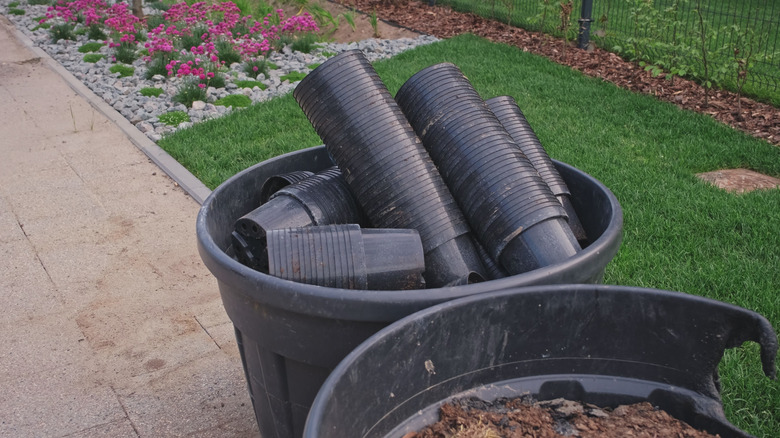
If you're a passionate gardener, you're undoubtedly buying new plants all the time. While the abundance in your garden is admirable, you're likely left with a garden shed or garage stuffed with stacks of old plastic nursery pots you don't know what to do with. Instead of recycling them or, worse, throwing them away, you can reuse them in your garden. They're handy for starting seeds and housing transplanted seedlings. You can upcycle an old nursery pot to keep garden twine tangle-free. While all of these ideas are great, there's one solution that will potentially put lots of pots to good use. You can easily turn them into buried water reservoirs for thirsty edible plants.
Many common garden vegetables, such as squash, tomatoes, and peppers, need consistent water — and lots of it. If, for example, tomatoes are watered unevenly, the fruit can develop blossom end rot. Likewise, if you don't thoroughly soak your squash plants (the roots, not the leaves), they will fail to thrive. It's also vital that water reaches the roots of your plants instead of sitting on the surface and flowing or evaporating away. While there are plenty of creative ways to reuse plastic nursery pots in your garden, this idea — burying an empty nursery pot next to each plant and filling it with water — requires no tools other than a trowel. The water will slowly seep out through the drainage holes in the base of the buried pot, where it can be easily accessed by the plant's roots. It's genius!
How to transform old plastic nursery pots into water reservoirs for a garden bed
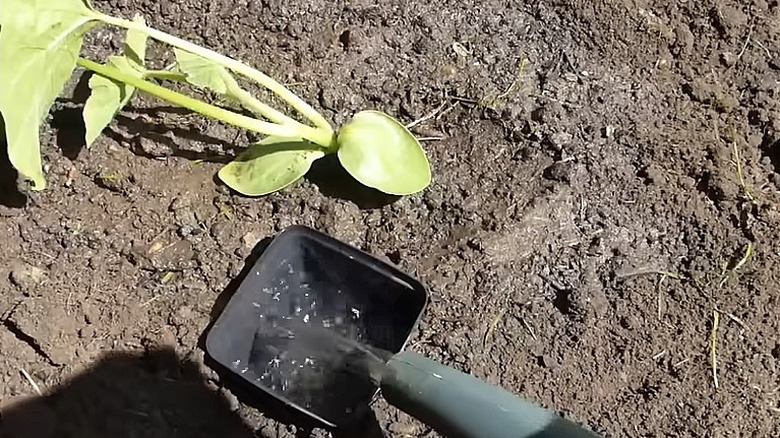
This idea works similarly to ollas, terra cotta or other low-fired earthenware vessels that are buried in garden beds and filled with water. The water slowly seeps out of the porous walls of the clay jars. The practice dates back thousands of years, hailing from dry climates in North America, China, and the Middle East. Ollas are still made today and sell for about $6 for small vessels to over $100 for large, high-quality pots. Instead, use an old plastic nursery pot you already have to make a DIY olla as a garden watering system for thriving trees and plants. You'll save your money for other garden needs and be repurposing something that might have otherwise ended up in a landfill.
To set up a nursery pot water reservoir, dig a hole next to a newly planted seedling — or even an established plant — that's large enough to snugly accommodate the pot. Place the pot in the hole; the rim should be level with the soil surface. Fill it with water from your garden hose or a watering can, and sit back and watch the water soak the soil. If the water drains out too quickly, fill the pot with some river pebbles, gravel, or coarse sand to slow it down. You can get a five-pound bag of Looiooj ⅕ Inch Natural Gravel for about $16. Alternatively, you could place a small piece of permeable landscape fabric or even a coffee filter in the base of the pot. You also might want to fashion a cover for the pot to reduce evaporation (and potentially use less water because of it) and deter mosquitoes. This could be a planter saucer, a broken tile, or a saucepan lid.