

What's The Average Lifespan Of Wood Kitchen Cabinets?
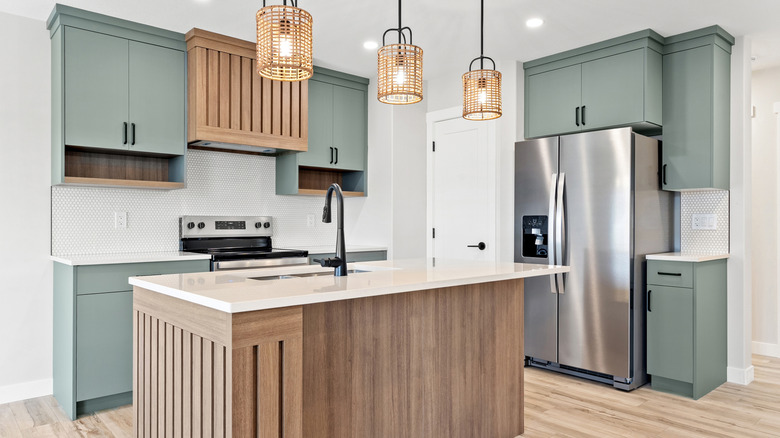
Updating your kitchen cabinets is one of the most impactful investments a homeowner can make. This project can change the visual aesthetic of your home and drastically improve your kitchen's storage functionality. One consideration of choosing wood cabinets over other options is their durability and lifespan.
The lifespan of wood cabinets averages between 15 and 30 years, depending on factors such as wood type, but some can last up to 50 years or more with proper protection and maintenance. Solid hardwood options such as oak, maple, or cherry offer the absolute peak of longevity. These are considered some of the best wood options for your kitchen cabinets, since they're durable and can be sanded down, restained, or repainted multiple times over their lifespan. These typically last closer to the 50-year mark.
Plywood cabinet boxes are made of layered wood veneers glued together. Plywood is durable, holds screws well, and is more resistant to moisture-warping than solid wood, making it a standard choice for cabinets. However, because it features exposed raw edges, it must be properly sealed with edge-banding or a solid wood face frame to prevent moisture from seeping between the layers and causing delamination over time. These can last 20 to 30 years if taken care of properly.
Perhaps the exact opposite end of the durability spectrum, however, is particleboard cabinets. These are considered the budget-friendly option, made from compressed wood pieces and resin. While a real-wood veneer on the outside makes them look expensive, the inner structure is prone to sagging under heavy weight and degrading quickly in high-humidity kitchens. Due to their vulnerability to moisture, you can expect 10 to 15 years out of these before needing to replace them.
How to get the most out of your wood cabinets
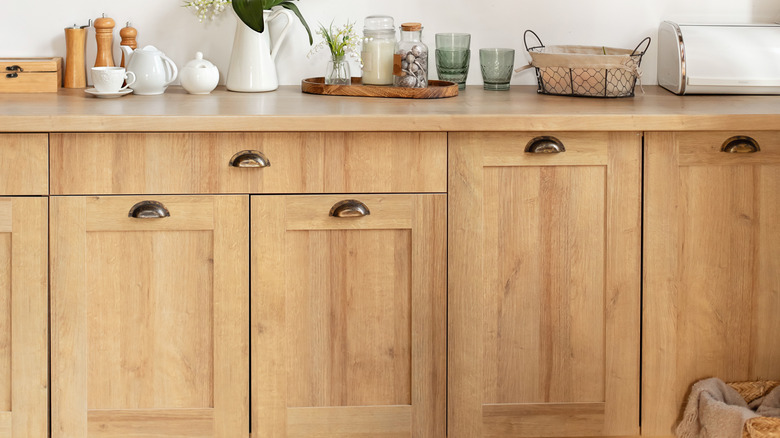
Getting the most out of your wood cabinets is all about controlling the environment and reducing wear and tear. Repeated exposure to heat and moisture will soften the protective topcoat, leading to peeling, warping, and discoloration. To mitigate this damage, always run your range hood vent while cooking, not just after you've burned something. If you use a countertop appliance that vents steam vertically — like a crockpot or electric kettle — pull it out from under the upper cabinets before turning it on.
Every time a cabinet door or drawer is slammed shut, a micro-vibration travels through the frame. While this doesn't destroy the cabinets overnight, it does add wear and tear. Soft-close hinges and drawer slides act as a shock absorber for your kitchen. If a full hardware upgrade isn't in the budget, adding silicone bumper pads to the inside corners of the doors will help absorb the impact and protect the wood frame.
Proper cleaning can also extend the life of your cabinets. Many homeowners accidentally ruin them by cleaning with the wrong chemicals. Products containing bleach or harsh abrasive powders can strip away the protective sealant. Spraying water or cleaner directly onto the wood can allow liquid to pool in the crevices of the door panels. Instead, use a highly wrung-out microfiber cloth dampened with warm water and a drop of gentle dish soap (like Dawn) or a cleaner that is safe to use on wood cabinets. Wipe with the grain of the wood, and immediately follow with a dry microfiber cloth to buff away any leftover moisture.
Signs that your wood kitchen cabinets need to be replaced
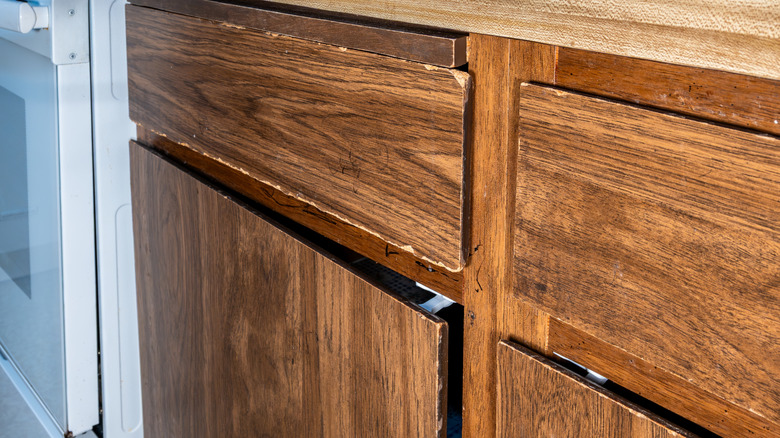
Depending on the age of your house, your kitchen cabinets may already be living on borrowed time. There are some unmistakable signs that your wood cabinets are nearing the end of their functional lifespan. Cosmetic issues like surface scratches or chipped paint can be fixed, but structural integrity cannot. If the actual cabinet boxes — the interior walls, backing, or floor shelves — are soft to the touch or bowing, the wood is compromised. This is usually the result of long-term water exposure that has weakened the wood fibers from the inside out.
While a minor alignment issue can often be corrected by adjusting the hinge screws, true wood warping cannot. If a cabinet door or the face frame itself has twisted, bowed, or cupped due to extreme fluctuations in kitchen humidity or heat, the doors will no longer close flush against the box. This creates unsightly gaps and leaves your cabinet contents exposed to dust and pests. While this might not seem like an immediate issue, warped frames can accelerate wear on remaining hardware and compromise the seal of your entire storage setup.
Cabinet doors, especially made from heavy wood, exert a constant gravitational pull on their hinges. Over decades of opening and closing, the screws can slowly strip the surrounding wood and loosen from its housing. If you try to tighten the hardware and the screws just spin endlessly, or if the wood surrounding the hinge has cracked and crumbled away, the cabinet frames may no longer safely support the weight of the doors. Fortunately, we have some top tips for replacing your kitchen cabinets on a budget.