

Not In-Ground, Not Heated: The One Type Of Pool That May Boost Your Home Value

While personal preferences and lifestyle choices reign supreme when undertaking interior or exterior upgrades, it isn't uncommon to factor their overall impact on your property's value. If anything, it's especially vital if you hope to or are preparing to sell your house in the near future. However, not every upgrade or addition has a clear black or red effect on your house's market value. A few upgrades, such as pool additions, fall in the gray area, and can swerve to either side based on your home's location, pool size, market type, and upkeep.
To put this into perspective, Zillow summarized its 2026 findings based on the latest home listings and noted that saltwater pools hold the potential to raise a property's sale price by an additional 2%. It arrived at this conclusion when pitting them against chlorine pools, while holding steadfast to the established position that adding in-ground pools entails a financial risk. Compared to 2025's trends, where Zillow found that homes with saltwater pools commanded an additional 1.5%, invited greater buyer interest, and as a result sold quicker, the latest findings show a continued, albeit small, uptick. And while homeowner might be excited to bring a slice of seawater to their backyard, there are a few caveats to a saltwater pool boosting your home's value.
If a pool is a must for your home, make sure it's saltwater
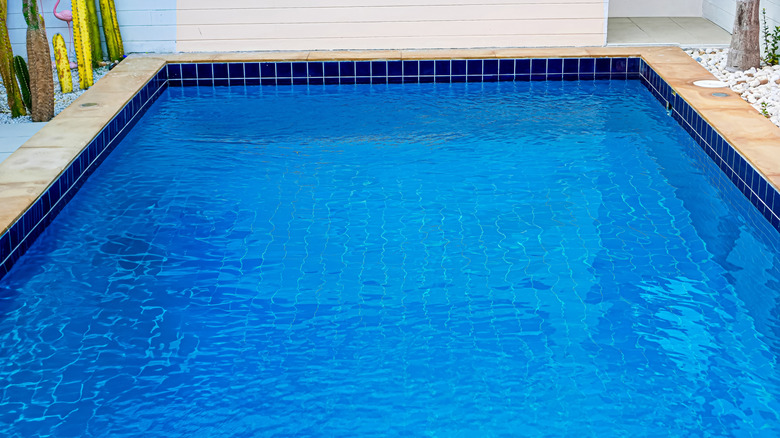
Anyone who has swam in a chlorine pool has, at some point, complained about the irksome smell, the water irritating their eyes or drying out their skin, and discoloring their swimwear. Saltwater swimming pools, in contrast, eliminate many of these problems, which perhaps explains why they're garnering greater attention and interest from buyers.
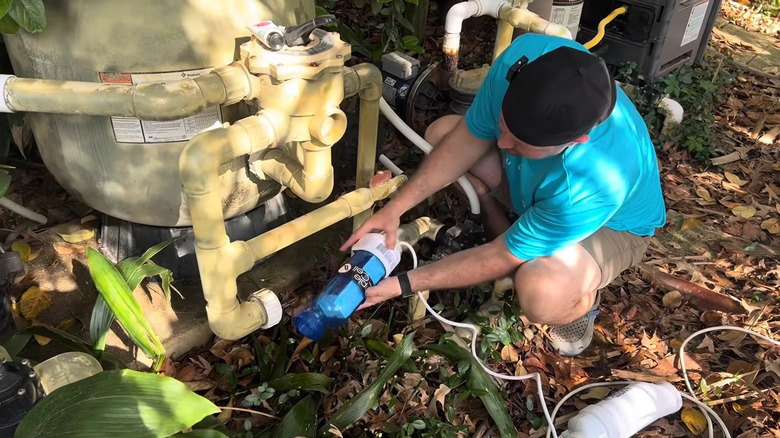
Saltwater pools come fitted with a salt cell, which converts salt into chlorine. So, while they still contain chlorine, which is necessary to keep algae and microbes at bay, it's present in a lower concentration. As a result, there are fewer chloramines — entities responsible for the itchy and red eyes — greatly enhancing the swim experience. Another reason homeowners may be favoring saltwater pools over other options is the relatively lower upkeep. Since you have the option to track salt levels on an app, you don't have to go around using kits to test the water's chemistry: a never-ending chore with chlorine pools and an absolute nightmare after a party. Better yet, salts are fairly inexpensive as compared to chlorine tabs.
Despite these pros, there are hidden downsides you should consider before getting a saltwater pool. For starters, the initial investment can be hefty enough to dissuade most owners. While size, materials, and labor all play a role, homeowners generally spend around $12,000 to $38,500 on their installation (the cost can fall to $500 if you just want to convert your chlorine pool to a saltwater one). This range doesn't include other outdoor features like landscaping or a deck — a cost you may not fully recover. Besides, salt can corrode the surrounding materials or harm plants if they lack resistance.
Why is the upside of saltwater pools not as clear-cut?
While saltwater pools have a distinct advantage over regular pools, we can't discount the role other factors play when determining their upside. In the recent past, homes that contained pools and were listed at a higher price were heavily concentrated in the South, Midwest, and West. This might be because homeowners can use their pools for most of the year, unlike those in northern states where usability rarely lasts beyond two months, unless it's indoors or heated. So, if your climate isn't conducive to year-round usage, there isn't going to be much upshot in your home's value, making them an expensive upgrade.
Moreover, while you could expect that amazing swimming pool designs in an upscale neighborhood invite more value, thanks to the prestige and entertainment points, it may not always play out that way. The reason? Buyers start treating swimming pools as a necessity rather than a luxury feature. "If 99% of homes have a pool, then having a pool is just inherent in the value; but if you're the one who doesn't have the pool, then it's a penalty," the President and CEO of Miller Samuel, Jonathan Miller, told Realtor.
Besides, maintenance matters more than you think. So, although saltwater pools are low maintenance, they're not "no-maintenance." And you'll have to ensure the walls don't get fragmented or rusted over time. You'll also have to make sure that the salt cells (it's responsible for chlorine generation) function properly and are replaced every few years. In short, if the pool is old or in serious need of descaling and repairs, its supposed marketability will drop dramatically.