

6 Flooring Trends That Are Out In 2026 (& 7 To Consider Instead)
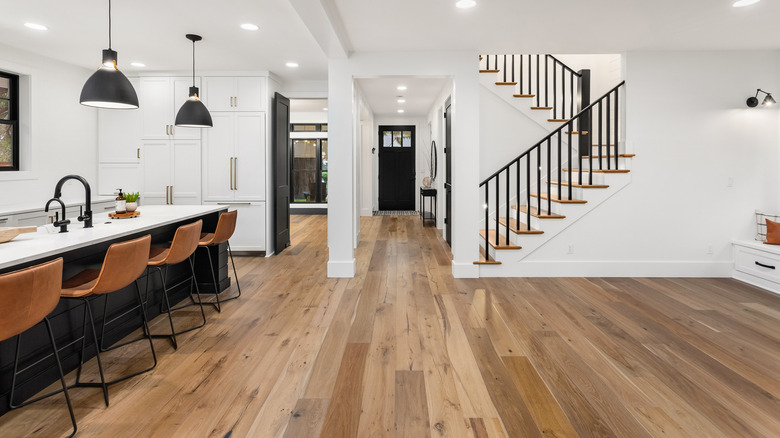
In the world of interior design, there are certain flooring ideas that have, let's face it, been trodden to death. Yes, neutral colors will almost always provide a versatile base with which to get creative with color elsewhere. But if the floor itself does little to excite you, then really, what's the point? Now, we're not saying that you should hop immediately aboard the bandwagon and copy that magazine you read while waiting for your last dental appointment. In fact, as you'll see below, if it was trendy last year, it may well have fallen out of favor.
In exclusive interviews with interior-minded professionals, we've managed to find six recently-popular trends that are now well and truly "out." Some, while they look spectacular in the showroom, are proving far from practical once they make their way into actual households. Others are starting to stifle designers' and homemakers' needs for excitement and self-expression. And while many still hold that bold flooring options can lend a modern touch to homes, it seems that less is becoming increasingly more.
It's not all bad, though. To keep the designer in you inspired, our experts have graciously offered no fewer than seven new options to consider instead. Whether you're shooting for some moody mystery, a little colorful cheer, or something that sits tantalizingly between the two, this expert-led guide is sure to steer you in the right interior direction.
Out: Cement and encaustic tile
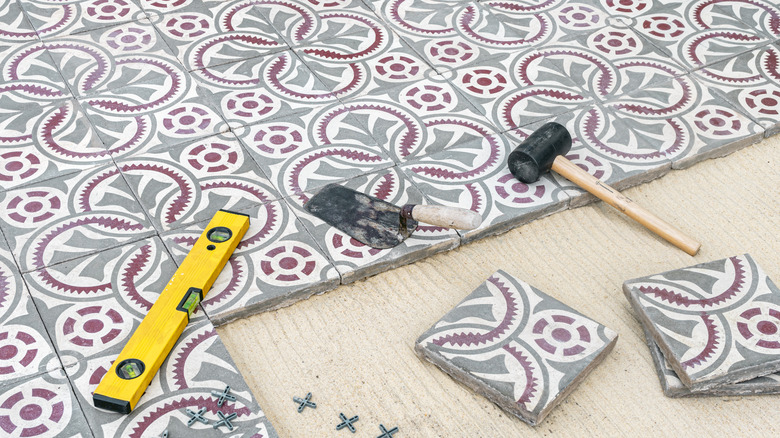
If you've been umming and ahhing over this floor style and asking yourself whether encaustic tile is going out of style, then it's important to understand why it might. Encaustic cement tiles are typically made from materials like marble dust, cement, sand, and natural pigments. These are applied to a stencil, which results in the Pinterest-worthy patterns that make them so popular. However, their material make-up is also kind of the problem. In an exclusive catch-up with House Digest, Lauren Lerner, founder and principal designer of Living with Lolo, says that the upkeep just isn't worth the outlay. "Cement tile is one of those materials that looks beautiful in theory," she explains. Unfortunately, she adds, it tends to underperform once installed.
So, what does this mean? Well, because it's naturally porous, cement and encaustic tile flooring stains very easily, since those thirsty pores tend to absorb anything that's spilled on them. What's more, says Lerner, water marks are almost unavoidable, to a point where the flooring gets hard to manage — especially in kitchens and bathrooms. This means that if you do decide to install encaustic tiles, then you'll need to keep them sealed. This isn't a one-time fix, either. "The sealing requirements are ongoing," says Lerner, "and most homeowners are not prepared for that reality when they choose it."
Out: Polished concrete floors
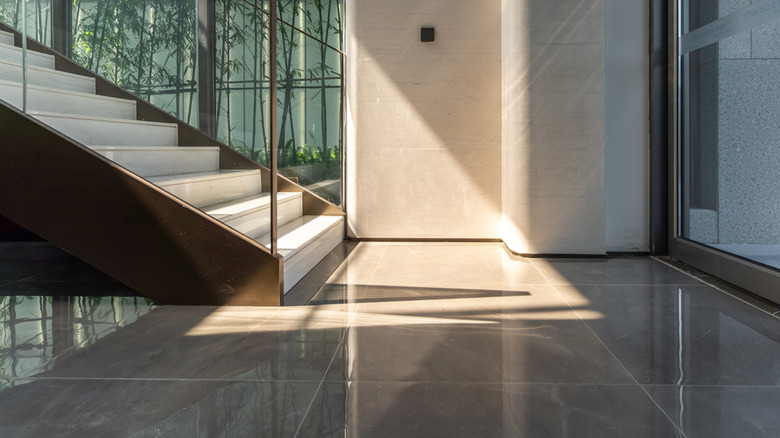
Another popular flooring trend in recent times is the use of polished concrete. It brings a minimalist, sleek, and highly contemporary aesthetic to households. It's also available in an array of colors, making it both beautiful and versatile. It's very similar to regular concrete, but it's buffed with diamond polishing tools, which is what gives it its characteristic shine. The issue that designers are starting to take with it is that, while it looks great in the showroom, it's as prone to surface blemishes as encaustic flooring.
As Lauren Lerner explains, "In real homes, especially in a climate like Scottsdale's where temperature swings are extreme and spills are constant, they show every watermark, scratch, and footprint." In other words, polished floors may not be the best choice for busy family households. You'll need to know how to keep your polished concrete floors clean and shiny, which may require much more work that you first expected. Even in quieter homesteads, says Lerner, the reality of maintenance for these floors just doesn't live up to the aesthetic you were first promised. In fact, she explains, "Clients who have lived with them almost universally regret it."
Out: Cool gray tile or wood
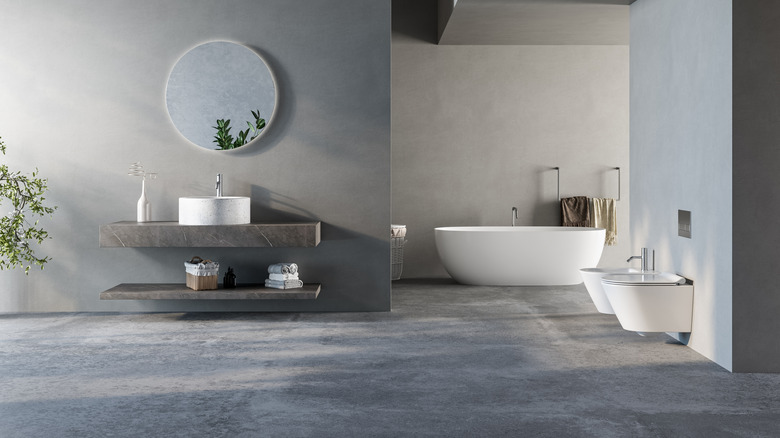
If there's one kitchen color that's sapping the life from your kitchen, it's cool gray. It's been popular for the best part of a decade, for giving modern homemakers a neutral backdrop on which to layer the rest of their interiors. Unfortunately, says Lauren Lerner, this trend is now visibly aging. The problem isn't that it feels dated. At least, that's not the only problem. The other issue, says Lerner, is that "gray undertones fight against almost every warm finish, fabric, and natural material that is trending right now."
So, what does that mean exactly? Well, let's explore some examples. In more recent years, warm, earthy hues have taken center stage, reflecting a growing appetite for nature-inspired interiors. These range from decorative tones like cashmere and terracotta, to naturally-textured materials like wood. Against these, gray flooring looks stark and chilly. Pairing them together can turn a space that should feel warm and relaxed into one that leans combative, disjointed, and even stressful.
Out: Large format high-gloss floor tile
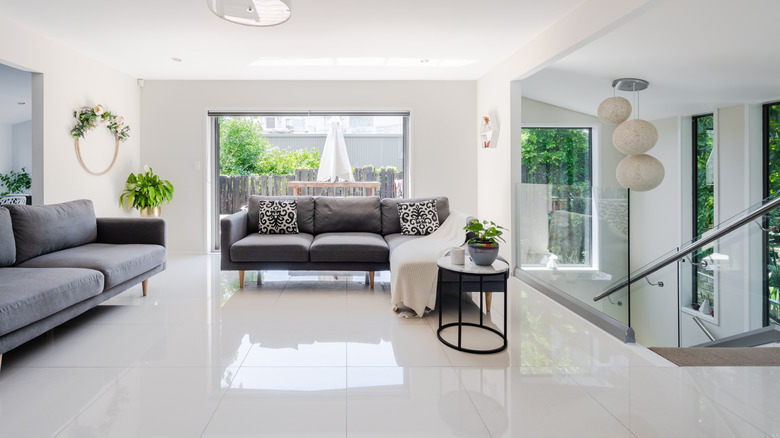
The first thing to say here is that tiles aren't set to disappear altogether. However, there are certain approaches to tiled flooring that are quickly falling out of favor. According to Lauren Lerner, large-format, high-gloss, porcelain floor tiles have almost certainly outstayed their welcome. To explain why, we'll first explain what they are, and the traits that make them so popular.
High-gloss tiles are manufactured with a light-reflective, highly-polished surface. You can add them to the wall, in fact this remains one of the top tile trends for 2026. When used in the right place, their highly-reflective finishes can lend a space a luxurious and polished appearance. And since they come in various colors, they can be matched to an array of different design schemes.
What's the problem, then? The issue that Lerner takes with them is that, when used as flooring, especially in large-format applications, they become tough to maintain. As she says, "Gloss shows every scuff, every water spot, every dog paw." In other words, that "glossy" finish that was so alluring in the showroom can eventually wear off, especially in high-footfall spaces. And when it does, the porcelain beneath becomes even more prone to damage.
Out: Low-quality builder-grade luxury vinyl plank (LVP)
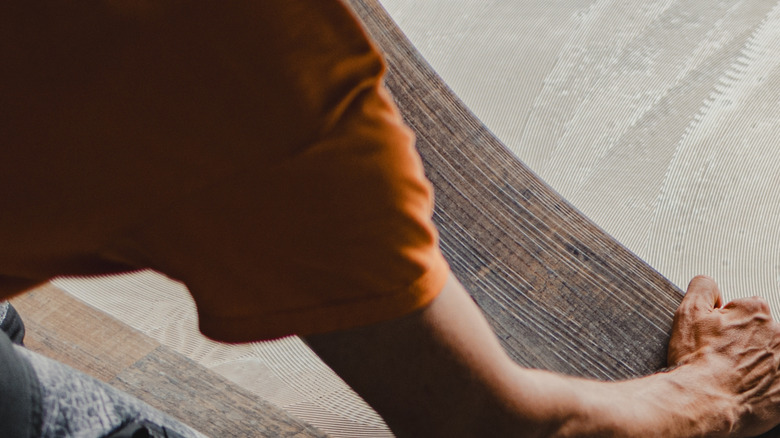
Choosing the best tiles for the floors in your kitchen and wider home is easier said than done. Firstly, you need to decide which type is most likely to stand up to the demand your household will put on it. You then need to find a style that matches your wider design, before trying to match your findings to a "type" that works with your budget. For more spend-savvy homemakers, luxury vinyl plank (LVP) is an obvious choice. It's hardy against wear and tear, compatible with modern technology like underfloor heating, and can typically be bought for considerably less than real wood and stone. However, as with most material types, not all LVP is created equal.
In an exclusive interview with House Digest, Craig Gritzen, founder and principal designer at Curated Style Collective, says that look, feel, and performance are more important than ever to discerning homeowners. Unfortunately, he explains, "Lower-quality versions of LVP can feel plasticky underfoot," and that they can make a space feel more "builder-grade" and less elevated. "I think LVP still has a place," he adds reassuringly, "especially for spaces that need durability or budget-conscious projects." But he stresses the importance of looking for higher-quality products. The best types of LVP, says Gritzen, have richer textures, warmer tones, and an overall more realistic look and feel. These, he elaborates, can bring the same elevated vibe as real wood or stone, but without the associated price tag.
Out: Overly bold patterns in floor tiles
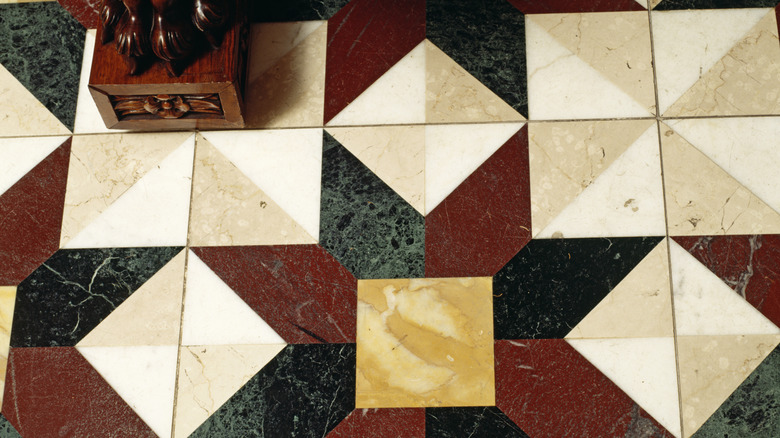
While patterned tile remains one of the most popular flooring trends for 2026, it's becoming increasingly easy to overdo it. As Craig Glitzen says, "I think the full-room, bold-patterned flooring trend is losing momentum." He admits that spaces with wall-to-wall patterned flooring are visually interesting, especially when viewed online. However, when you live with them everyday, they can quickly become extremely tiring to look at.
This is an important point to bear in mind. When you're designing a new space, it's easy to get carried away with color. What's more, in the showroom, where there's acres of space around you, it's hard to gauge how certain patterns will work in your space. This means that you may not notice how overpowering those patterns are until it's too late. For this reason, says Gritzen, "I'm seeing homeowners who are choosing tile reach for more timeless options with handmade texture and quieter patterns." These, he explains, still lend bags of character to the living space. Crucially, he adds, they create a better balance, making a design feel more cohesive and comfortable.
In: Stone inlay and mixed material flooring
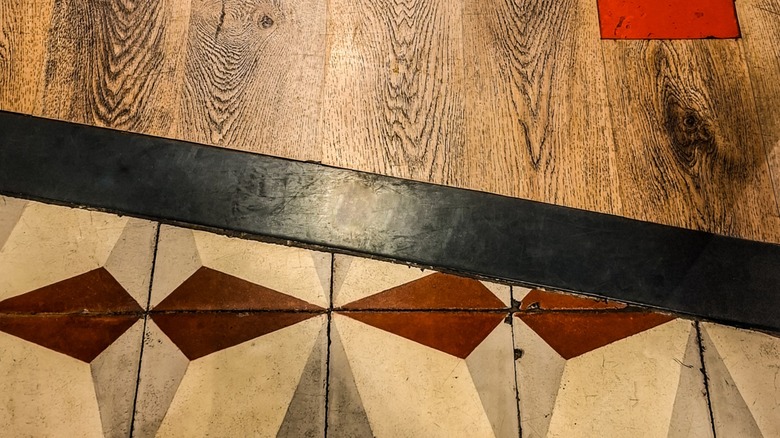
For those who've been left flabbergasted by the flooring styles that are on the way out, don't worry. As we'll see over the coming sections, there are also some exciting, emergent trends that are sure to delight your inner designer. For example, Cara Woodhouse, founder and principal designer of Cara Woodhouse Interiors, has seen a rise in expressive stone inlay and mixed material flooring. This makes sense, especially given the eclectic flooring trend that gained momentum in 2025.
It's a result, says Woodhouse, of homeowners' desire to become more adventurous with custom floor detailing, and she says it can come in various forms. These include combining different stones, introducing subtle inlays, or specifying oversized, architectural-style geometric layouts. As she puts it, "Flooring is no longer being treated as just a background element. It's becoming a focal point that adds personality and artistry to a space."
In: Darker, moodier wood tones
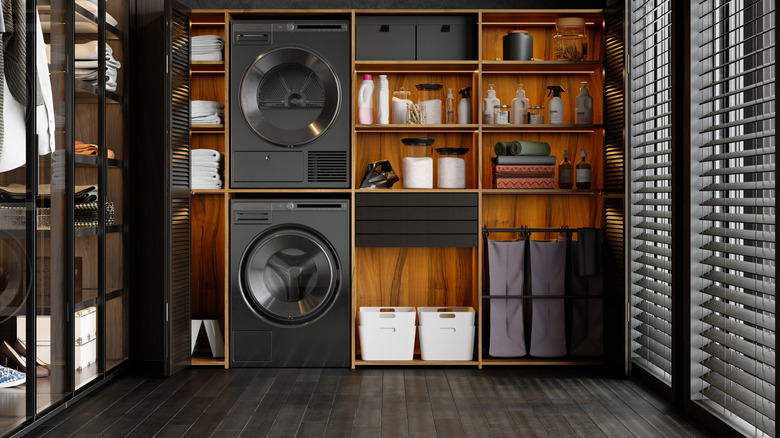
If there's one wood finish that's likely to appear everywhere in 2026, it's dark wood. A recent resurgence of popularity for natural tones and textures makes wood an obvious choice. And with more homeowners looking to imbue their spaces with warmth, it seems that, for now at least, dark-toned hardwood floors are here to stay. In fact, says Cara Woodhouse, homeowners are increasingly on the hunt for moodier flooring palettes. "After years of lighter oak dominating interiors, there's a shift toward richer walnut tones, smoked finishes, espresso stains, and deeper, more dramatic wood colors." These, she explains, can help to ground a space while infusing it with warmth.
Of course, dark wood flooring may not suit every space. But if you're shooting for a contemporary, minimalist design, then Woodhouse says that dark wood is an excellent choice. Its natural grain and texture can help to layer your space without excessive ornamentation. Darker tones also bring an increased feeling of warmth, and there's a sense of sophistication with moodier tones that you simply don't get with lighter wood.
In: Unusual plank layouts in hardwood flooring
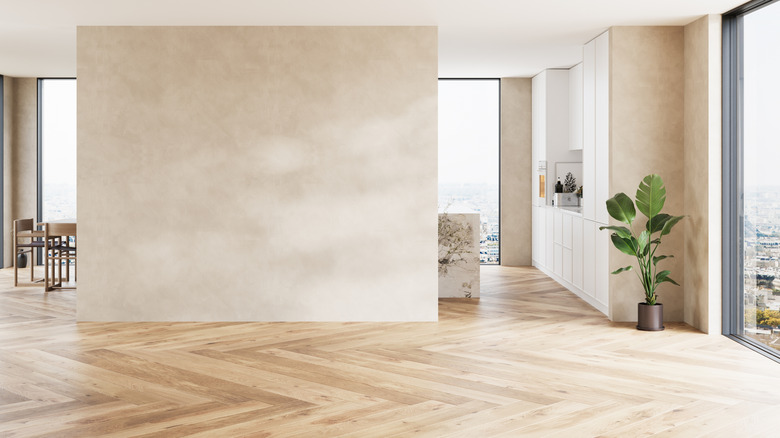
As timeless flooring ideas go, wood is up there with the most unshakably stylish. However, whereas traditional approaches tend to stick to the clean, straight lines of uniform-sized planks, Cara Woodhouse is seeing an uptick in unexpected patterned wood layouts. In her own words, "Rather than traditional straight plank installations, homeowners are embracing more customized approaches."
As for the specific styles, there are several popular wood floor patterns that are beginning to emerge. Oversized parquet and mixed plank widths, for example, are great for adding even more "layers" to the existing texture of the wood. In larger spaces, Woodhouse explains that intricate herringbone and diagonal layouts can also work wonders. "These installations bring movement and texture into a home," she says, "while still feeling timeless and elevated."
In: Tonal layering instead of high-contrast flooring
Seeking the advice of interior experts is key for a number of reasons. Firstly, they understand how to match design features to the architectural character of your home. They also tend to have their fingers on the pulse when it comes to what is, and isn't, "in vogue." As an example, we spoke exclusively with Kerrie Kelly, CEO and creative director of Kerrie Kelly Studio, and 2026 Board Chair of the National Kitchens and Bathrooms Association (NKBA). Perhaps unsurprisingly, Kelly has a solid grasp on what is and isn't currently trending in the world of interior design. She also attended the 2026 Milan Design Week, gaining an early look at the year's most exciting and emergent trends.
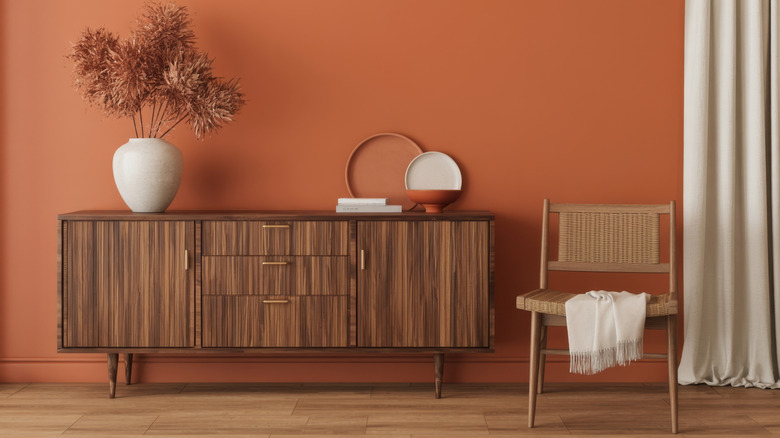
As she tells us, "One of the strongest shifts I'm seeing — reinforced at Milan Design Week — is a move toward tonal flooring palettes rather than high-contrast moments." Think soft taupes, warm oaks, and honed stones. By specifying flooring that exists within a similar color range, says Kelly, you can create a space that feels at once calm, cohesive, and enduring. And with warmer, more natural tones, it's much easier to achieve harmony between your design choices and the personality of your home. In her own words, "It creates a foundation that supports the architecture rather than competing with it."
In: Authentic materials that have character and texture
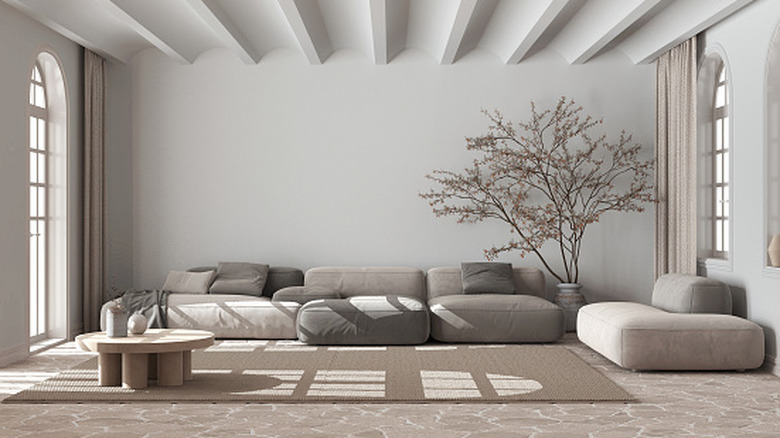
As well as refining the palette of your flooring, it's just as important to think about the materials. Specifically, says Kerrie Kelly, it's important to consider those that bring the most inherent character. Right now, she explains, homemakers are favoring authenticity in their flooring. That could mean wood with natural grain or the subtle movement of limestone. The key, she says, is materiality, as opposed to pattern.
Again, she explains, "This aligns with what we saw in Milan — spaces grounded in nature, where texture and authenticity do the storytelling." For some, this might sound a little nebulous. However, storytelling is an essential part of interior design. It's one of the things that separate decorators from interior designers. It's the understanding that design is about more than just color and texture. It's knowing how those choices will resonate with you emotionally. It's about how they'll reflect your personality, what they'll remind you of when you step inside a room, and how each different space connects to the next. And while there are many elements that go into interior storytelling, flooring is central to all of them.
In: Matte and honed finishes
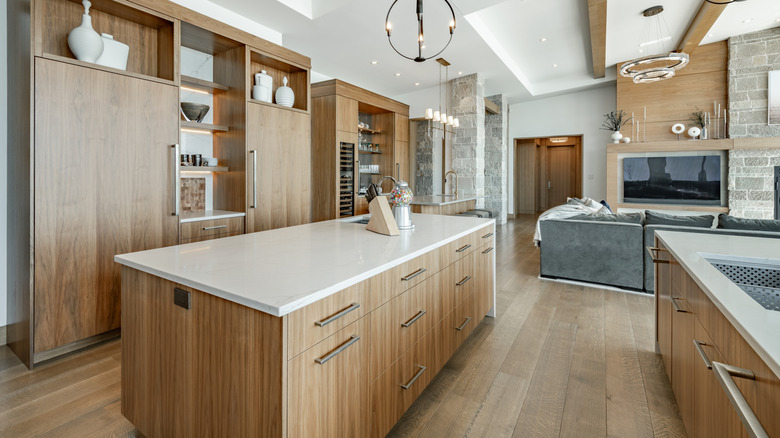
If you need your flooring to instill some visual calm in your kitchen and living spaces, then matte finishes might be the way to go. As we've learned, keenly polished and high-gloss surfaces, while pretty in the showroom, come with high amounts of maintenance to keep them looking ship-shape. And if you're among the many looking to infuse your home with warmth and natural texture, then glossy surfaces may simply feel out of place.
Matte finishes, says Kerrie Kelly, not only soften the visual impact of a room, but they also perform very well in homes that are designed to be lived in. If you have a busy household, and precious little time in which to enjoy it, then this is important. Since matte finishes hide scratches and imperfections better than glossy floors, they're usually much easier to maintain. More than that, says Kelly, "They diffuse light rather than deflect it, contributing to a more relaxed and elevated environment."
In: Continuous flooring across spaces
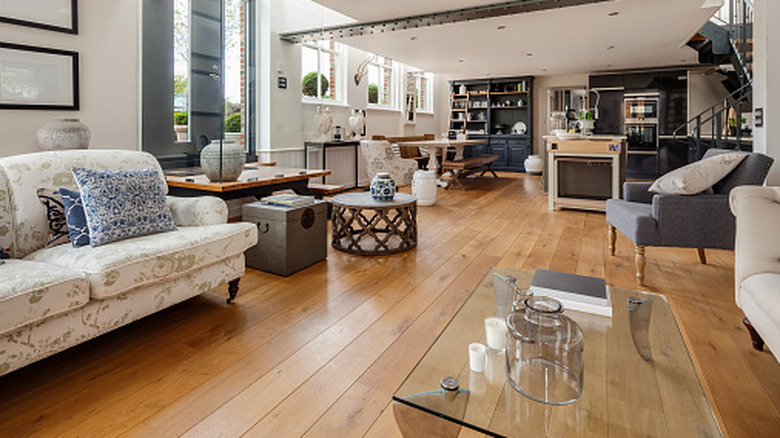
In alignment with other trends, like removing visual "stressors," such as overdone colors and anxious patterns, continuous flooring is gaining serious momentum in the world of design. As Kerry Kelly explains, "We're continuing to see flooring extend seamlessly from room to room. This continuity enhances flow and makes spaces feel larger and more intentional." As for where it's most impactful, Kelly shares that it's especially effective in open-plan spaces. There, she says, continuous flooring can become the "unifying" element that ties your different zones together.
The same theory applies to homes with both indoor and outdoor living spaces. By running the same floor throughout, or by "softening" the contrast between the two, it's possible to deepen your interior's connection to the outdoors. But how do you do it? Well, there are several ways. If you're running a floor outside into an uncovered area, then weather-resistant stone could be a sensible choice. Alternatively, if you've adopted dark-toned interior wood flooring, you could achieve continuity staining your deckboards to match the flooring inside your home.