

Driveway Trends That Are Taking Over 2026 (So Far)
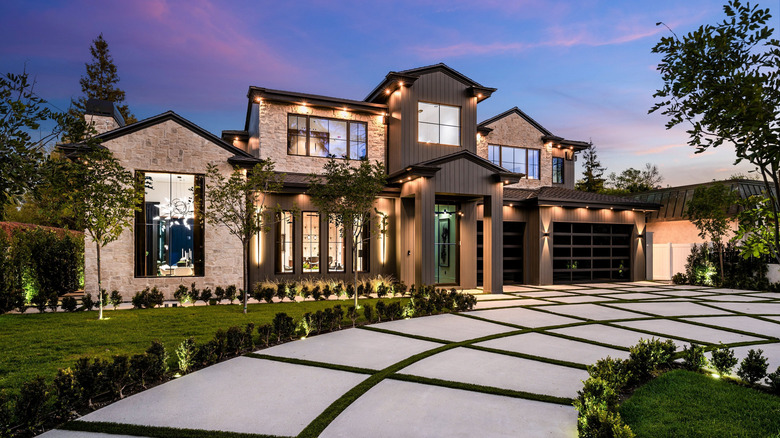
Balance is key when you're planning a driveway for your home. While you need a paving material that stands up to cars pulling in and out over time, heavy rain, and major weather events, pleasing visuals that complement the landscape are also important. Fortunately, following the trends doesn't mean you have to sacrifice form for function, especially as the focus broadens past the driveway itself and toward creating a coherent vibe that encompasses the home's entrance area as well. Sustainability, natural aesthetics, and easy-to-maintain systems are taking over the world of driveway design in 2026.
Several factors should be considered if you're planning to put in a driveway or update your outdoor landscape to reflect this year's trends. The weight and size of vehicles entering and exiting is one important element. If you drive an SUV or your family has multiple cars, it makes sense to consider grids that hold gravel in place for durability over time. Also, build in the time in your schedule and budget to properly lay a base and treat the driveway material once it's in place. Permeable paving systems call for excavation and the building of a foundation with drainage and gravel underneath them, for example, and natural stone laid as pavement should be sealed so it will last for years to come.
Natural stone
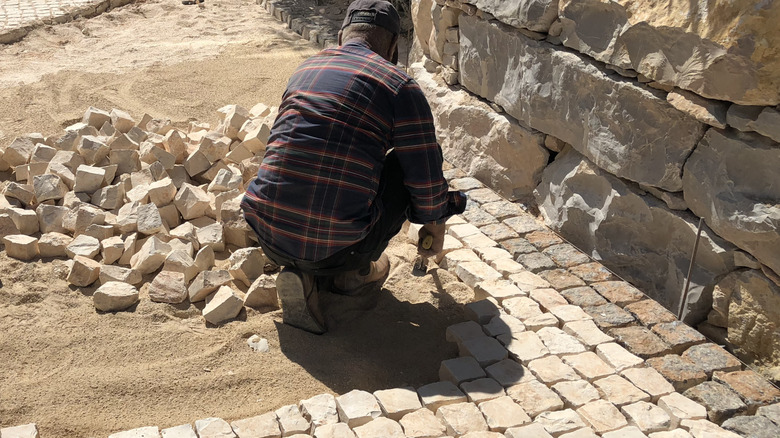
As many homeowners say goodbye to concrete, one 2026 driveway trend is about embracing the textures and hues of stone found in nature. While it's a natural match for homes that feature stonework and other organic elements, this trend cuts across many different home styles. "Although I have found numerous options that not only enhance the overall aesthetic appeal of a front yard but also ensure low maintenance, there is one material that always stands out as an excellent choice and that's natural stone," Ryan Vaughn, who co-owns San Diego Stamped Concrete & Staining, told Homes & Gardens. "Its timeless beauty adds elegance to any front yard design while requiring minimal upkeep." Along with the texture of stone, warmer shades like sand and dark brown are rising in popularity for use in outdoor hardscaping, including driveways.
If you're diving into the trend, choose from options like warm-toned Dijon limestone, larger slabs of bluestone, or a mix of gravel that varies in size and color. These materials are also known to endure over time, which may be another reason industry professionals have seen more homeowners choose pavers over concrete this year. Pavers made from granite, for example, can last more than 30 years, topping the durability of asphalt. One reason for the longevity is that natural stone resists cracking as temperatures change throughout the seasons. If you want to up the eco-friendliness factor, consider using stone from nearby quarries or repurposing stone from other projects.
Permeable surfaces
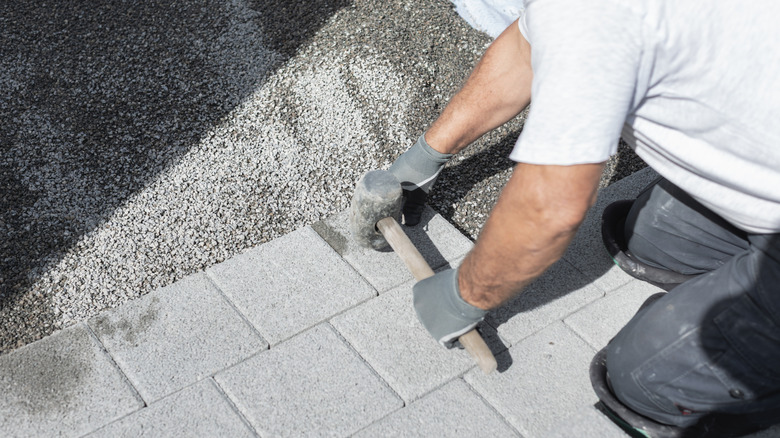
With yard maintenance and repair costs on the upswing, more homeowners are choosing permeable driveways to prevent stormwater from pooling on your property or into nearby streets. These types of driveways direct stormwater into the ground or channel it toward water treatment systems. These driveway systems work by allowing the water to move through the surface, pass beyond a bottom layer, and flow into the dirt below rather than creating a swamp on the lawn.
Permeable paving can be made from textured brick or clay pavers with open space between them, or resin, concrete, or asphalt that's specially made to be porous. These trending driveway materials can look upscale, with interlocking designs that sometimes frame grass. If you're interested in trying permeable paving, you're far from alone: the market for permeable concrete pavers is projected to reach $7.92 billion in 2026.
Driveway paver installation that maximizes permeability can be a big project, since it involves putting in drainage covered in an aggregate material like small crushed stones before the pavers are installed. It can also be significantly more costly than paving your driveway with standard materials that don't absorb water. However, having permeable paving in place may save you from having to invest in other stormwater management work, especially in tight quarters where there aren't many other places for the water to flow when it rains.
Driveway borders
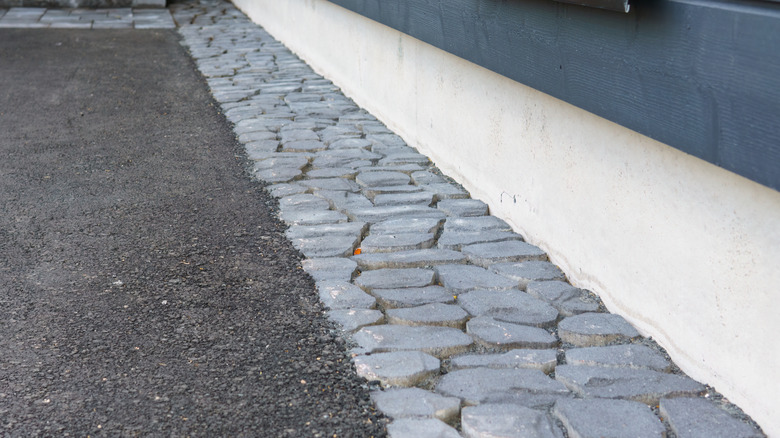
Whether it's to hold gravel in place or bring personality to a basic asphalt slab, more people are adding borders to their driveway in 2026. Installing some attractive borders as part of a refinishing project is kinder to your budget than revamping your entire driveway, but it still refreshes the look. Plus, this simple change can increase your home's curb appeal.
Consider the climate around your home as well as its style to choose the best border material. Concrete, brick, and natural stones (like durable Belgian blocks made from granite) are some favorites, but you can also use cobblestone for rustic charm or an aluminum edge for modern flair. Although aluminum tends to be pricier than stone, it also has a longer lifespan and requires less maintenance over time.
Going the DIY route can help cut costs on your driveway edging installation. First, you'll need to measure the area, ensure you have enough material, and dig a trench along the length of the driveway. One doable project involves laying rocks over a gravel base in between metal or plastic borders for an edging idea that adds interest to your yard. Another, recommended by Scott Flores, the CEO of California-based Empire Parking Lot Services, involves using an affordable concrete with exposed stones. "Add a 12-inch border of exposed aggregate, or brushed concrete, which ranges anywhere from $10 to $15 per square foot," Flores instructed in a Martha Stewart interview. "The finished look is ultra clean and modern, and it comes at a fraction of the cost of installing pavers."
Getting creative with block paving
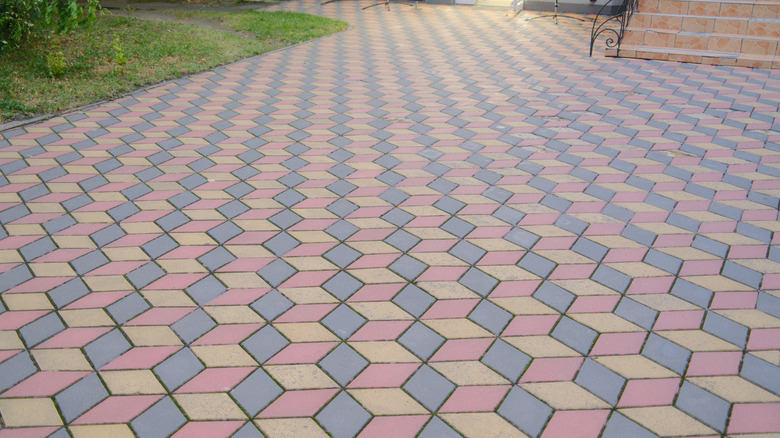
Block pavers have been in favor for driveways before 2026, but they're now becoming more popular than plain concrete, and there are fresh takes on designing with these stone, brick, or concrete squares. Homeowners are pairing contrasting-colored blocks, such as lighter and darker grays, for instance. Designers are also seeing a turn toward large pavers that measure more than 24 inches, due to their modern look and quicker installation. With many patterns and finishes available, the canvas to work with is vast.
Another trending use of pavers involves creating continuity between the driveway and the home. Matching the color and material of your pavers to your interior flooring can make one's overall space feel bigger. This principle is one that expert Amy Fedele, the Pennsylvania landscape designer who founded Pretty Purple Door, mentioned in a Home & Garden interview. "My best advice for paving ideas in your front yard is to match the paving material to the style of your home and garden," Fedele said.
Block pavers might be here to stay for practical as well as style reasons. If you choose the interlocking type, designed to adhere without mortar, you can maximize the stability of the driveway since they're not as prone to cracking or shifting. Another reason for their appeal is that one or several damaged pavers can be removed and replaced for an easier repair than tearing up slabs of concrete or resurfacing asphalt. There's also the option to install permeable pavers, which helps minimize the runoff from big rainstorms.
Heritage stones and designs
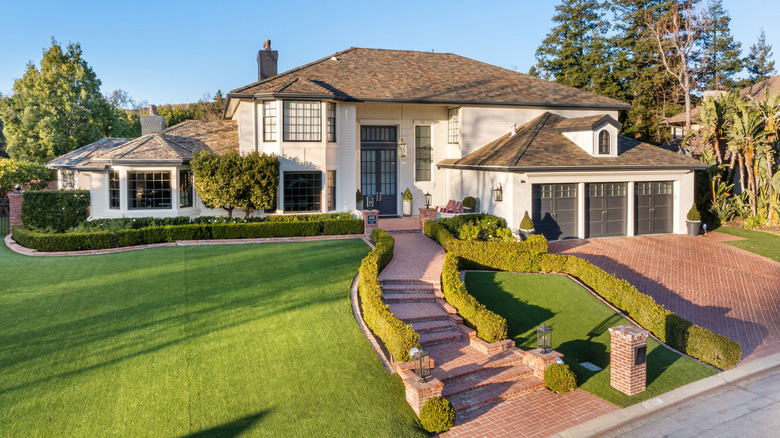
The advent of modern grid and drainage systems is enabling homeowners to use classic driveway materials while still enjoying modern convenience and maintaining environmental responsibility. This can be achieved with pavers that resemble heritage stone shapes and textures or more bespoke options. Limestone pavers can be antiqued so they look like they would be at home on an old English estate, and with a proper base of gravel and sand, even reclaimed cobblestone, prized for their historical resonance, can make up a durable driveway.
The location of your home and the era it was built can help you find a good antique stone to match. Cities in the northeastern United States once had streets paved with weathered cobblestone gathered from riverbeds, some of which are reclaimed and become available for residential use. Another natural option for paving, sandstone, was of the first building materials in the Midwest. Pavers made from reclaimed granite can serve as an accent to those stones or shine as a driveway material on its own.
Just like with older homes, there are some challenges to prepare for when you're using historic stones in your driveway. Cobblestone, for example, can be inaccessible for some people as it is hard to walk across due to its natural texture and variations. Due to this uneven quality, you may also have trouble removing snow from the driveway efficiently. On the upside, the spaces between the rounded stones allow water to flow through to the base layer rather than pooling in the driveway.