

Every Home Had It In The '40s — The Space-Saving Furniture Type That Gives You More Control
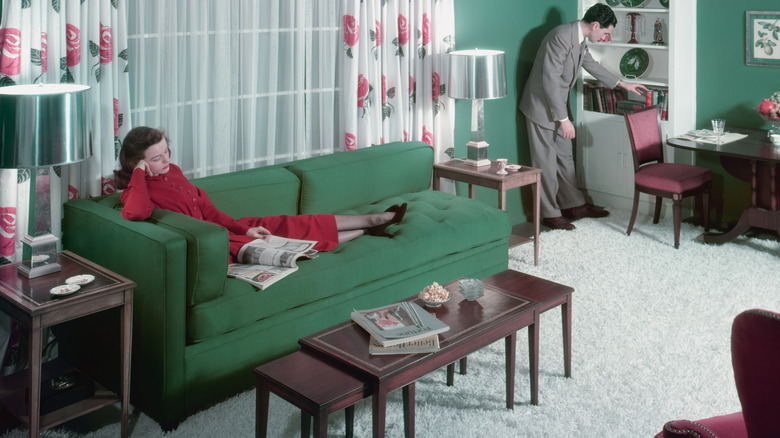
Do you like exploring interior design trends of the past? This isn't just a fun hobby of looking through old photos; it can also give you a window into the forgotten habits and priorities of people in decades gone by. For example, the 1940s were an era of upheaval, restriction, and change due to the ongoing world war and a variety of other current events. As a result, many different industries — including interior design — were forced to rethink both how they operated and what their customers wanted from them.
Thus was introduced: modular furniture. Reportedly first designed by young manufacturer Harvey Probber, this furniture allowed people to buy pieces that worked for multiple different purposes or that fit together in different ways, meaning the furniture could save space and suit a variety of different home situations. This was not only attractive to the customer — who could purchase just what was needed and look to buy more in the future — but it also allowed designers like George Nelson to craft furniture that integrated functionality and aesthetics. For example, with the 1940s came a stronger emphasis on inspiration from the natural world, possibly as a response to the more sharp-edged geometry of the previous decades. Modular furniture, then, was a great way for designers to incorporate more curving edges and ovals while emulating the flexibility of natural environments and departing from the cookie-cutter feel of earlier designs.
But what did this 1940s home design feature actually look like in people's homes, and how did they use it in their daily lives? Let's explore some key elements of retro modular furniture and how it compares to the modern equivalent.
Uses for modular furniture in the 1940s and today
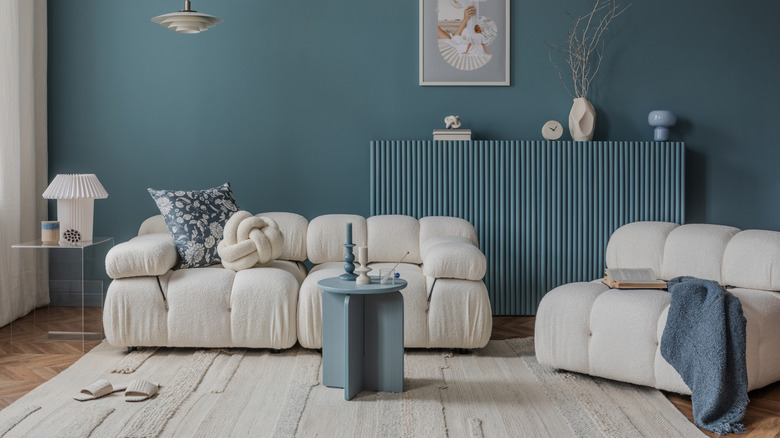
Modular furniture served a lot of different purposes in the 1940s. For instance, it was used in conjunction with the changes in the architectural designs of the time. Wider, more open-plan living was beginning to become more popular, so flexible modular furniture was often used to separate out the different living, eating, and entertaining areas, which were no longer boxed in by walls. In addition, those who couldn't afford a larger home due to the economic uncertainty of the war years were in need of space-saving furniture options. Modular furniture also allowed them to dream, however, because they had the option of collecting more modular furniture piece by piece as time went on and times became less tough.
Today, modular furniture is still in use, though often for different reasons. For example, as an emphasis on sustainability has grown, buyers have become keen on purchasing items that have a longer lifespan and that can be used for a variety of different purposes and situations. Additionally, after the upheaval of the COVID-19 epidemic, there has been a rise in flexible working, leading many to create their own work-from-home spaces. This has meant that more people are on the hunt for pieces that can be used for both working and relaxing or socializing. If this sounds like you, then perhaps the comeback of modern modular furniture is perfect for your outdoor patio or home, where you can work, relax, and entertain guests, all with the same furniture.