

Not Toilet Paper Tubes: The More Natural Bathroom Staple To Add To Your Compost
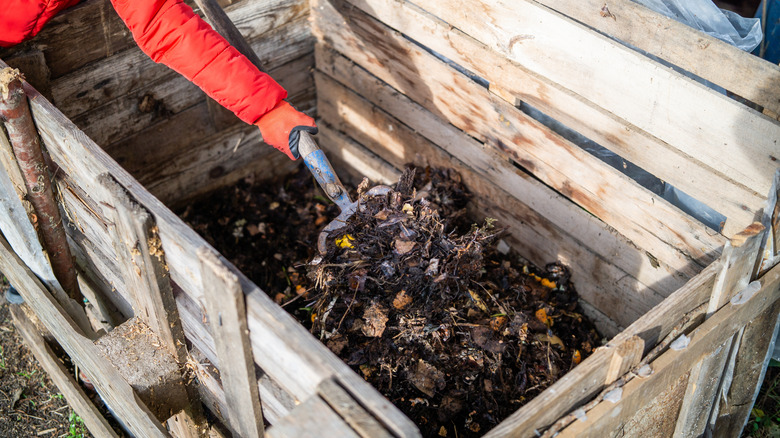
Composting is nature's way of recycling organic waste and returning nutrients to the soil. If you already make your own DIY compost, then you're helping fast-track what mother earth does, and with that creating a more sustainable lifestyle. Therefore, it makes sense to always be on the lookout for more compostable materials for your next pile. But did you know you can add loofah sponge to your compost? The plant-based fibrous scrubber you use in the shower is one of the many unexpected bathroom items you can put in your compost bin, besides the more familiar toilet paper tubes.
It's basically the dried interior of the fruit of the luffa gourd plant. Just like wood chips, leaves, or cardboard like good old toilet paper tubes, 100% natural loofah is rich in cellulose and lignin, and therefore falls into the carbon-rich ("browns") category of compost ingredients. Since it's carbon-rich, loofah helps balance out nitrogen in the "green" materials and create a conducive environment for decomposition to take place. This bathroom staple will also play the other roles of other browns like absorbing excess moisture in the composting pile, facilitating air flow between the layers, and preventing compaction. These actions give your little composting microorganisms the best working conditions to facilitate decomposition and ultimately allow you to reap the benefits of composting.
How to turn natural loofah to garden compost
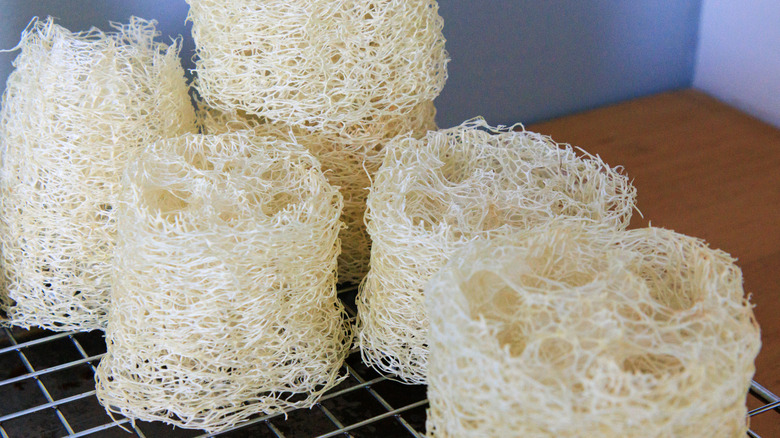
If your loofah scrubbers have gone soft and have a lingering odor despite cleaning and drying, then it's about time you say goodbye and add them to your compost. The actual process will depend on the composting method you've chosen for your garden. But first, ensure you remove any artificial add-ons like plastic hanging loops or sewn-on labels that aren't made of natural material. Other than that, clean the old loofah under warm water to rinse out any soap residue. You don't want any harsh chemicals inhibiting bacterial action while composting.
Next, for the traditional composting bin or pile, cut the loofahs into an inch or two segments to speed up the rate of composting. Then soak the pieces in water and place them in the middle of your pile, where it is most warm and decomposition will happen faster. Then, ensure you're maintaining the proper balance of brown and green materials in your bin — two to three parts brown material to one part green material. Follow all the other requirements for successful composting, like regular turning and mixing and maintaining optimum moisture levels, and you'll be good to go.
Other ways to compost your natural loofahs if you do not have a composting system is cutting them in pieces and burying them in your garden, or tossing the pieces in a worm bin for vermicomposting. Apart from composting, you can shred the loofah and use it as garden mulch.