

Not Brick, Not Pavers: The Driveway Edging Idea To Add Extra Foliage To Your Front Yard

When homeowners think about creating a nice border along their driveway, what usually springs to mind first are hardscaping materials. After all, bricks or concrete pavers look tidy and are durable. But what if, instead, you want to soften up those harsh edges? If you're looking for ways to make your driveway look new again or more exciting, a living driveway border is a fun option. And if you want one that's good-looking and relatively simple to grow, consider planting some lady's mantle (Alchemilla mollis) along your driveway edges for a unique look.
Thriving in USDA Hardiness Zones 3 through 8, this delightful perennial is prized for its velvety foliage, making it a great plant for lining your pavement and adding a little extra greenery to your front yard. In fact, this charming plant will produce little sprays of star-shaped green-to-yellow flowers that'll pop nicely against the dull neutral hue of your driveway. Lady's mantle can grow to reach 1 to 1½ feet tall once it's mature, and it can spread out from 1½ to 2½ feet wide. Because of the way the plant is naturally shaped as it grows, it'll gently cascade over the edge of your driveway, magically blurring the transition between your yard and that hard surface. That'll be a nice little visual treat to come home to each day, and it's a great driveway border idea to boost your curb appeal.
How to grow lady's mantle along your driveway edge
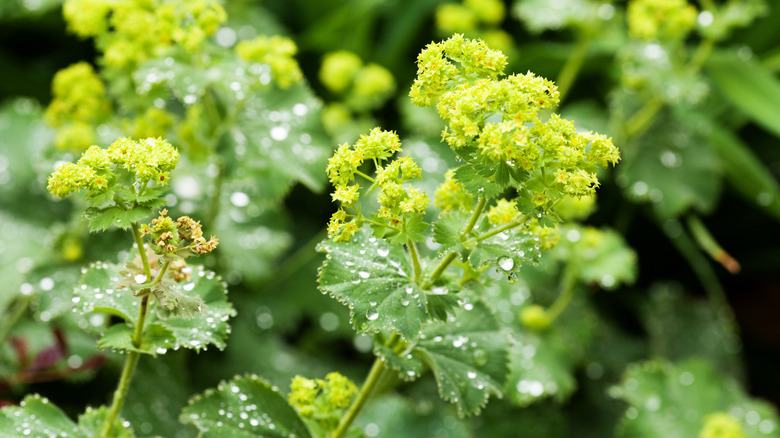
The goal is to create a lush, continuous strip along your driveway's edge, so plant lady's mantle in a perfectly spaced row rather than single plants here and there. A dense line of foliage will create a much more cohesive border than isolated clumps can. Since these plants typically end up a minimum of 1½ wide, you'll want to space the crowns about that distance apart, or a few inches more. That spacing creates a buffer zone for younger plants and allows for a perfect little overlap once fully grown, and works well for this look. Plus, overcrowding limits airflow between plants, which raises the chance for fungal issues.
Proper drainage is also important because even though lady's mantle likes moist soil, it hates sitting in waterlogged dirt. So make sure the soil you plant it in can consistently drain well. If the runoff from your pavement constantly floods that edge area, you can amend the soil with compost to boost its drainage.
Sun exposure is another factor to deal with: Lady's mantle prefers some shade, but can handle full sun in cooler zones. If your driveway tends to bake at some point in the day, you'll need to water the plants more often to prevent any scorching. Finally, know that this plant loves to self-seed, so you should cut back faded flowers before they drop their seeds to keep your border tidy. Lady's mantle is also one of many perennial companion plants that thrive next to hostas, which is great if you want to keep the strip garden going. Talk about a breath of fresh air for your front yard!