

5 Retro Kitchen Styles That Defined '50s Homes
We may receive a commission on purchases made from links.
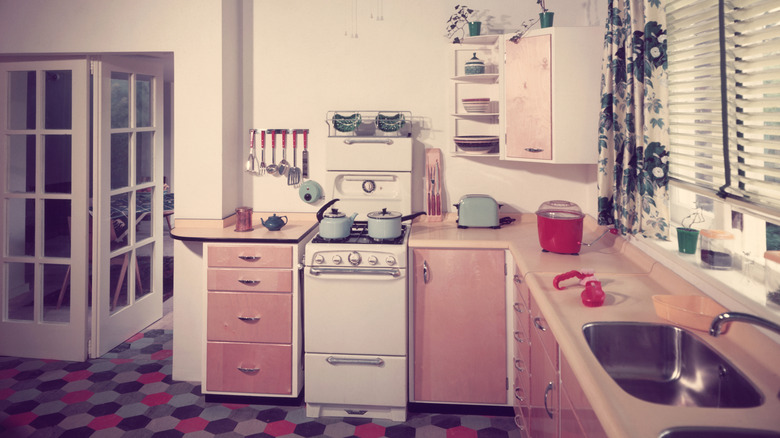
The word "optimism" is often associated with 1950s home design, and the sunny tones and straightforward lines of a kitchen from that decade bear out the story. The economic growth marked by that time period in the United States meant the kitchen could be a showcase of status while also displaying some of the new technologies that defined the period. Electric appliances were within reach of everyday consumers, who could spend more time decorating and enjoying their domestic spaces as their daily chores were simplified.
The 1950s also saw the debut of manufactured materials like Formica laminates that made their way into everyday kitchens thanks to their affordability. It was easier than ever to customize floors, counters, and cabinets, and an explosion of patterns and colors resulted. Whether you're planning to furnish a retro style kitchen, want a dose of mid-century modernism in your space, or just want to know what to avoid, we explored some ubiquitous staples from the era for you to peruse.
The sleek lines of mid-century modern
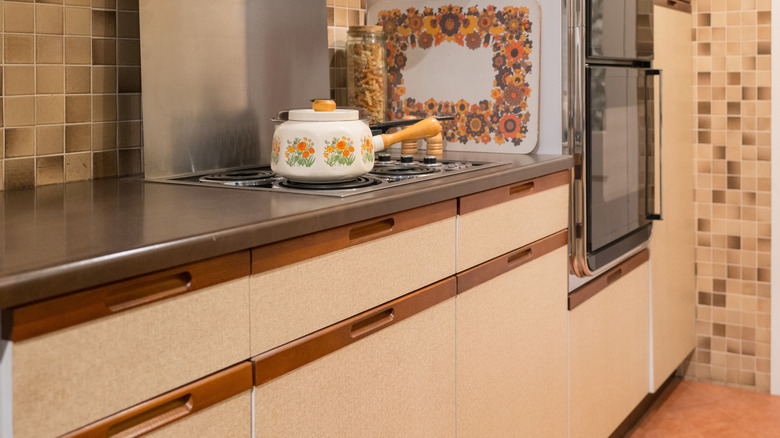
If you feel the simplified aesthetic of mid-century modern design will never go out of style, you likely admire the clean geometry of 1950s kitchens. Mid-century modern, a term that writer Cara Greenberg used to describe that decade's furniture design, has become shorthand for a straight-lined look that was just as present in the kitchen as in the living room. "The mid-century modern design style emphasizes functionality, simplicity, and clean lines," interior designer Christina Simon explained in a Martha Stewart interview. "The design lies in the simplicity of beautiful craftsmanship."
Cabinets with slab doors were popular, giving the kitchen an unfussy sense of efficiency, scrapping the fancier raised details that were seen in earlier eras. Appliances were often built-in and unobtrusive. Even though the design favored clean lines, there was no lack of playfulness; steel cabinets in colors ranging from bold primaries to pale pastels were options just as much as natural wood pieces.
If you want to copy these sleek lines in an updated kitchen, flat-front cabinets in walnut or darker wood are surefire choices. It's even possible to reclaim old cabinetry but have it retrofitted to new specifications. The challenge is to complement these classic forms with floors, walls, and accent colors that add variety.
Iconic checkerboard flooring
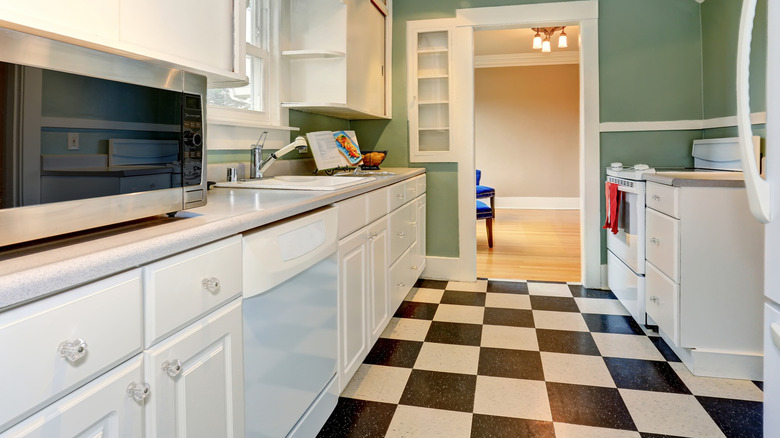
Checkerboard is a motif that dates back to ancient times, but it's forever tied to the 1950s, evoking the floors of bustling, old-school diners and kitchens straight out of worn magazine pages. As playful interiors came into vogue and it was possible to print patterns on linoleum, a newly attainable flooring material made with linseed oil and other ingredients, the stage was set for '50s kitchens to feature checkerboard.
There are also practical reasons that alternating black and white squares so often graced kitchen floors at the time (and today). The dynamic pattern can convey forward motion and distract from kitchen messes on busy days at home, just like it would at the soda fountain.
The pattern hasn't lost its association with the past, and this nostalgia factor is one of the reasons it's still incorporated into contemporary spaces. These days, a kitchen designer may swap out the linoleum for tiles made of marble, ceramic, or porcelain and replace the dark squares with a lighter hue that still pops against the white. Utilizing softer shades is one of the ways HGTV star Nate Berkus switches up checkerboard floors. Some homeowners take the design inspiration from floors and transfer it to checkered backsplashes or even painted walls.
Incorporating appliances as décor
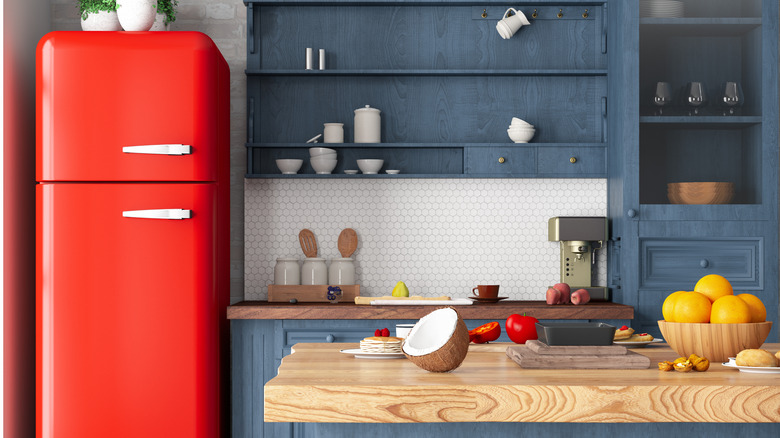
The kitchen was viewed as a living space in the 1950s, so appliances were designed in colors that could harmonize with an overall scheme. Refrigerators or dishwashers in yellow, blue, or various pastels would be intentionally chosen to form a set and match with steel cabinets of the same color. An advertising report from 1951 revealed that colorful models made up 80% of General Electric's home appliance sales. It was not just color that could make them stand out; the rounded edges of fridges, toasters, and other indispensable parts of the kitchen gave the rooms a soft, welcoming look.
To this day, those looking to add warmth and dimension still include colorful appliances in their kitchens. Kitchenaid observed that people are trending away from all-white kitchens to embrace colorful appliances again in its 2026 trend report. While white kitchen cabinets and stainless steel refrigerators haven't gone away, sellers are seeing demand for warm colors as well as deep accents like forest green and navy blue. Those who are excited to bring color into the kitchen can start with smaller appliances in an accent color or go all out with a red gas range by Smeg, a brand that pays homage to the '50s.
Space age geometric patterns
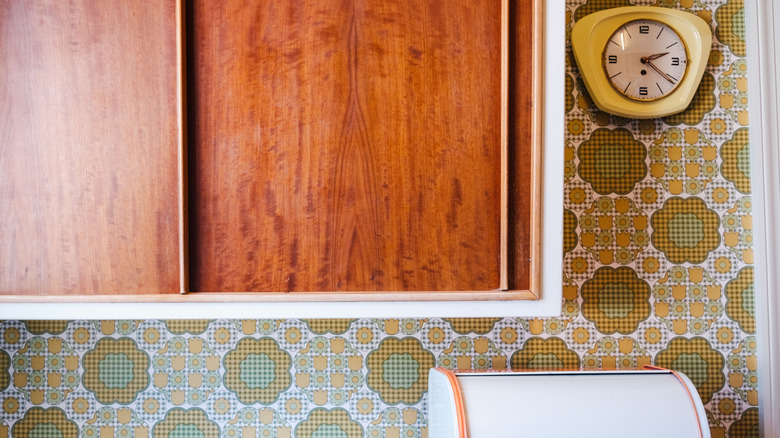
If cabinets were simple in design and unified in color in the mid-century, the walls, floors, and even countertops were places in which a variety of geometric patterns could shine, whether on linoleum floors, bold wallpaper, or textiles like curtains. These 1950s home décor ideas, along with accents made from chrome, were often inspired by the space race that dominated the cultural imagination of the era.
While hardly as psychedelic as the '70s, it was still common to see starbursts, curves, and other "far out" designs in 1950s kitchens. Formica developed a durable laminate for kitchen counters that was both easy to care for and featured patterns like "Skylark," composed of many overlapping boomerangs on top of a light solid color.
Believe it or not, laminate isn't unpopular today as a countertop surface, and it's especially in favor with younger folks who may have a love for experimental patterns in common with '50s families. "It allows for tailored designs on surfaces and cabinetry, and the wide range of fun patterns available gives [our] clients the freedom to get creative without a major investment," designer Vanessa DeLeon told Apartment Therapy. If you'd rather incorporate geometry in a more elevated way, though, you could try a geometric update using ceramic tiles, or for a quirkier look, go for a statement wall that features art or wallpaper with atomic shapes.
Candy-colored pastel walls
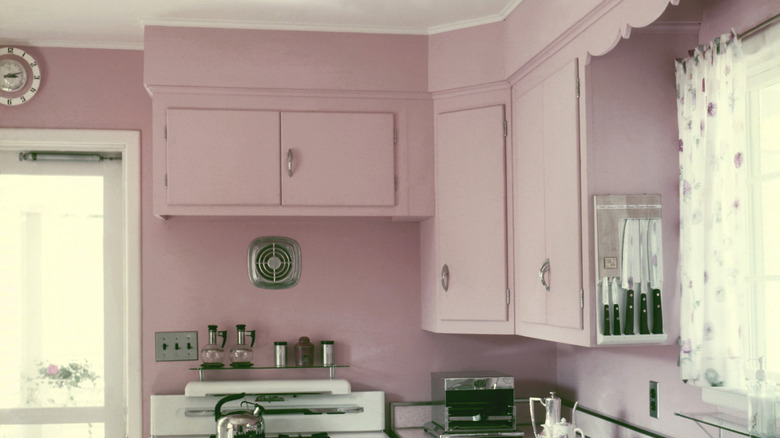
A 1950s kitchen in an old photograph can easily be identified by an expanse of pastel wall. Comfort and family gatherings were prioritized in the design of these spaces, and colors like sunny yellow, mint green, light blue, and soft pink prevailed. Of course, they were often chosen to work in concert with cabinets and appliances, making kitchens feel like a fully customized "happy place". It was also easy for people to apply the fast-drying latex paint that was newly available in stores.
If you love the vibe, there's good news: The pastel trend is coming back to kitchens in 2026. "Soft pastels reminiscent of the 1950s feel comforting and nostalgic, offering a sense of ease at a time when many homeowners are craving calm," interior designer Heather Kirk told Good Housekeeping. They're sometimes used in "color drenching," a method that matches or coordinates furniture and textile accents with an encompassing wall color.
It's best to select tones of varying depth (perhaps in the same family) for these other features, so the room doesn't get lost in all the pastel fluff. Some wooden or neutral elements in the kitchen can also serve as a much-needed contrast to your '50s-style kitchen.