

Ditch Raised Planter Beds: The Cheaper Alternative That Naturally Keeps Weeds Out
We may receive a commission on purchases made from links.
The concept of a raised garden bed seems appealing at first. Instead of spending hours amending the soil and turning over mounds of dirt, you can just set down a bed of wood or metal, fill it with a nutrient-rich garden soil mix, and call it a day. But especially in the case of open-bottomed configurations, you may notice weeds start to pop up. Even raised garden beds with enclosed bottoms still present issues since weeds can come up through drainage holes. Not to mention, they can cost anywhere from $50 to $200 or more. Thankfully, there are plenty of savvy home gardeners eager to share their discovery of a cheap, weed-free alternative for raised beds: plastic kiddie pools.
That's right, the backyard essential for hot summer days could also be the key to a neat and tidy vegetable patch. Unlike raised bed models where unwanted vegetation can creep through, wading pools are literally designed to hold water. Hence, there's no way for weeds to grow through the base. They also provide more growing space for less money compared to standard raised beds. For example, the Bluescape wading kiddie pool available at Walmart comes in multiple sizes and set options. A set of three 59-inch pools comes in at just over $50. For the amount of room you get (almost 5 feet per product), it's much more cost-effective than a set of wood or galvanized metal raised beds, which can go for the same or higher price points for much smaller dimensions.
Use kiddie pools to grow a variety of plants
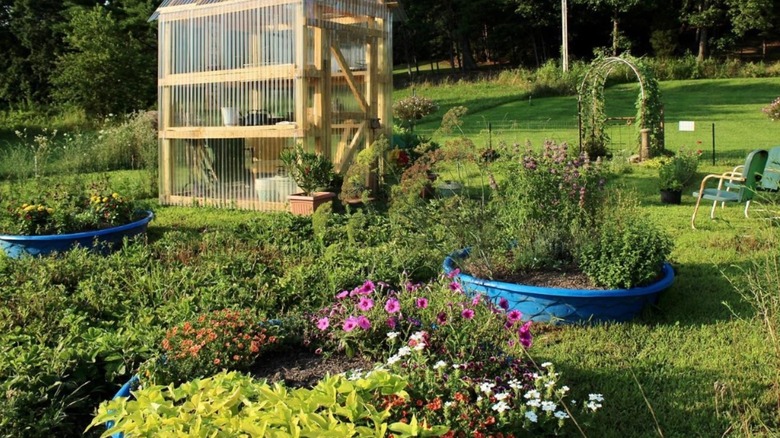
So, what can you grow in a plastic wading pool, and how do you ensure success? The answer is basically anything, just like you would in a raised bed. Turn one into a pop-up cut flower garden, a tomato jungle, the herb bed of your dreams, or your very own corn plot. These are just a few examples of what you can cultivate. You can even reuse a kiddie pool for an easy potato harvest. There are endless possibilities as long as you provide optimal light, fertilizer, and water. Deciding how to address drainage is the most important factor for converting the pools into functional container gardens.
Consider whether you want to add drainage holes to the bottom or not before you get started. This will determine whether additional protective measures are necessary to keep weeds at bay. If you do decide to drill holes to prevent waterlogged soil, you'll need to put a suppressant material or cardboard under the base to prevent invasive species from coming up through the ground. In contrast, you can keep the pool as-is and fill the bottom with gravel to keep roots from sitting in water. This may work best for plants that don't need to be watered frequently, but it's a smart compromise should you also want to reuse the pool for its original purpose in the future.
Make small pools into the ultimate bottom-watering solution
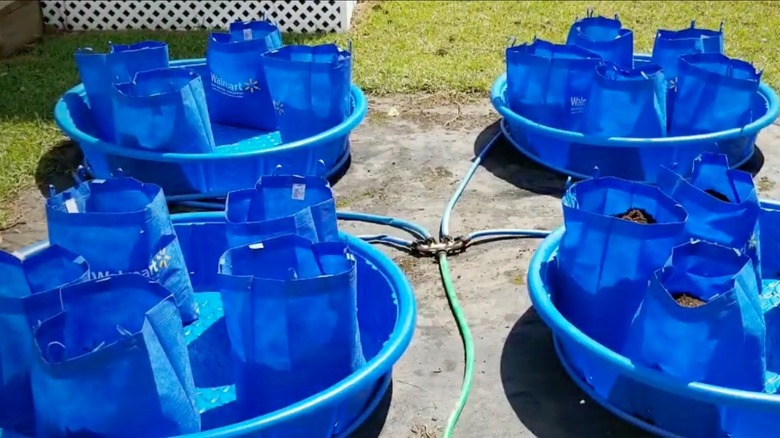
Another way to maximize the potential of wading pools in the garden is by using them to mass bottom-water plants instead of filling them straight with soil. Bottom-watering can be more effective than top-watering since plants absorb the water slowly into their roots from a tray or saucer underneath. Watering the top of the soil can displace dirt or seedlings and evaporate before it has a chance to get to roots. Ultimately, a kiddie pool allows you to do bottom-watering on a much larger scale. Just drop in your garden hose, let it fill the pool a quarter of the way, place plant containers inside, and watch the water get soaked up. The best part? No weeds! This method is also great to keep patios and decks free from dirt and water, since it's all contained in the glorified drip tray.
However, you need the right containers in order for the plants' roots to properly uptake the water. Fabric containers should definitely be on your radar because they're just as inexpensive as DIY solutions, like folded bags of potting soil or reusable grocery totes, but with quality built to last for multiple gardening seasons. These Delxo grow bags on Amazon come in packs of 20 and are available in a range of gallon sizes depending on the types of flora you choose. If you want to try the soil bag planting method, just make sure to poke a few holes in the bottom and sides so the water can be easily absorbed.