

What To Do If You Find Your Mower Deck Wheels Touching The Ground
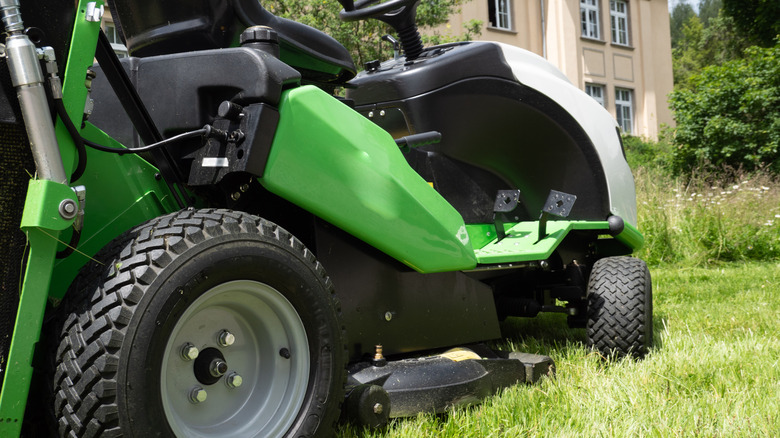
When you want to simplify the work required to care for your lawn, you may decide to upgrade from a walk-behind push mower to a zero-turn or riding lawn mower. The rider requires less physical effort to do the work and significantly cuts down on the time required for this regular summer chore.
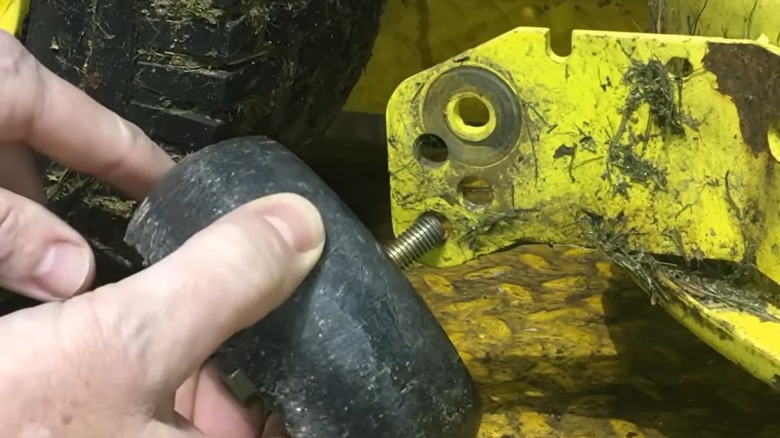
However, as you migrate to a riding mower, you will encounter some major differences in the design of the machines, including in the deck. The riding mower's deck is a floating deck, which allows the frame to bounce and adjust in real time to uneven terrain under the speeds at which the rider travels. To manage the bounce of this deck, a riding mower deck has guide (or anti-scalp) wheels around the edges. They should hang just below the lower edge of the deck and sit up to ½ inch off the ground when the mower is not in use. During use, they're designed to keep the swaying deck from directly hitting the ground and causing the mower blades to scalp the lawn.
If the guide wheels are sitting on the ground when the mower is not in use or are regularly dragging on the ground as you mow, you could take a few different steps to fix the issue and return them to the proper height. Inspect the height at which the guide wheels are set in the pre-drilled holes in the deck and inspect the mower deck's suspension parts for damage to determine why the guide wheels are hitting the ground.
How to deal with riding mower guide wheels on the ground
If your anti-scalp guide wheels are constantly hitting the ground, you can make some DIY adjustments to try to fix the issue. Before doing anything, place the mower on a flat surface and fill the machine's tires to the proper air pressure. Check the sidewall of the tires for the recommended PSI to use for each tire, as the front tires usually need a higher pressure than the rear tires. This is important because improper tire inflation could cause the deck's guide wheels to hit the ground and cause scalping.
If the guide wheels are dragging on the ground, they might be hanging too low on the deck. Set the mower deck to the desired cutting height and make sure the guide wheels are up to ½ inch off the ground. If they're set too low, remove the nuts and bolts holding the wheels in place and move them to a higher hole in the deck.
You may also need to level the actual deck, which may be out of alignment, causing the anti-scalp wheels to hit the ground. Most designs have a rod and lock nut that hold the deck at the desired height. Tightening or loosening this lock nut will adjust the height of the entire deck. Some mower designs also have hangar brackets that allow you to adjust the side-to-side tilt. When these are worn or broken, the deck may fall out of alignment, causing the guide wheels to hit the ground. If this is the issue, repair or replacement of the rods, nuts, and brackets may be necessary.
Why the riding mower's deck differs from a walk-behind deck
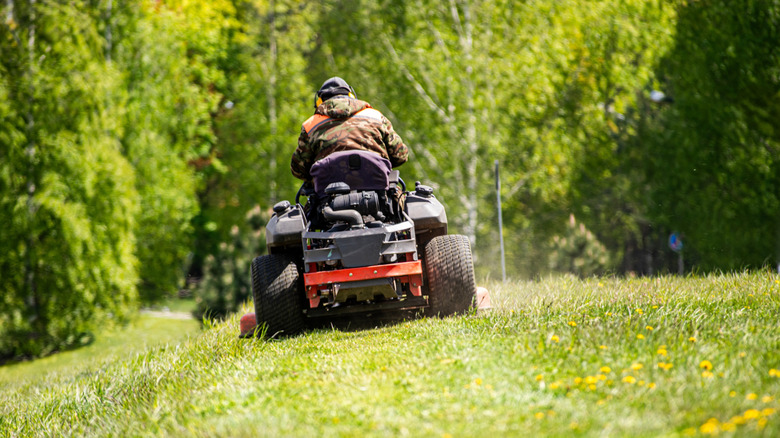
The design of the floating deck with a riding mower is more complex than what's found with a typical walk-behind model. The walk-behind mower deck doesn't float, as it's attached directly to the machine and moves with it when you go over bumps and ruts. The riding mower's floating deck moves separately from the rest of the machine as it hangs from the brackets and rods, allowing it to cut the grass evenly and avoid scalping, even when the ground underneath has ruts or contours.
Push mowers don't need guide wheels because of the fixed deck design. Instead, on residential self-propelled and push lawn mowers, levers to the inside of the tires allow you to adjust the deck height. Moving this lever back and forth raises or lowers the deck in relation to the wheels and the ground. Ensuring the levers are all set at the same height for all four wheels of the push mower ensures an even mowing height and reduces the chances of scalping without the need for guide wheels.