

Don't Forget To Clean This Spot To Help Extend The Lifespan Of Your Electric Lawn Mower

Electric lawn mowers may be a low-maintenance alternative to gas-powered models. You don't have to change oil or replace spark plugs. However, that doesn't mean that they are maintenance-free between mowing sessions. A commonly missed task in upkeep that's beneficial for your electric mower is cleaning the chassis and housing components. It only requires a damp cloth and a few minutes of your time. Keeping the frame areas free of grass, dirt, and dust can improve performance and help extend the average lifespan of your electric lawn mower.
For maintenance, homeowners typically focus on sharpening the lawn mower blades or tending to the battery, but forget that the exterior housing plays an important role in protecting the mower. After mowing, fine grass clippings and dust often settle on the chassis parts. Some of the debris can also collect around the cooling vents and openings that help regulate the temperature of the motor. Electric motors heat up when they operate, so they need clear airflow to prevent overheating. When vents become clogged, restricted airflow can cause the mower to run less efficiently, increasing strain on the battery and reducing overall performance.
Moisture that becomes trapped against surfaces can also contribute to premature wear. It may increase corrosion, affecting the longevity of your mower. Keeping the chassis clean allows you to spot other issues before they become expensive repairs. You'll be able to clearly see any rust spots, loose hardware, damaged vents, cracks, or worn components when they aren't hidden underneath dried grass and dirt.
Why and how to clean your electric mower's chassis and housing
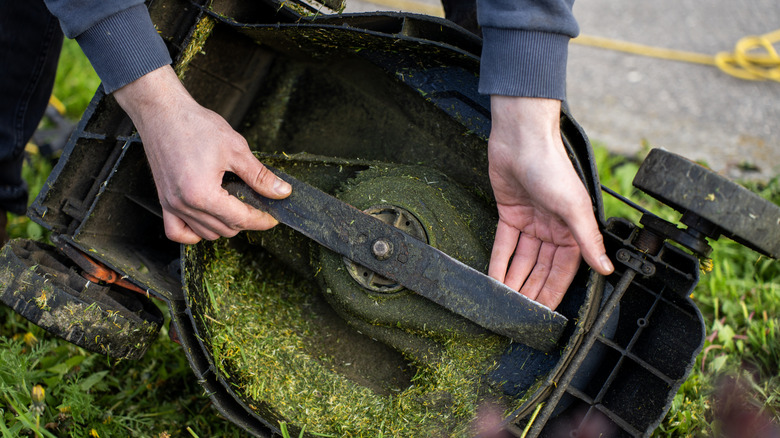
Safely cleaning your lawn mower the right way is essential. Built-up debris can cause unnecessary strain on your mower, so routine cleaning is an important maintenance step. Before cleaning, you need to turn off the mower and remove the battery or disconnect the power source. Always refer to the manufacturer's instructions before turning off and tilting the mower on its side. Take a damp cloth and wipe the top, sides, handles, and exterior housing. A damp cloth is usually enough to remove dirt, mud, dust, and residue. Avoid having the cloth soaked or allowing any water to enter switches, compartments, or electrical connections.
Storing your mower immediately after cutting can allow mud to harden and dry. Grass clippings also get packed into the chassis. Look at the cooling vents and intake openings around the mower's motor housing. In addition to the cloth, you can use a soft brush, flexible putty knife, or compressed air to clear debris from these areas. This improves the airflow and reduces the risk of wear on the motor. It can be tempting to use a hose, but many manufacturers advise against spraying your electric mower with water. The moisture can damage electrical components and battery connections. Spending a few minutes cleaning the chassis and housing can help maintain your electric mower's performance and reduce wear over time.