

AI Slop Suggests Using An Old Tire To Create Budget-Friendly Pavers — And We're Here For It
We may receive a commission on purchases made from links.
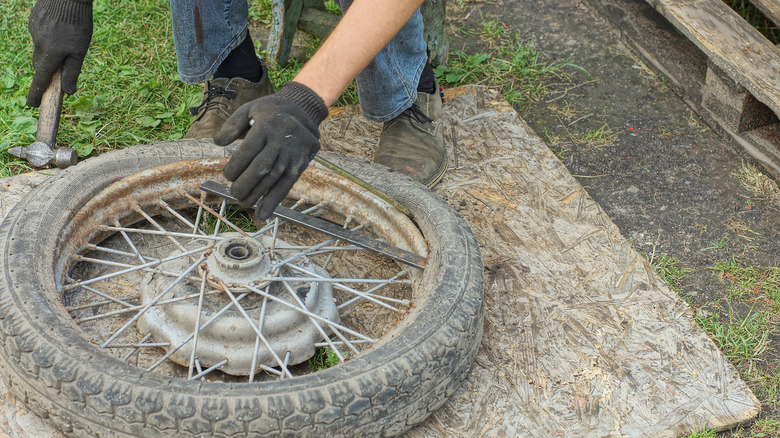
AI-generated videos have undoubtedly and effectively etched their way into social media platforms, and they don't seem to be going anywhere soon. For example, several AI-generated videos are making the rounds on YouTube, illustrating how to create concrete pavers using an old bicycle tire as a mold. The core idea of this project appears feasible. After all, tires are made from very durable and versatile materials, including natural and synthetic rubber and metal. However, the execution of the project in the videos looks suspiciously convincing... and almost too perfect. So, is it possible? Yes, but perhaps with a caveat.
In the videos, the demonstrators start by pouring premixed cement into a tire lying flat on a cardboard box. After smoothing the surface with a trowel, one creator also presses a wire grid into the wet cement for added strength. The project is then finished with broken ceramic tile pieces and landscaping rocks placed on top for decoration.
The main issue with this method, and the tell-tale sign that the videos are AI-generated, surrounds the ease with which the tires are removed after the cement has cured. Commenters noted that removing the paver mold wouldn't be as seamless as the videos portray. After all, how could you remove the tire after the cement cures inside its hollowed cavity? Even if you cut it away, the edges likely wouldn't look so clean and straight. However, you could get around this issue by filling the cavity and then covering the opening.
Materials needed to create the paver molds
Everyday items such as small towels, cut pool noodles, or even old rags can work as filler material, while duct tape makes a great sealer (though the edges would now be slightly concave). With a few extra steps, it just may be a satisfying DIY win after all, and just one of many creative ways to repurpose tires in your backyard. For this project, in addition to tires, you'll need a fast-setting concrete mix, such as Quikrete. Also, grab a cardboard box or similar item to protect your grass during the project. However, you shouldn't need the suggested wire grid for these pavers, as their compact size doesn't warrant such structural reinforcement. The size of your tire will determine how much concrete you'll need for this budget-friendly home project.
A standard mountain bike tire is about 26 inches in diameter, with an inner diameter of roughly 24 inches, and it typically has a width of about 2 to 3 inches. Assuming your bike tire has similar measurements, expect to buy at least one 60-pound bag of ready-mix concrete for a thinner paver, or two 40-pound bags if the tire is slightly wider or has a larger diameter.
Filling, pouring, and personalizing your pavers
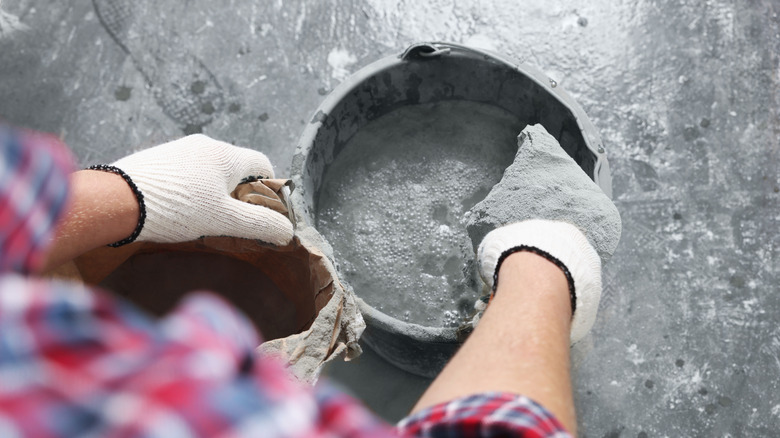
Once you've sealed the tire cavity, the next step is to prepare your concrete mixture. For ready-mix concrete, this typically requires combining the cement powder with a recommended amount of water and stirring it together with a shovel or short-handled mortar hoe, such as the Edward Tools Carbon Steel Hand Hoe, until fully combined.
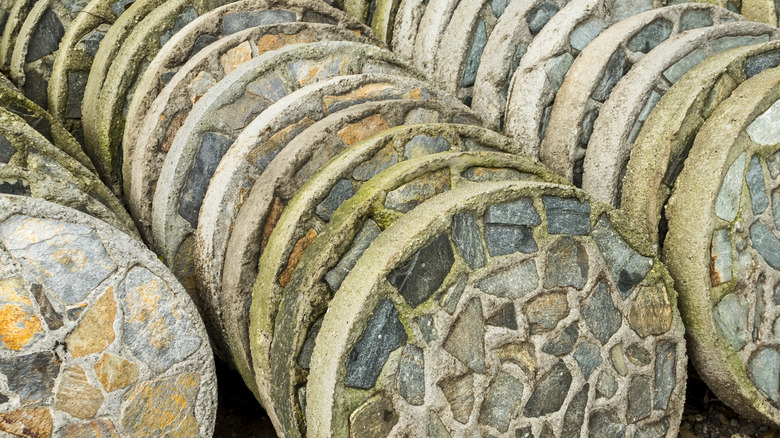
When the mixture is ready, slowly pour it into the tire and level the surface. Before the concrete starts to set, flex your creative muscles by designing mosaic-style letters and geometric shapes out of broken tiles or small rocks. Also, consider adding colored pigment to your concrete mixture during the blending process to give your pavers a vibrant, custom finish. Use this idea to create uniquely coordinated themes in your yard using the perfect paver color.
At average temperatures, ready-mix concrete like Quikrete takes about five days to cure. After it hardens, you can experiment with gluing small stones or other embellishments around the edges using a construction adhesive, such as Loctite Premium Construction Adhesive. This can create subtle border details that'll help each paver stand out a bit. And if you're happy with the results of your first trial run, you can then measure your designated space to determine how many more you'll need and how much concrete to buy to finish your project.