

What To Do If You Find Reddish Brown Circles On Your Lawn And Grass
Did you know that not all brown spots in your yard are the result of a dry spell or a neighborhood dog? There are several turf diseases that can wreak havoc on your lovely green lawn, and Fusarium blight is one of the more destructive. It's a severe fungal infection that targets your grass's root system and blades, often flaring up when the weather turns hot and temperatures stay high throughout the day. The problem is, rising summer temperatures also stress grass, and that's just what helps Fusarium blight spread easily, leaving ugly patches popping up in its wake. It's one of the most common plant diseases you never want to see.
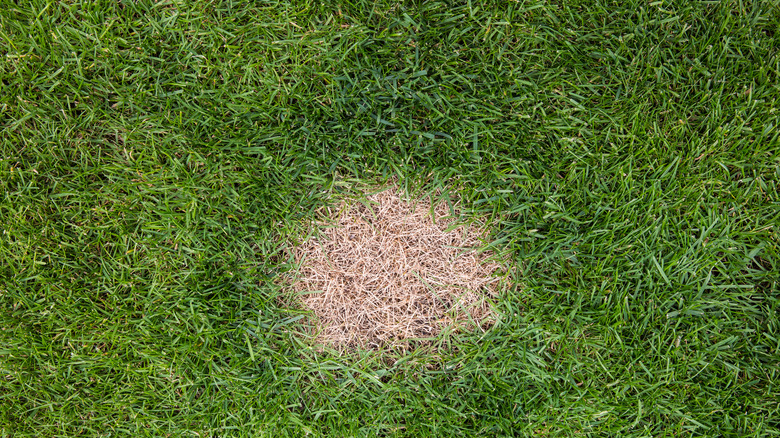
So what does Fusarium blight look like? The exact features depend on the fungus' growth stage, so make sure you look closely. The blight first appears as little light green patches of scattered grass; then it'll transition to a dull brown-to-red color. During summer, one of the times your lawn is most susceptible to fungus, it may even appear in a frog-eye pattern; this looks like a ring of dead, brownish-red grass with a tuft of healthy, green grass at the center. You can also check by pulling up a handful of affected grass and seeing if its roots and crowns are rotted and dark in color.
It's easy to confuse this blight with other lawn issues. Regular drought stress causes widespread, irregular brown patches across the whole lawn, whereas this blight creates distinct, localized circles. Pet urine spots can also look like a patch of dead grass, but often have dark green grass around the brown spot thanks to the urine's nitrogen content.
How to treat and prevent Fusarium blight
If caught early enough, managing Fusarium blight is relatively simple. The short answer is to adjust your maintenance routine to relieve stress on the turf. First, change your watering habits: Do it less often but more deeply. This change helps your grass to grow roots that are deeper and more robust, instead of shallower, weaker roots that are more vulnerable to disease. Next, raise your mower's height. Cutting your grass too short stresses it out, which also makes it much more susceptible to issues like fungal infections.
Long-term prevention is all about improving your soil health. Fusarium blight loves lawns with soil that's super compacted, thick layers of thatch, and high amounts of nitrogen. If this sounds like your yard, aerate your lawn and use a less nitrogen-intense fertilizer to make the blight less likely to reappear next year. If you didn't catch it early enough and the patches have already set in your yard, proper maintenance alone may not be enough. In that case, you may also need to find the right fungicide for your lawn, such as azoxystrobin, propiconazole, or thiophanate-methyl, to stop it from spreading and protect your green turf.
Don't get too discouraged when dealing with this issue. Improving your lawn's health helps, as does overseeding with disease-resistant grass. Consider Kentucky bluegrass varieties like 'Adelphi'. While spotting the telltale signs of this disease can be alarming, a few quick adjustments will stop it in its tracks. Stay proactive with your maintenance, and your yard will be back to looking lush in no time.