

If This Happens When You Water Your Plants It May Be Time To Replace The Soil
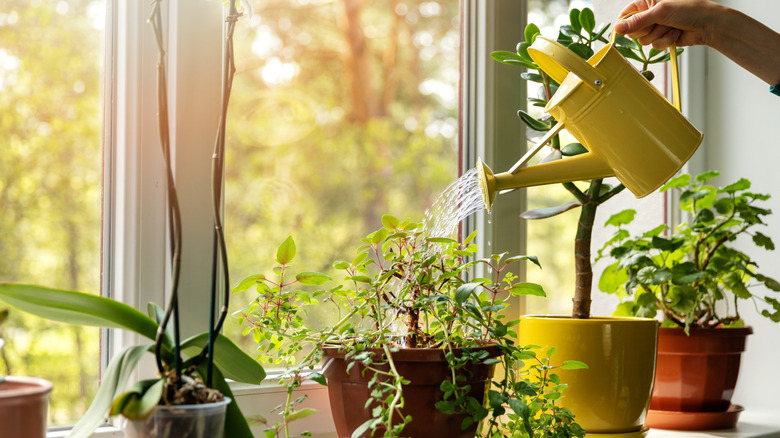
Caring for houseplants is a rewarding hobby, but even devoted owners of potted plants can sometimes miss the small cries for help from their leafy companions. You might have your watering routine down to a perfect science, hydrating your favorite pothos or monstera plant varieties every weekend. However, if you start to notice that the water rushes straight through the container after you pour it and floods the bottom drainage dish, that means you have a problem. This rapid flow isn't a sign of incredible drainage; rather, it's a red flag telling you that it's time to replace that plant's soil.
Over time, potting mixes break down, get compacted, and get worse at retaining and regulating their water, leaving your plants thirsty and sad. It can help to understand why this happens in order to fix the issue and stop it from happening again. When fresh soil mix is first put in a container, it's light, fluffy, and packed with organic materials that absorb water like a sponge. As the months go on, however, the roots consume all those nutrients, and the organic matter breaks down.
What gets left behind is a dull-looking, hardened lump that has pulled away from the edges of its pot. Then, whenever you try to water your plant, the water follows the path of least resistance, which is straight down those empty side gaps and right out the bottom. This condition is labeled as hydrophobic soil, and it means your plant's roots aren't drinking anything. It's also a pretty glaring and obvious sign that it's time to replace the soil in your potted plants.
How to properly replace soil and revive your thirsty plant
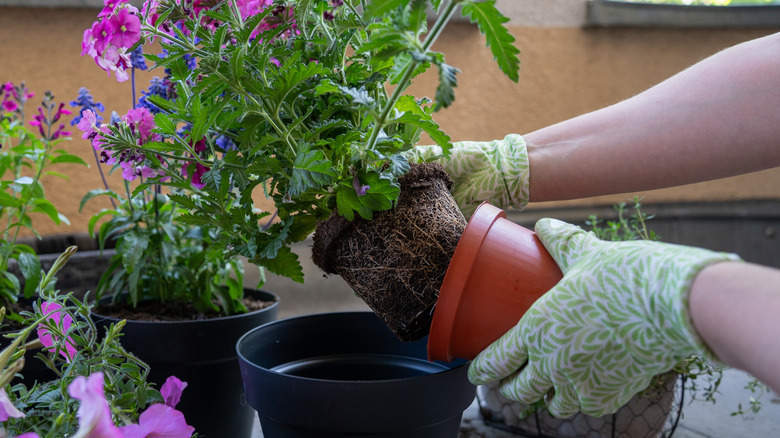
Before you rush off to your local garden center for supplies, you should take a minute to double-check that your potted plant actually does need a refresh. Sometimes, super dehydrated plants only need a slow soak to level out. The way you do this is with bottom-up watering, which is when a plant takes in water by placing it and its pot in a basin or sink full of lukewarm water for about 15 minutes. If the soil stays compacted, and especially if it stays dry up top, you have your answer. In that case, it's officially time to remove the plant from its current home and provide it with a fresh, nutrient-rich environment.
To properly replace soil, start by carefully sliding your plant out of its pot. Then, gently shake off as much of the old compacted dirt as possible. Choose a high-quality potting blend best suited to your specific plant's needs, fill the bottom of a clean pot with the new mix, position your plant securely in the center, and fill in the surrounding gaps. Finish things off with a good watering to settle things, then watch your plant bounce back into the happy greenery it used to be.