

Plant This Compact Hydrangea For Early-Season White Blooms That Never Change Color

There are so many hydrangea varieties that it can be hard to choose which is right for your garden. If you're a hardcore hydrangea lover, you probably want to see blooms as early in spring as possible. In that case, consider growing a Wedding Gown bigleaf hydrangea — it's a white hydrangea variety you'll dream to have in your garden. This patented deciduous flowering shrub was developed specifically for early blooming.
This cultivar's botanical name, Hydrangea macrophylla 'Dancing Snow' Wedding Gown, is quite the mouthful. The common name for the Hydrangea macrophylla is bigleaf hydrangea, also known as French hydrangea, garden hydrangea, or florist's hydrangea, and 'Dancing Snow' is the cultivar name. The trade name Wedding Gown is tacked on the end. This cultivar is also a lacecap hydrangea, meaning it has loose, flat flower heads that are quite unlike the spherical blooms of mophead hydrangeas.
Wedding Gown bigleaf hydrangeas are coveted for their bouquets of white double flowers, big dark green leaves, and compact growth. Expect your shrub to stop growing once it reaches 3 feet tall and 5 feet wide, making it the ideal choice for small yards and gardens. What's more, you don't need to worry about soil pH with this cultivar. The flowers stay white no matter the pH levels.
Get an early start on blooming with a Wedding Gown bigleaf hydrangea
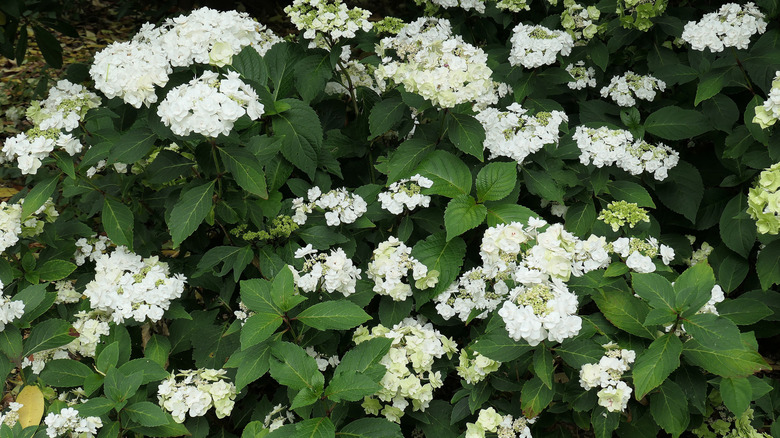
Wedding Gown hydrangeas are hardy in Zones 6 to 9. Plant saplings in nursery pots in well-draining, rich, semi-moist soil. The top of the root ball should be level with the ground in a hole one and a half times wider than the pot. Consider mixing organic material into the soil before you fill the hole up again — compost works well. Choose a part-shade spot for your hydrangea, and a site that's away from pets or small children. The bark, buds, leaves, and flowers of bigleaf hydrangeas are toxic if ingested.
Water your Wedding Gown hydrangea frequently while it's getting established. Once it's settled in, you can get away with twice-weekly deep waterings. Apply a 15-30-15 fertilizer for flowering shrubs in spring, following the instructions on the label. This bigleaf hydrangea requires minimal pruning — if you do prune, do it after blooming finishes. You can expect flowers in early spring with this cultivar. Gardening tips and tricks for successful hydrangea blooms every year include regular deadheading and protecting the buds from frost and hungry deer.
Add a deep layer of mulch around the root zone of this compact hydrangea in winter and, if it gets really cold where you live, wrap burlap around the shrub. Wedding Gown hydrangeas aren't susceptible to disease, though pests can be an issue. Keep an eye out for aphids, four-lined plant bugs, black vine weevils, slugs, and Japanese beetles and treat infestations promptly. Propagating plants could cause you a legal headache if they're patented, like this particular hydrangea cultivar. Keep that in mind before taking cuttings.