

Goodbye Flying Ants: The Cleaning Staple That Makes Getting Rid Of Them A Breeze
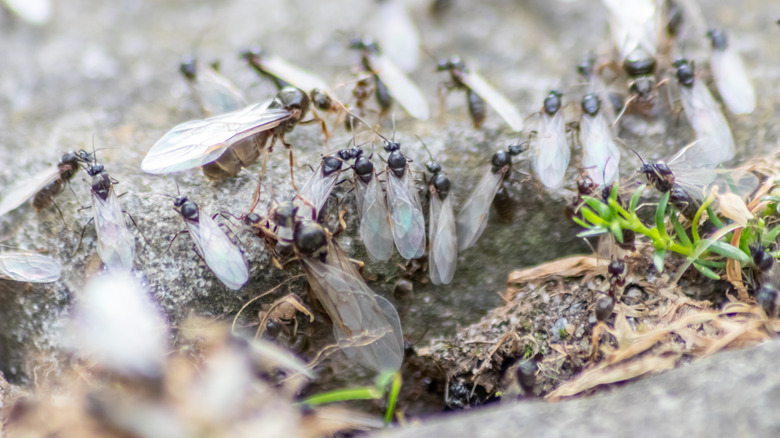
Flying ant season is on the horizon, with winged male and female ants emerging throughout July and August to mate. The hotter and more humid conditions are ideal for them and this can create swarms of thousands of ants flying around. Although generally harmless, a large swarm of ants can be a little overwhelming and you might be wondering what to do if you spot a swarm of flying ants in your home. Fortunately, there's a very simple solution and that's bringing out your trusty vacuum cleaner to vacuum the ants up in one (hopefully) simple swoop.
What does a swarm of flying ants mean for your home? They might be harmless in the main, but if they're found their way indoors in large numbers, they can leave behind debris and generally make a nuisance of themselves. Flying ants are attracted to moisture, light, and wood, with the last two of these obviously being found in abundance within a home. So, if they do get inside, you'll want to deal with them as quickly as possible.
Winged ants are only produced when a colony decides to expand, with the ants flying off in a swarm that's called a nuptial flight. As the ants begin to mate, the fertilized female ants will then fly off to start up a new colony. It's a necessary procedure for the future of the ants, but it can be overwhelming if an entire swarm decides to make its way into your home and set up camp.
How to safely remove flying ants from your home
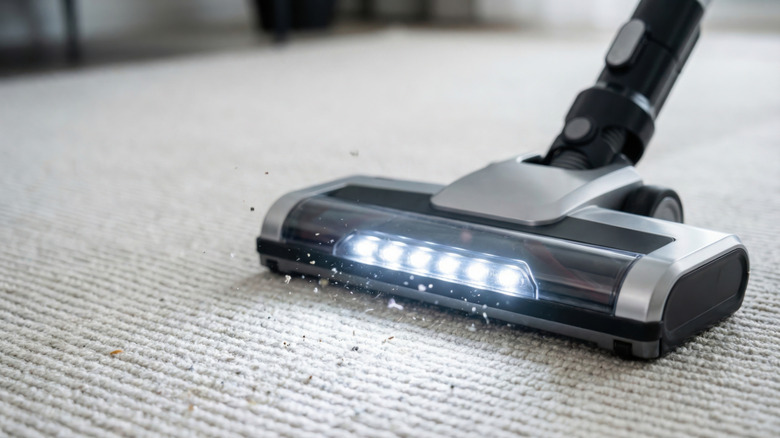
If you're looking for the easiest way to banish pesky flying ants from your home, there are, of course, a number of options. But with the ants very much focused on mating rather than anything you're doing, using a vacuum cleaner to safely remove them from the house is one of the quickest options. Simply switch on your vacuum cleaner and, using a suitable head or nozzle, depending on the size of the swarm, suck up all the flying ants you can see. You'll then need to go out to the garden, going a fair distance from the house, before emptying the vacuum. Because of this, do make sure that your vacuum bag or cylinder, if the vacuum is bagless, is clean and empty before you start. If your vacuum cleaner has a bag, you may want to dispose of this afterwards as it could be difficult to ensure that every single ant has been released.
Once you've removed an ant swarm from your home, you'll want to take steps to ensure that they're not tempted to come back inside again. Insect screens on your doors are an incredibly simple and effective solution but on top of this make sure you keep your surfaces clean and crumb free, as well as storing away any sugary food in airtight containers. Lastly, it's worth checking around your home for any obvious ant entry points and, if necessary, making sure you've sealed any cracks around your windows, doors and vents.