

What Is The 35 Foot Dryer Vent Rule And How Does It Apply At Home?

You might have come across the so-called "35-foot dryer vent rule" when shopping for a new dryer, but you may not have known what it meant. It comes from residential building codes that limits how long a dryer exhaust duct can be before the airflow becomes restricted — a maximum of 35 feet. In short, its primary goal is to keep the lint moving out of your dryer's system efficiently so that there's no buildup, overheating, or fire hazards.
The important takeaway here is that your dryer needs to have a vent system that accounts for both the straight duct and directional changes. Keeping ducts clean, minimizing bends and ridges, and checking your dryer's airflow all help you stay within the rule and keep your dryer running safely.
Despite how simple it sounds, the 35-foot rule doesn't mean that you just install 35 feet of straight duct and that's the end of it. What it refers to is called "equivalent length." This means that each bend, transition, or elbow in the vent system will reduce the effective length by disrupting airflow. In other words, if you have an elbow in your duct, you may need to subtract several feet from your total allowance.
Thus, if your vent system has many turns and bends, it can use up that 35-foot budget quickly. Each restriction will increase air resistance, slowing down the lint-filled exhaust and increasing the chance of buildup in your duct. Nonetheless, the 35-foot rule does provide a good framework.
How to use the 35-foot dryer vent rule in your home
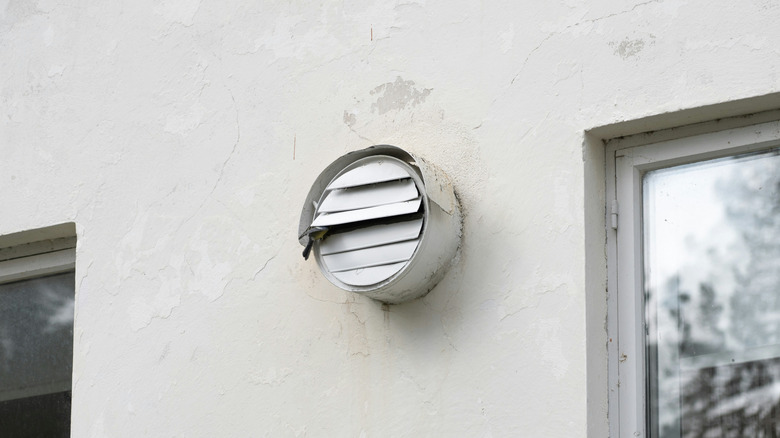
This rule is designed to address the hidden danger lurking in your dryer vents when it comes to your ducting. When you are planning or evaluating your dryer's vent system, consider that total equivalent length rather than the straight duct. Start by measuring the total duct length from your dryer to the vent cap, then subtract any of the bends or elbows with code guidance. Usually, it's about 5 feet per 90-degree elbow, so around 2.5 feet for any 45-degree bends. Exact values can vary by manufacturer and local code.
If you find that your total equivalent length goes beyond the recommended limit, your airflow drops and your heating risk goes up. Restricted airflow from lint buildup is one of the leading contributors to dryer fires, so understanding the details of this rule is important.
Even if your system meets the 35-foot maximum, using flexible ribbed ducting can still trap lint and slow the airflow. If you can, opt for smooth, metal ducting (which is actually required in some locations), since it minimizes friction and reduces buildup over time. You should also try to ensure that the vent is as straight and direct as possible.
It can be helpful to hire a professional for duct installation, since they will be well-versed in the rule. Review your manufacturer instructions for specifics on dryer vent installation, as well. It's also important to stay on top of routine vent cleanings, because you're likely not cleaning them as often as you should, which should be about once a year or more. Of course, you should also ensure you're not making any mistakes when choosing and replacing your air filter.