

Not Coffee Grounds Or Banana Peels: The Household Trash You Should Add To Compost
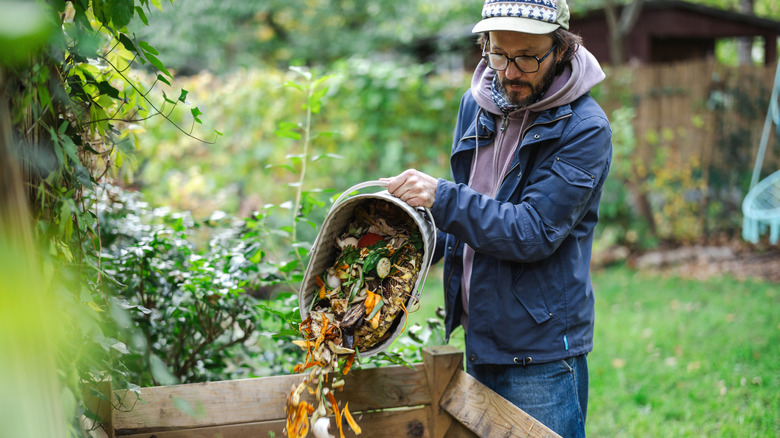
If you make your own DIY compost and are limiting your bin contents to kitchen scraps like coffee grounds and banana peels, you aren't taking full advantage of the compost ingredients you likely already have at home. We're guessing you might have stacks of paper hanging around, including newspapers. Not only are many kinds of paper and newsprint safe for composting, but they also offer some special benefits.
Like anything you put in compost, paper decomposes more efficiently when cut into small pieces, so a paper shredder is an ideal tool to have on hand. Shredded paper also happens to be a quick addition that helps control bad odors in your compost bin. Thus, paper performs double duty in the compost bin and triple duty if you are composting with worms, because shredded paper is what you should be feeding worms for healthy garden compost.
Paper also provides a simple way to balance nitrogen in compost. If kitchen scraps and other nitrogen-rich "green" ingredients are dominating the pile, adding paper, a carbon-rich "brown" ingredient, can provide the balance that will keep your hot compost toasty. On the flip side, too much paper in compost slows down decomposition. Paper helps manage moisture in compost, as well. Wrap your wet kitchen scraps, like those coffee grounds, in newspaper to absorb moisture.
Avoid adding these types of paper to compost
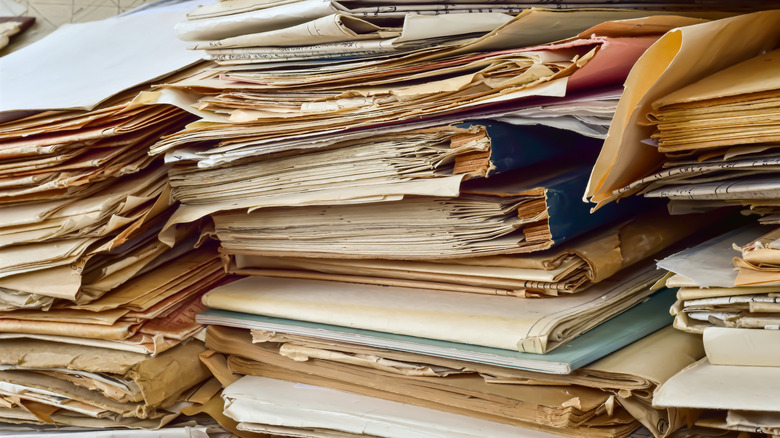
Using paper in compost has some limitations. You may have heard the myth that newspapers aren't safe to compost because of the ink, but today's newspapers are printed with nontoxic ink. In fact, any other compostable paper with ink on it is fine to use in compost. You should, however, avoid paper with additives, such as coatings to make it glossy (this eliminates receipt paper and most magazines from the compost bin). Look for products that are 100% paper and remove any non-paper components from them, such as stickers, staples, and plastic windows from window envelopes.
Be prepared for paper to lag in decomposition time. Paper is made from wood, which contains lignins that microorganisms find extremely difficult to consume because of their complicated structure. Bleached paper (which is safe to compost) actually decomposes faster than unbleached paper because the lignins have been removed.
Paper and newsprint can also be recycled. The processes of composting and recycling each have their pros and cons, but composting is, overall, the greener practice of the two. Composting is also a great option for those who want to improve their soil, especially if their compost heaps are awash in "greens" but lacking in "browns."