

Why Bradford Pear Trees Have That Awful Smell
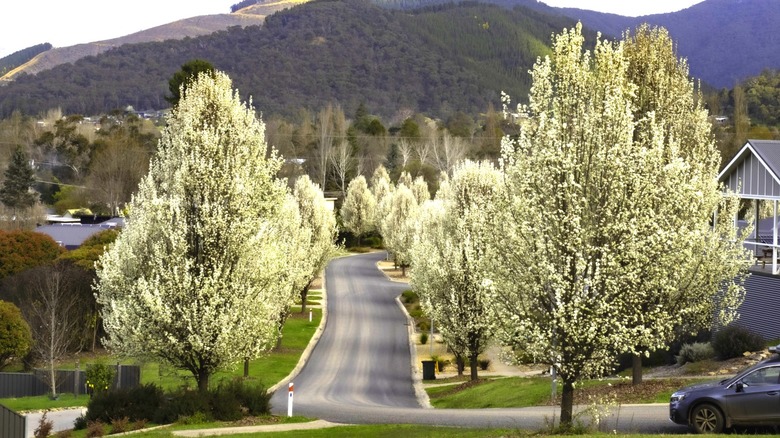
Picture this: You're enjoying a casual stroll on a sunny spring day, taking in the gorgeous weather, blooming plants, and subtle breeze, when all of a sudden, a putrid-smelling punch stops you in your path. You can almost see the stink traveling through the air in a cartoonish, green cloud, rudely interrupting the scent of fresh-cut grass and blooming flowers that you were enjoying previously. Sound familiar? You have the Bradford pear (Pyrus calleryana 'Bradford') to thank.
Boasting a fragrance often compared to spoiled fish, rotting flesh, or a host of other unsavory fluids, Bradford pears are a stinky tree that you should avoid at all costs. What's vexing, however, is why any tree would gain an evolutionary advantage from smelling so foul. While many flowering plants draw in pollinators like bees and butterflies with sweet, woodsy, or fresh scents, Bradford pears' main pollinators are flies. That stinky fragrance might be hated by humans, but it's fantastic bait for the insects that frequent trash cans and dog poop. Unfortunately, this smell isn't just unpleasant for those in the neighborhood — it also has the ability to ward off other native pollinators. Even if you've put your heart and soul into starting a pollinator garden that's filled with bright flowers, enticing scents, and a clean water source or two, there's a chance you'll see more visits from flies than anything else if there's a Bradford pear nearby.
Why Bradford pear trees are best avoided
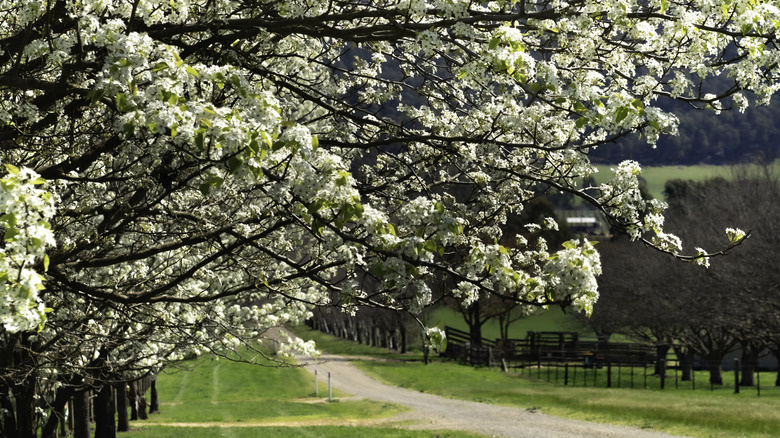
The unpleasant olfactory experience is only one reason why this plant is so deeply detested — while it is undeniably beautiful when it's in bloom, it has also become an invasive species. Originally commercially released as an ornamental in the '60s, the 'Bradford' cultivar of the Callery pear tree couldn't self-pollinate. Armed with the confidence that they wouldn't take over, many customers planted several trees by one another, and as more cultivars became available, cross-pollination became a problem. In just a few decades, these nasty-smelling trees were everywhere across the U.S., and their vigorous growth that was once a selling point developed into a major con.
As if the bad smell and the spreading habit wasn't enough of a deterrent, these trees also started to show big problems once they became established. Bradford pears aren't very structurally sound, so as they continue to grow, branches can easily break off during harsh weather events. This can cause damage to nearby structures or vehicles. So, if you love the look of this plant, do your part and consider choosing a native alternative to grow instead. Eastern redbud (Cercis canadensis), flowering dogwood (Cornus florida), and wild plum (Prunus americana) are all great picks, though there are plenty of other options that could work depending on your specific tastes, environment, and USDA Hardiness Zone. Whichever plant you choose, it will undeniably be a better pick than this foul-smelling, brittle, invasive, and fly-attracting tree.