

The Heat-Tolerant Shrub With Vibrant Pink Flowers That Backyard Hummingbirds Love
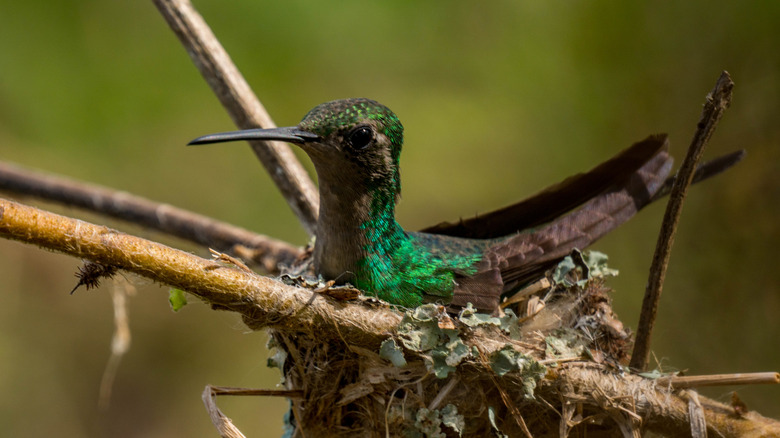
If you garden in the sweltering heat for most of the year, growing pretty blooms for pollinators that won't wilt under pressure can feel like an uphill battle. You've tested your fair share of flowering succulents or planted heat-tolerant rose alternatives that are great for cut arrangements, but they don't bring in the hummingbirds. What if we told you that there's an evergreen shrub that thrives in extreme heat, adds more vibrant splashes of color to a garden than you can shake a stick at, and is irresistible to hummers? Enter the 'Barbara Karst' bougainvillea (Bougainvillea x buttiana 'Barbara Karst'). This hybrid perennial vine is one of the hardiest bougainvillea varieties — it thrives in a wide range of climates.
The genus Bougainvillea is named after the French explorer Louis Antoine de Bougainville. It appears that the Barbara Karst in Bougainvillea x buttiana 'Barbara Karst' was a family member of the plant's cultivator. This vine is arguably one of the showiest climbers out there, and easily one of the most popular bougainvilleas. It's easy to care for, drought-resistant, and produces a plethora of neon-magenta blooms from spring to fall in warmer climates. Besides giving front porches or backyards some pizzazz, the bright pink, nectar-filled flowers attract hummingbirds. The tiny birds can spot the blooms from a distance, but it also doesn't hurt that 'Barbara Karst' can reach 40 feet tall at maturity. Hummers, after all, prefer flowers growing several feet above the ground. To see success once you get your sapling in the ground, you need to learn how to take care of this sometimes finicky bougainvillea.
How to grow a 'Barbara Karst' bougainvillea to maximize hummingbird visits
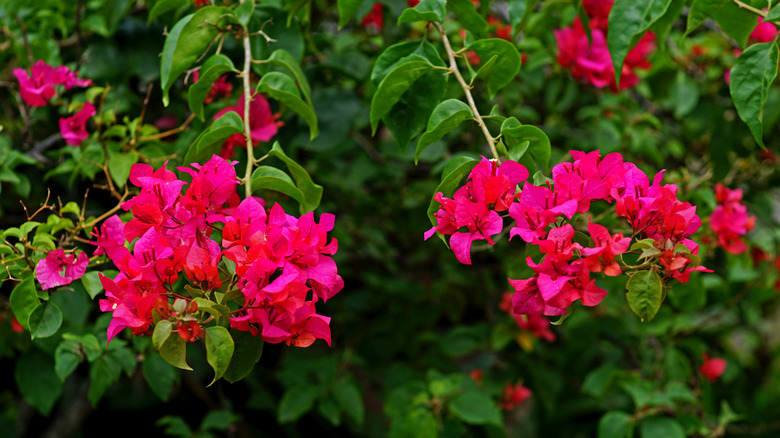
One of the first things to understand about growing a 'Barbara Karst' bougainvillea is that this vine needs abundant sunshine. If the brightest possible blooms are your goal, you need to choose a full sun spot in your garden — somewhere where the vine will get at least six hours of sunlight every day. The bracts of 'Barbara Karst' are hot red-pink when it's growing in full sun, but they turn blue in partial shade. 'Barbara Karst' bougainvillea thrives in USDA Hardiness Zones 9 through 11, though may also do well down to Zone 3 when grown in containers on sheltered patios. If you live in cooler climates, you can keep your bougainvillea plants healthy all winter by covering them once they go dormant or bringing them indoors so they don't freeze.
We tend to love our plants so much that overwatering can be an issue. Don't make this mistake with 'Barbara Karst.' Good drainage is equally important. This bougainvillea doesn't like sitting in wet soil for long stretches. If it does, you may end up with more leaves than colorful bracts — and, ultimately, fewer hummingbirds. The more desert-like the soil is after the vine has established its root system, the better off it'll be. Thanks to this perennial climber's bright pink bracts, you'll likely see an uptick in tiny avian visitors when it's in bloom. After all, pink is one of the flower colors that will have hummingbirds swarming your garden. To encourage even more hummers, pair your 'Barbara Karst' bougainvillea with other nectar-rich plants that bloom at different times of the year and enjoy the same growing conditions.