

Not Honeysuckle: The Gorgeous Hanging Basket Flower That Hummingbirds Can't Resist
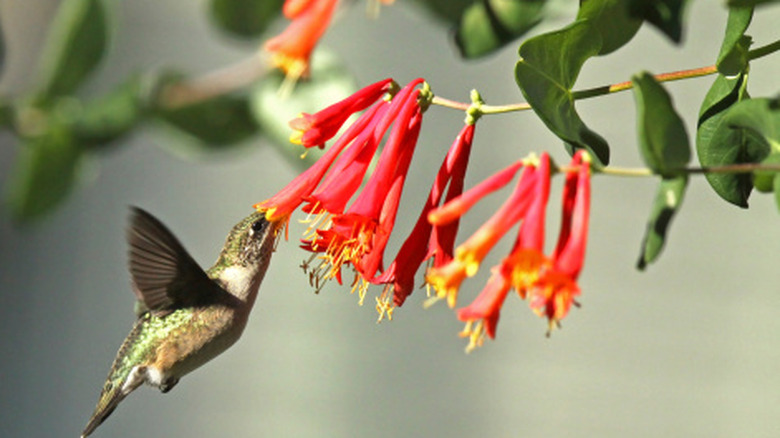
Appetites so voracious they must feed every quarter of an hour, colors so scintillating you're transfixed when they appear, and habits so peculiar you wonder what fuels the ardor when they fight for territory in their petite bodies. Truly, hummingbirds are a marvel to behold, and you can never have enough of them in a garden. While you may have heard of the various native varieties of honeysuckle to plant and grow for a hummingbird paradise, many gardeners lack the ground space or feel reluctant about propping a trellis to support them in pots. But with Proven Winner's 'Supertunia Vista Fuchsia II' petunia (Petunia 'BHTUN65301'), you won't face such limitations.
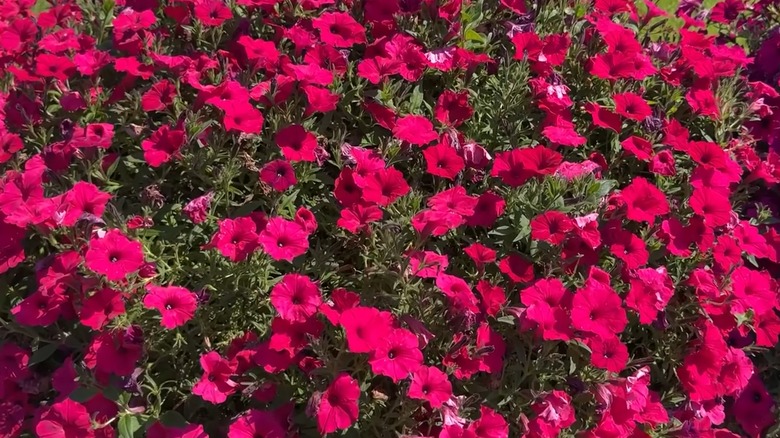
A continual bloomer, 'Supertunia Vista Fuchsia II' is a stunning flower you can grow in hanging baskets to weave some hummingbird magic while making use of vertical space and striking up an eye-catching display on your porch, deck, balcony, patio, or garden. You can also use it as a cascading ground cover to fill window boxes for added beauty. After it's planted and right until a hard frost puts it out of business, it's covered in waves of fuchsia pink tube-like blooms, to such an extent that you can't easily spot the green leaves — the display is certainly floriferous. Because the flowers are bright pink and teeming with nectar, they lure in both hummingbirds and butterflies.
Why 'Supertunia Vista Fuchsia II' is excellent for hummingbirds
If you've previously grown petunias, you may have looked at deadheading, the essential gardening task that keeps petunias blooming all summer, with disdain. Regularly snipping off spent blooms takes time and effort that is better spent just taking in the view (isn't gardening supposed to be relaxing, anyway?). Besides, petunias can grow tatty when the sun beats down in the dog days of summer.
The 'Supertunia Vista Fuchsia II' petunia takes these problems head-on and overturns them. For a start, it is self-cleaning, meaning it drops its own dead flowers without human intervention. So, whether it's you or the hummers, both will find a healthy stream of new flowers to gawk at or drink from throughout the growing season. Moreover, it's heat-tolerant, so it'll look lovely even during summer. Considering some hummingbirds continue nesting into the summer, creating a non-stop display of nectar-rich flowers can be highly valuable. Supplementing with hummingbird feeders and locating these flowering baskets close to small shrubs that offer protective cover may even encourage these tiny jewels to nest in your yard.
Even though 'Fuchsia II' has a well-branched form, its canopy may open up later in the season. At that time, you can prune the plant by one-third to encourage a bushier form. Don't worry, it'll bud out and rebloom within a week, keeping your local hummingbirds well-fed into fall.
Designing and caring for 'Supertunia Vista Fuchsia II' in hanging baskets
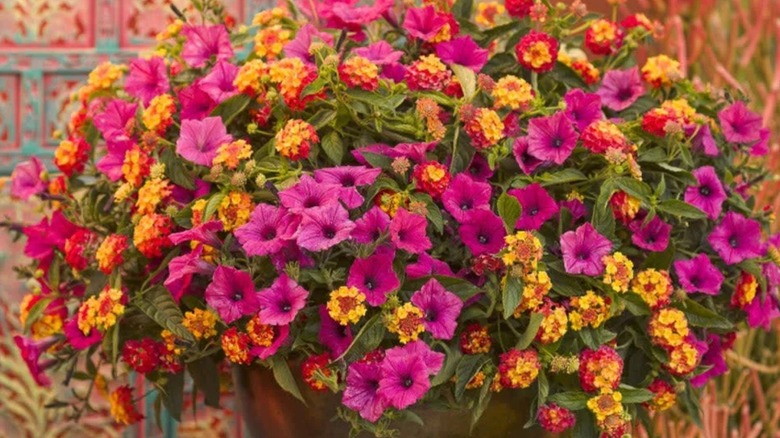
'Supertunia Vista Fuchsia II' isn't a small plant. At maturity, it can grow over 2 feet high and spread 3 feet wide. Moreover, it has a mixed habit, where it first creates a cute mound before cascading down nearly 4 feet over the edges. For this reason, it's best planted in a large basket or container where its full form can truly shine. Gardeners can fill out a 20-inch-wide planter with three plants, or mix it up by adding other Supertunia Vista varieties like 'Bubblegum II' and 'Silverberry'. You may also grow it in combination with other hummingbird-friendly flowers like lantanas and calibrachoa in containers as small as 12 inches. No matter your choice of a companion, make sure it's highly vigorous or a fast grower, or it will become lost in the river of fuchsia pink flowers.
You must water and feed 'Supertunia Vista Fuchsia II' more often than you would landscape plants. That's because hanging baskets dry out fast, and even faster if they're lined in coir (and they also leach out more nutrients). Ensure the water drains out from the bottom so the rootball is fully moist. Two months from planting, and then every couple of months, add a water-soluble, slow-release fertilizer. If the foliage still turns yellowish-green, get a fertilizer with the EDDHA form of chelated iron; even if the container's soil pH levels are fluctuating, plants have a better chance of absorbing iron in this form, curbing further discoloration.