

This Flowering Drought-Tolerant Shrub Does More Than Elevate Your Xeriscape
For gardeners trying to conserve water, xeriscape gardening promotes the use of drought-tolerant plants. When it comes to xeriscape gardening, the ideal plant combines drought-tolerance with beauty, like the California lilac (Ceanothus). It's a pretty blue flower that butterflies love. But the benefits of this vibrant, flowering species go beyond its ability to conserve water and to attract pollinators. It also lends itself to aiding neighboring plants by improving the soil surrounding it via nitrogen fixing. Because improving the soil also serves as a key principle of xeriscape gardening, you can choose California lilacs for more than just the way their beauty elevates your drought-tolerant garden.
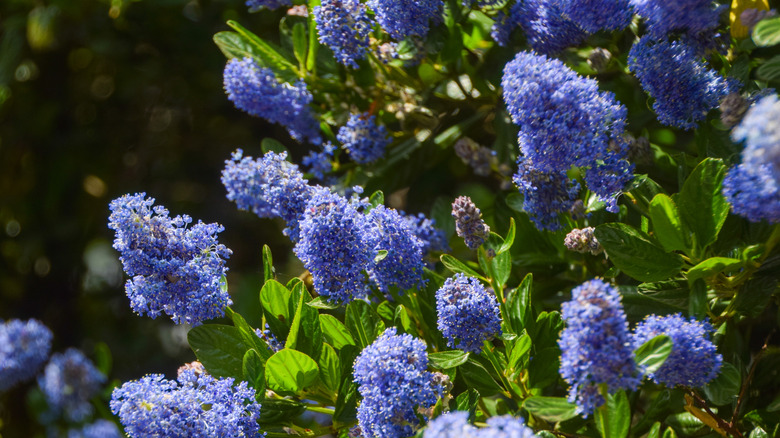
Another name for this evergreen species is blueblossom, referencing its bold blue flowers, which are tiny and come in dense, fragrant clusters. There are actually around 55 different species of California lilac; majority are native to California, but also other states on the West Coast. That variety means you can choose between species with different characteristics to suit your yard. It seems all of the species included under the California lilac label help fix nitrogen in the soil, which means you can comfortably choose the low-growing Point Reyes ceanothus (Ceanothus gloriosus) or the large, bushy Ceanothus 'Concha' cultivar, knowing they both will improve your soil. And some California lilac species are beautiful blue trees that bring life to dry climates while improving the surrounding soil, like Ceanothus 'Ray Hartman.'
How California lilacs can transform poor soil
Nitrogen fixing is a process where some plants work with soil microbes to help add nitrogen back into the soil by forming root nodules. Many common nitrogen fixers are members of the legume family, but California lilacs are a prettier option to grow outside of the vegetable garden. For most plants under the Ceanothus genus, you can let them do their own thing without worrying about fertilization. They actually do best in poorer soil and do not need extra feeding.
Because California lilac helps add vital nitrogen resources to poor soil, you can strategically plant it in your yard where it will do the most good. For example, this blue-blooming shrub is one of the best flowers to grow under thick-root trees. The blue blossom (Ceanothus thyrsiflorus) variety is very adaptable to shade and can help provide more vital nitrogen for the tree to use. If there is a spot to avoid planting this shrub in the garden, it is anywhere without good drainage. Consider growing it alongside other native species. Your California lilac can help improve degraded soil to help newly introduced natives thrive in your yard. It especially helps for gardeners trying to establish low-maintenance, drought-tolerant xeriscapes by boosting the surrounding soil naturally.