

Plant This Fast-Growing Flowering Vine For A Garden Full Of Hummingbirds
We may receive a commission on purchases made from links.
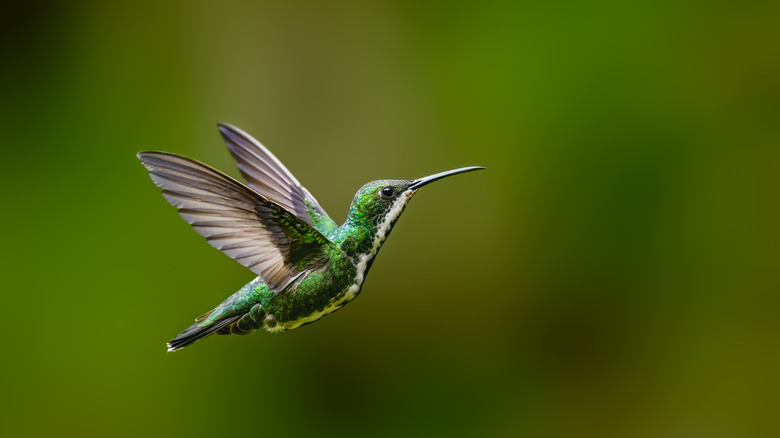
Hummingbirds are remarkable little birds. These living jewels fly through gardens at astonishing speeds, then stop on a dime to gracefully hover beside a flower to sup its nectar. There are a number of plants that boast essential features for attracting hummingbirds to your garden. However, if you're looking for a flowering vine that will quickly cover a new trellis in your pollinator garden, canary creeper (Tropaeolum peregrinum) should be your first pick. Native to South America, canary creeper has bright yellow fringed flowers that hummers love and can grow up to 12 feet in a single year. The speedy climber takes just 1 to 2 years to reach its mature height.
Canary creepers bloom from summer until the first frost and have feathery petals that resemble the wings of a canary in flight — hence the plant's common name. The flowers, which appear en masse, are packed with nectar. Their long, funnel-shaped nectar spurs are especially appealing to hummingbirds. In short, it's difficult for these tiny visitors to ignore this vine if it's growing in your yard. Hummers are not the only visitors to canary creepers — bees and butterflies are drawn to its blooms as well.
Even when it's not flowering, canary creeper will add interest to a garden. The lush five-lobed leaves of this quirky climber are another of its distinctive features. They're pale blue-green and extremely pretty — some gardeners even describe them as hand-like. Like the flowers, they are edible, with a peppery flavor. Arguably, the only real downside to canary creeper is that it will only thrive in USDA Hardiness Zones 10 to 11. Outside of these zones, you'll have to grow it as an annual or in a container you overwinter.
Growing canary creeper to attract hummingbirds to your garden
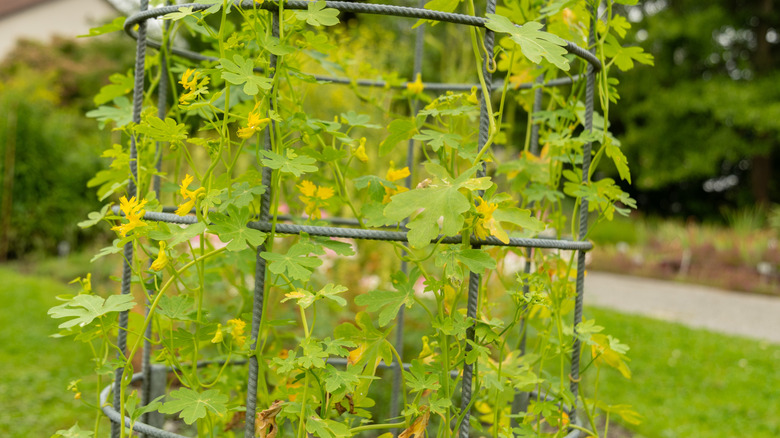
While canary creeper isn't rare in the U.S., seeds can be hard to come by. Some of the best companies to buy your garden seeds from are specialty nurseries — Pinetree Garden Seeds, Farmacie Isolde, and Seedville USA all carry the plant. Or you can get a 100-seed packet of Outsidepride Yellow Canary Creeper Nasturtium Seeds for under $8 online. Start the seeds indoors in the dark about six to eight weeks before the last frost date in your area. You could see sprouts in as little as seven days. Harden off the seedlings for about two weeks before transplanting them into a garden bed. You can also directly sow the seeds outdoors once the danger of frost has passed. As with indoor sowing, wait at least seven days for germination.
Carefully consider the spot you plant your canary creeper. This pretty vine needs well-drained soil and lots of sun. It will grow in part shade, but may flower less, and that's not great if you're trying to attract hummingbirds to your garden. Nasturtiums also forgo blooming in too-fertile soil. As your canary creeper puts out its roaming tendrils, train them up a trellis or, if you have the space, allow it to spread over a garden bed as a ground cover. Water your plant whenever the top inch of the soil feels dry — canary creeper hates soggy soil. Feed your vine with a potassium-rich fertilizer during the growing season to boost flowering. Follow the application instructions on the label. Get its care right, and this flowering vine will keep hummingbirds coming back to your yard with almost no effort from you at all.