

Everyone Owned It In The 19th Century — The Kitchen Appliance That's Worth Making A Comeback
We may receive a commission on purchases made from links.
They say necessity is the mother of invention, but some innovations come along even when the need is already met by another device. Take today's fridge as an example. In the late 19th and early 20th centuries, before electricity became widely available, many homes had iceboxes to keep food cool. While this was a labor-intensive solution by our current standards, it was much better than having nothing at all. Although iceboxes aren't a replacement for modern refrigeration, they still have their uses. Could they be the next best retro appliance to make a comeback?
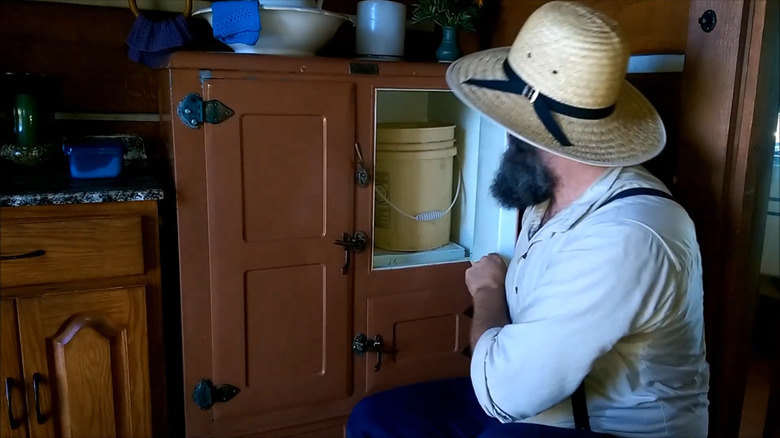
Iceboxes were free-standing, insulated wooden cabinets that people filled with blocks of ice and all the perishable food they needed to keep fresh. The ice was typically stored in a chamber at the top of the cabinet, while the food was stored in a lower chamber. There was usually a drip tray in the bottom of the cabinet that captured water from the melting ice. On some models, you could open a little door and pull it out to empty it.
You can still buy antique iceboxes today, and they even have modern equivalents in ice buckets, insulated coolers, and solar-powered camping fridges. The original wooden cabinets aren't just pretty to look at. It's easy to see how these nifty appliances could still useful as a backup mini-fridge or drinks cart — think summer parties or holiday family get-togethers. Some people living off-grid are even using them as a primary option! Unlike that second fridge humming away in your garage, an icebox costs basically nothing to run outside of some ice, making it a smart choice for occasional use. Plus, aside from the door hinges and latches, there are no moving parts, so there's nothing to maintain.
How to bring an antique icebox into your kitchen
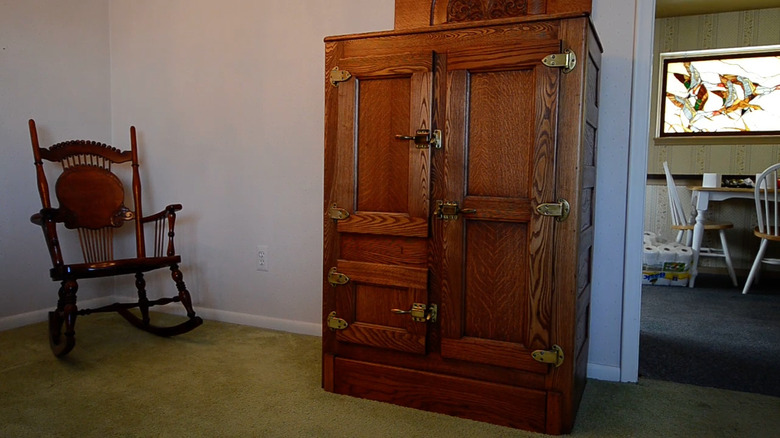
After President John F. Kennedy was assassinated in 1963, his mother Rose Kennedy opened the family home as a museum. She included a wooden icebox in place of a refrigerator when she restored the 1917 kitchen. Today, many people use iceboxes as storage furniture, but there's no reason they can't be functional. As mentioned, a handful of off-grid homesteaders keep them in service, as do many Amish households. Some Amish still take a couple of days off work each year to harvest ice the old-fashioned way.
Some of the best places to shop for vintage furniture like iceboxes include antique malls, estate sales, Facebook Marketplace, eBay, and Etsy — and even your local thrift store, if you're lucky. Some have been restored, but many are still in their original condition. From modest thrift store finds to fully refurbished iceboxes, prices vary significantly.
Some of the antique iceboxes you find online are actually early refrigerators. There was considerable overlap in use, as electric refrigeration became more accessible to more households, and designs were similar. Also, in the 1920s, some iceboxes were retrofitted with electric motors or gas engines. Another factor that can complicate your search is the vintage icebox decor style. Contemporary end tables, cabinets, and coffee tables are crafted in the style of iceboxes, though they've never held ice a day in their lives. While this can make it a little harder to find the real thing, they can work well in a home for those who simply like the icebox vibe.
Tips for restoring and running an icebox in the 21st century
If you love the look of the 100-year-old or more wooden iceboxes or prefer the metal models that appeared after 1915, you may be considering using one in your kitchen in place of a fridge. The downside? The work to get an antique icebox into safe, usable condition will almost certainly cost you time and money. You could skip the ice and use one as an antique cabinet that's great for kitchen storage, but if the appliance is in original condition or sat unused in a musty basement for decades, you'll still have to clean and restore it. This could include deodorizing the interior, refinishing the wooden exterior, and polishing hardware. If you plan to use the icebox for food storage, you'll also have to check the metal lining, shelving, drip pan, seals, and insulation and repair them as needed.
When you're using an icebox — whether it's filled with pies at Thanksgiving or keeping the burgers and beverages cold during a patio party — it's vital to keep a close eye on the temperature inside the appliance. Food safety guidelines state that fresh food must be stored at or below 40 degrees Fahrenheit or you risk illness. Set up a digital thermometer on the exterior of the fridge so you can get a reading without opening the door and letting all that precious cold air escape. A GoveeLife Wireless Digital Refrigerator Thermometer costs about $40 and sends alerts to your phone. Why not pair technology from today with an appliance from the past that's still worthwhile?