

The Fertilizer Mistake That's Secretly Damaging Your Concrete Driveway
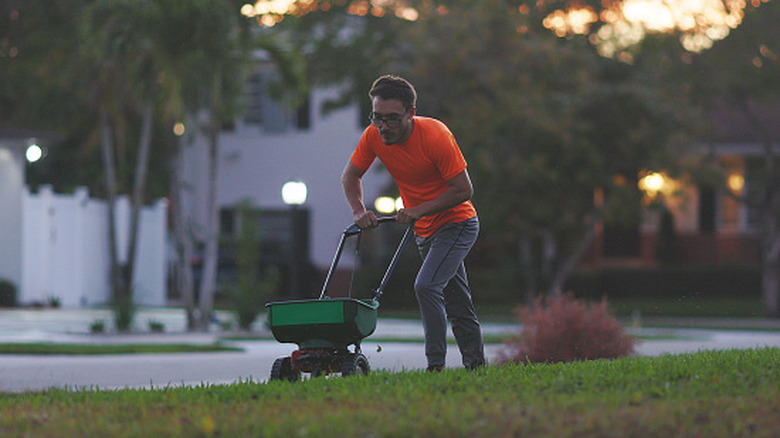
One of the simplest ways to keep a lawn healthy and green is to apply fertilizer at regular intervals. Fertilizer replenishes nutrients in the soil, encourages strong root growth, and helps grass develop thicker, healthier blades. Many homeowners can handle the job themselves using a spreader and granular fertilizer, both of which are widely available at home and garden stores.
When using lawn fertilizer near a concrete driveway or sidewalk, though, it's important to be careful. If fertilizer spills while you're filling the spreader, or if the spreader throws granules onto surrounding areas, the iron found in some fertilizers can leave stains on hard surfaces like concrete. Once the granules are exposed to moisture, the iron can oxidize and create orange discoloration that resembles rust stains. These stains are typically cosmetic and don't affect the structural integrity of the concrete, but they can be unsightly and difficult to remove.
Iron exposure from fertilizer isn't the only reason your concrete driveway has rust stains. Anything that contains enough iron, such as tools or iron-rich water, can leave similar stains. Even if you are careful to keep metal items away from the driveway, stray granules are a common culprit because they're easy to overlook after a lawn treatment and can remain on the concrete until they're exposed to moisture.
Why fertilizer with iron can stain concrete driveways
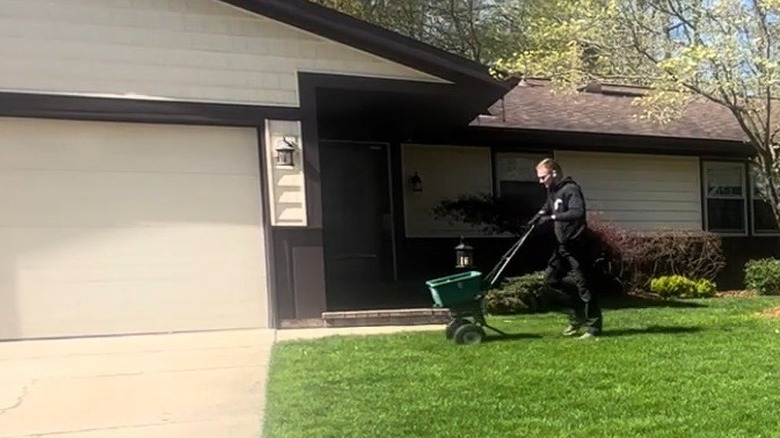
Granular fertilizers that contain iron usually don't stain concrete immediately. Instead, discoloration may appear over the course of several days. The iron needs exposure to moisture and oxygen before oxidation occurs and visible staining develops. Rain or even moisture from your sprinkler can trigger the process if fertilizer granules remain on the driveway.
You're more likely to see fertilizer granules hit your driveway if you're using a broadcast spreader. The broadcast (or rotary) design allows you to finish the job faster by slowly dropping granules from the hopper onto a spinning wheel that ejects them outward. It could throw granules up to 11 feet, so as you work near the driveway, they could end up on the concrete.
With a drop spreader, the granules slowly fall in a precise manner out of the hopper and onto the grass. It's easier to create clean edges along driveways or garden beds because you have more control over where the granules eventually fall. The control available with the drop spreader means you have less chance of hitting the concrete driveway with granules.
How you can stop fertilizer-based rust stains from forming
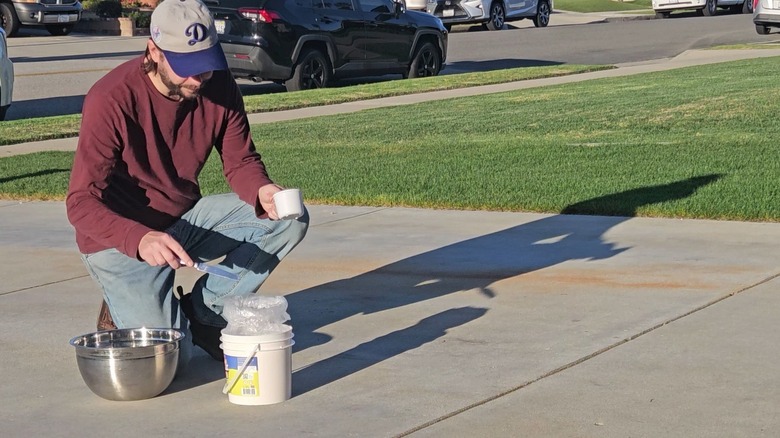
The best way to avoid fertilizer stains on a concrete driveway is to remove any stray granules immediately after application. If you're using a broadcast or rotary spreader, take a few minutes to inspect nearby hard surfaces and sweep up any fertilizer that landed outside the lawn. A broom works well, and you can either sweep the granules back into the grass or collect and dispose of them. Never wash them away with a garden hose or pressure washer, as doing so can expose them to moisture that could lead to iron staining.
Don't try to avoid concrete staining by filling your spreader on the turf. Instead, filling your spreader over a driveway, garage floor, or sidewalk is preferable to filling it over the grass. If you spill granules during filling and they pile up on the grass, you'll increase the risk of killing the turf. Just clean up any spills on the concrete right away.
Another option is to choose a fertilizer that doesn't contain added iron. While iron can help transform a lawn into a stunning green oasis, not every lawn needs it. If your grass is already healthy and green, an iron supplement may be unnecessary. On the other hand, yellowing grass can sometimes indicate an iron deficiency. A soil test can help determine which nutrients your lawn needs and whether a fertilizer containing iron is worth using.