

No More Concrete Pavers: The Eco-Friendly Patio Alternative That Looks Great
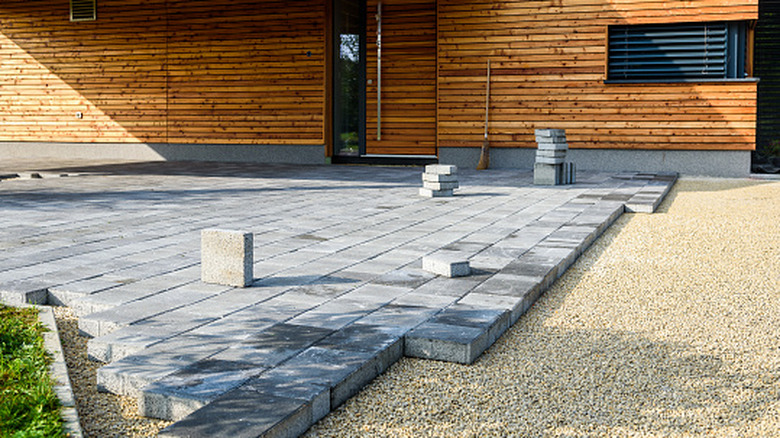
If you're considering putting in a new patio or revamping your current one, you might be wondering whether concrete or brick pavers are best. Both have been the go-to for patios for years and usually hold up quite well. They are also fairly inexpensive, too. However, when you really look into it, concrete pavers aren't all that environmentally friendly. Especially not when you compare them to newer materials like resin stone.
For a start, concrete pavers can absorb heat, so if your patio is not covered, it could be unpleasantly hot if the sun has been out for a few days. The other important fact you want to consider is that concrete pavers are non-permeable, which means that water simply runs off and causes flooding or soil erosion, especially if you've used polymeric sand to hold the pavers in place. Excess water carrying soil and other debris can also end up in stormwater drains, instead of soaking into the ground to replenish the groundwater. On the other hand, resin stone, which is also becoming popular as a permeable driveway material that's low-maintenance and weed-resistant, is an affordable alternative that allows water to easily soak through.
Why resin stone is better for the environment
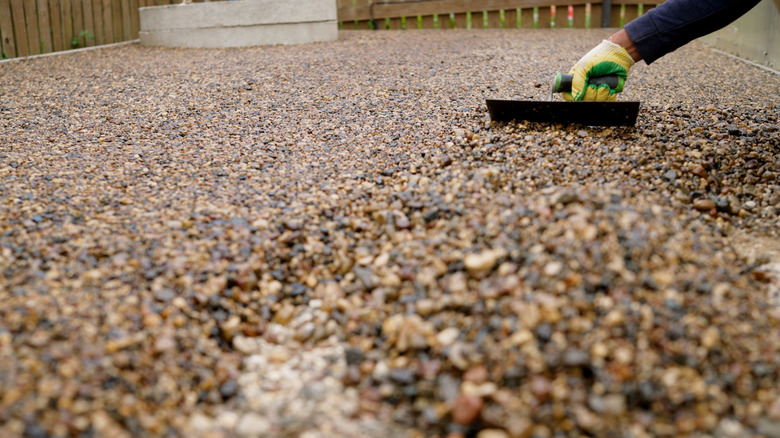
Resin stone is manufactured by combining stone aggregates with a specially formulated polyurethane resin. This results in a durable and strong paving compound that is completely permeable. In other words, rainwater can soak through freely to reduce pressure on stormwater drains and prevent flooding. The fact that the water can soak into the soil under the surface also means that the stone will stay much cooler than concrete pavers would. Compared to concrete, resin stone is often more durable and resistant to cracking, meaning it can last for years with minimal maintenance.
Patios laid with this hardscaping material will not only look amazing because there are numerous color choices, but there are also UV-resistant resin options, meaning that the colors will stay true and there'll be no fading. Resin stone can even be used around trees, providing a much better solution to keep them healthy. And to make it even more practical, it's also possible to lay it over existing surfaces such as weather-worn concrete or broken and damaged paving. This has many additional environmental advantages because there's a reduction in waste ending up in landfill, and fewer emissions are produced because you're not removing the old surface.
Finally, because resin stone is laid as a solid surface, there are no gaps for weeds to grow, which means you won't have to use any herbicides. Once you've resurfaced your patio with resin stone, you might also want to find colorful upgrades that will brighten it up with minimal effort.