

Not Hostas, Not Coral Bells: The Deer-Resistant Plant That's Great For Shaded Flower Beds
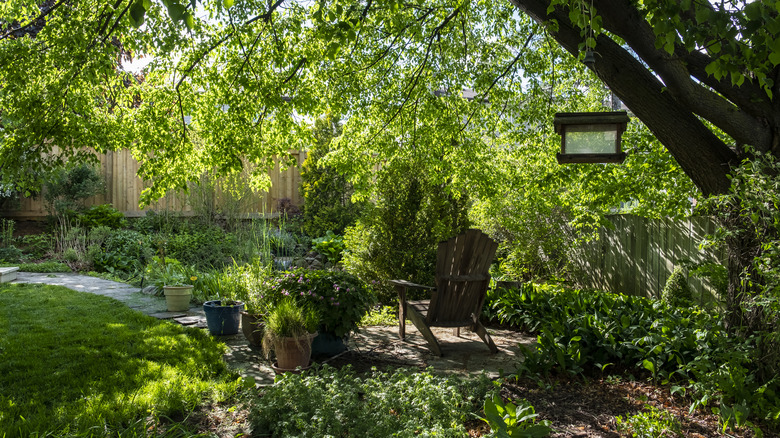
There are many different mental health benefits associated with gardening, but it isn't always easy. Sometimes, it can be downright frustrating, especially when you're trying to navigate the more challenging areas of your yard. When you find yourself faced not only with stubborn, shady spots that seem to struggle to support any plant, but also deer that turn your seedlings into a buffet, you may want to throw in the towel. Fortunately, you're not out of options. Instead, this genus of plants handles shade with ease, and they're also deer-resistant.
Commonly known as the leopard plant, ligularia is an eye-catching perennial that blooms through the summer. It showcases stunning yellow and orange flowers, a striking contrast of brightness for the shaded beds of your yard. The plant is also fairly easy to grow, so it can be a helpful choice when in need of plants for beginners. Of course, easy to grow doesn't mean you can sow seeds and forget them. Offering your ligularias the right care can make the difference between a lackluster garden and a shaded flower bed filled with show-stopping florals.
How to grow the shade-loving ligularia
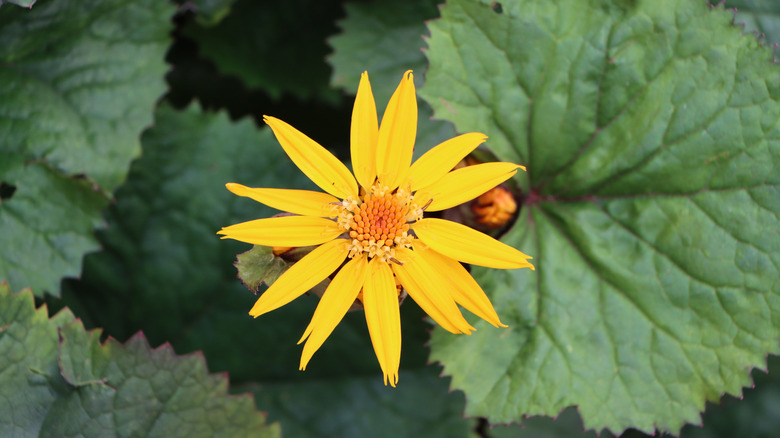
Because ligularia is a perennial, one of the very first things to brush up on is its USDA growing zones. These are the areas where ligularia can actually survive as a perennial, meaning you have the opportunity to enjoy plants from this genus year after year. Of course, with so many different species in the genus ligularia, you may find some minor differences from one plant to another. Still, overall, the genus is considered to be hardy in zones 4 to 8.
Light is another notable consideration. Just because ligularia is a shade lover doesn't mean you can leave it entirely in the dark. Instead, ligularia grows in full to partial shade. They also handle sunlight-dappled conditions. A common fear with many plants is providing them with too little sunlight. However, with ligularia, too much sunlight can cause problems, including wilting leaves. As a result, finding a spot with enough sunlight for growth but primarily shaded conditions, such as an east- or north-facing spot in your yard, may produce the best results.
Many people choose to grow ligularia near water features in their yard. This is because the genus prefers moist soil that's rich in nutrients. If you do choose to plant it elsewhere in your yard, whether in a container on a covered porch or a shaded flower bed, ensure it stays properly hydrated.