

Don't Fall For Its Beauty: The Mosquito-Attracting Tree You Don't Want In Your Yard
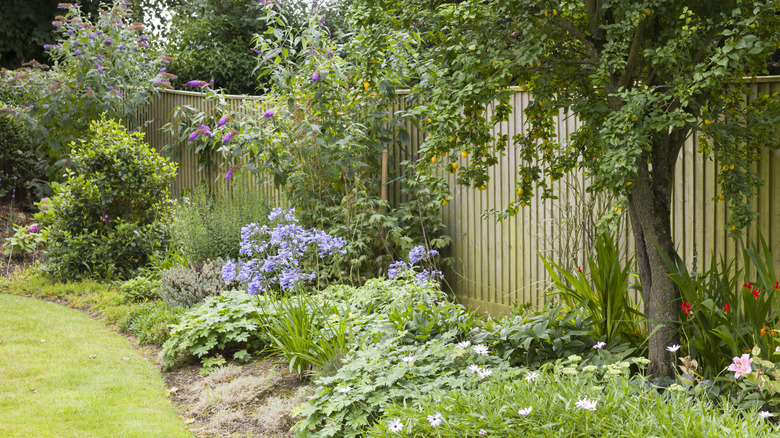
There are plenty of gorgeous and fast-growing plants to add to your landscape if you want to create a lush, private garden. An important part of picking the right plant also means looking closely at any drawbacks it might have, however. While a lovely option like the autumn olive (Elaeagnus umbellata) is definitely pleasing to the eye, the perennial has a huge downside that should make you think twice about putting it in your yard: It can end up attracting tons of mosquitoes. You can recognize autumn olive thanks to three easy-to-identify features: its silver-green leaves, fragrant pale-colored flowers, and plentiful clusters of edible, round red berries.
Don't let this tree's good looks sway you. It has become notorious with gardeners for yet another drawback. Autumn olive is considered invasive in certain areas, like North Carolina, but not everywhere in the U.S. Some states have put a ban or restriction on its sale into law, including Minnesota, Wisconsin, Michigan, Illinois, Indiana, Tennessee, West Virginia, New York, Massachusetts, New Hampshire, Maine, and West Virginia. This plant should not be planted in those regions without exception. The plant can be grown anywhere else in the U.S.
In other states, the tree is listed for the sake of public knowledge (and voluntary avoidance). These states include: Oregon, Iowa, Missouri, Kentucky, Alabama, Georgia, Florida, South Carolina, Ohio, Pennsylvania, New Jersey, Connecticut, and Rhode Island. Beyond the fact that gardeners dislike autumn olive for being invasive, the fact that it's also a literal magnet for blood-sucking mosquitoes should give you plenty of reason to keep the tree off your property.
Why autumn olive attracts mosquitos, and some alternatives
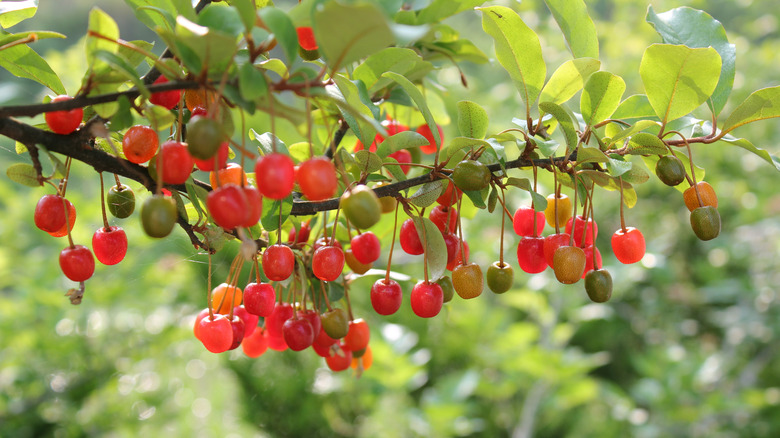
The reason autumn olive has such a strong relationship to mosquitoes all comes down to the fact that it's a nitrogen-fixing plant. When those nitrogen-rich leaves fall into standing water (whether it's a rain puddle, a neglected birdbath, or a dedicated nearby water feature in your yard), they decay, allowing the growth of fungi and bacteria.
A 2015 study published in Springer Nature Link found that these leaves end up creating a super-charged food source for baby mosquitoes, which are hatched there in the water, with a larger amount and variety of bacteria for the larvae to eat. Those researchers also discovered that this leaf-decay water leads to a higher rate of mosquitoes surviving to adulthood. So, planting this tree in your yard could literally come back and bite you in a big way, even if you're using one of these ways to keep mosquitoes away from your home.
However, if you still want a stunning ornamental tree, there are plenty of beautiful, well-behaved alternatives that could look great in your yard. If you have an open space where you're trying to create a focal point, try planting rugged, highly adaptable trees like the Saskatoon serviceberry (Amelanchier alnifolia) or the American plum (Prunus americana). These lovely trees both offer beautiful blooms and foliage, giving you great visual appeal under similar growing conditions, and no issues with mosquitoes or being too invasive for your yard. Most importantly, their standard leaf litter won't boost your local mosquito populations, ensuring you can comfortably sit on your patio all summer long.