

How To Turn An Ordinary Japanese Maple Into A Stunning Statement Piece
We may receive a commission on purchases made from links.
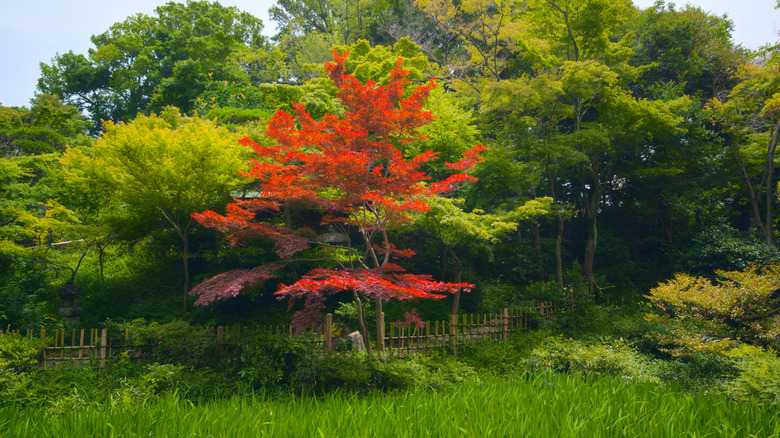
An ordinary Japanese maple (Acer palmatum) is anything but; slightly drooping, feathery leaves and a delicate form give each tree a feel of dignity and a bit of melancholy. Japanese maples also take well to the art of bonsai. Although a Japanese maple scarcely needs improvement, a bit of artful trimming and wire wrapping can sculpt this already beautiful specimen into something even more stunning.
Since bonsai trees live in pots, it's best to start with a young nursery tree. You can also uproot young trees that have been growing outdoors. The supplies you'll need are a sharp branch saw, pruning snips, aluminum bonsai wire, and a good pot and bonsai soil (Check out our guide on choosing the best type of pot for a happy and healthy bonsai tree.) Don't run the risk of spreading infection to the tree with dirty tools, so also grab a bottle of 70% isopropyl alcohol and a clean rag. Lastly, you may or may not want to use bonsai putty to cover the cut areas on the tree. There's controversy in the bonsai community about whether putty helps the plant heal or whether the cuts should heal naturally. Apparently, growers have been successful with both methods.
Bonsai takes a real Zen mindset, since the trees require ongoing attention and many years to reach their peak beauty. You'll take on the major trunk trims for several seasons before shaping any branches with the wire.
Potting and creating a new apex for your Japanese maple
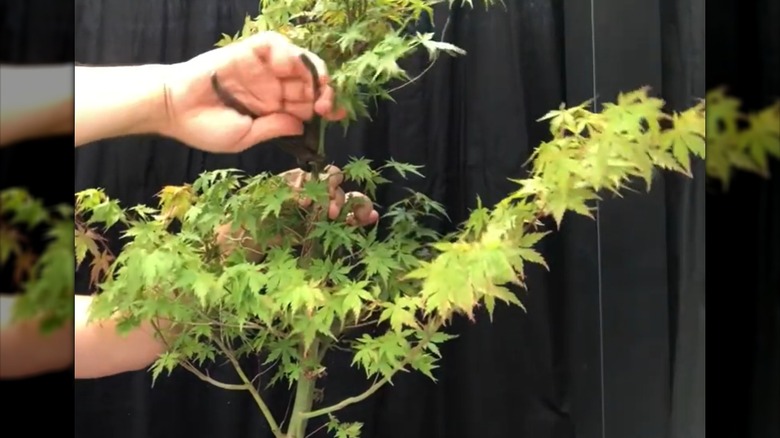
To start potting, attach one or two 12-inch pieces of wire (or longer, for larger trees) through the drainage holes to hold the plant in its shallow pot. Mound up a bit of soil at the center of the pot, place your tree atop the soil, and gently wrap the wire around the trunk. Bonsai take lots of handling, so the wires secure the trees in their shallow pots.
Next is what's known as the "trunk chop". This entails cutting off the top of the tree at the trunk to trigger it to put out more side branches. It's best to tackle this task in late summer or early fall, to work with the tree's sap flow at the time. The general consensus among bonsai gardeners is to do this in summer or early fall, since a moderate amount of sap is moving through the tree to help it heal.
On the main trunk, roughly scope out the vertical halfway point to make the cut. The point of this is to develop a new treetop (or "apex') formed to your liking. Do note that a new apex will take several years to develop. Prepare your saw or snips with alcohol, and make a horizontal cut across the trunk. Unfortunately, the treetop is only fit for the compost pile. (Although you can propagate this popular garden tree, you'll have more luck rooting smaller branches you trim in spring.) You may cover the cut area with something like Kiyonal New Bonsai Pruning Cutting Sealer, or let nature take care of the healing process.
Shaping the new apex and branches
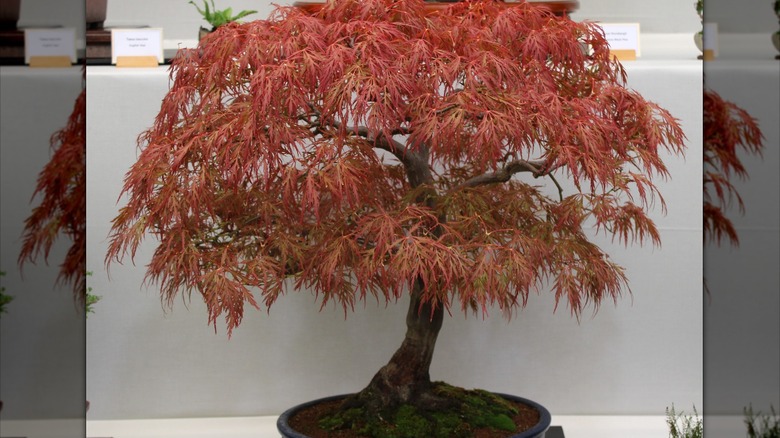
Your tree is waking up after a winter's rest, and it's begun to put out fresh branches. Choose a branch that's close to the trunk's cut end to sculpt into a new apex for the tree. The eventual goal is to have a gradual taper from the trunk to the tip of the apex, and this is an integral part of developing the curved shape that many bonsai hobbyists create. (Some bonsai designs involve vertical trunks and apexes, but this is less common.) Loosely wrap the wire around the upper portion of the trunk and continue wrapping it along the length of your chosen apex branch. Bend the wired branch into a position you're hoping will become permanent.
Snip away any shoots that don't fit with your vision of the design. For the ones that you keep, follow the same steps as you did to wire the apex branch. Here, patience is key, since it can take about five years for the new apex to develop. You may remove the wires from the branches once they have shaped to your liking, or if the wire is cutting into the wood. This is a process that you'll undertake each year in spring. While your tree evolves, it needs plenty of sunlight. You can place your pot in a sunny spot outdoors, and for an indoor bonsai that thrives, the best spot for it is very close to a bright window with southern exposure.