

12 Simple Tips And Tricks To Make Your Tomatoes Grow Faster
We may receive a commission on purchases made from links.
Growing tomatoes is up there with one of the most rewarding gardening pursuits. Whether you toss them into a salad, blitz them into a paste, or whip up some chutneys for your friends at Christmas, there's nothing quite like the flavor of your own hard work. The problem is, knowing just how delicious those tomatoes are going to be can lead to a certain degree of impatience. And while you can hardly expect your new seedlings to sprout hundreds of tasty tomatoes overnight, there are a few things you can do to try and speed the process along. That's what this guide is here to help you do.
Below, you'll find 12 useful tips to help expedite your tomato harvest. Some are super simple to implement, like planting them in an appropriate spot in your yard. Others revolve around ensuring your growing beds are primed and ready for speedy tomato success, and some require a little careful research prior to visiting your local nursery. What you should find is that, if you string just a few of these growing tips together, you'll shave the time it takes to grow gorgeous tomatoes by not just days, but potentially weeks.
Pick a fast-growing variety
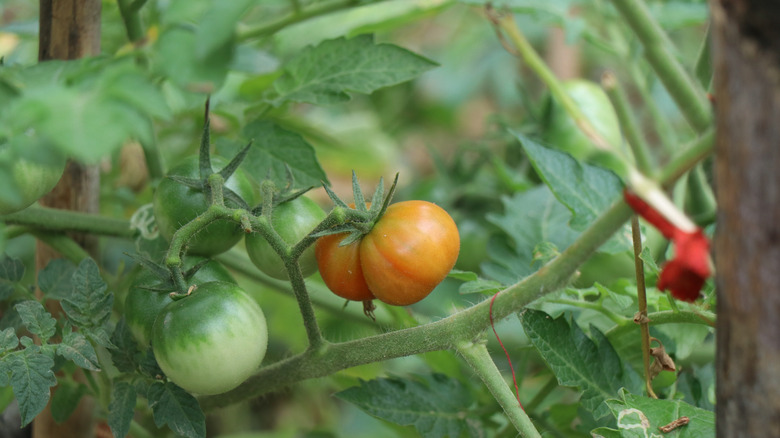
Many gardeners will tell you that success with tomatoes starts with the soil you plant them in. And to a degree, we'd say they're right. But if speed is of the essence, then we'd argue that it actually starts at the garden store. If you want to grow lots of tomatoes as quickly as you can, then you'll want to sniff out the varieties that are bred to grow the fastest. Believe it or not, there are some serious differences between tomato varieties when it comes to growing time.
For example, many beefsteak tomatoes, while impressive when fully grown, can take up to 85 days to get there. Compare that to a faster-growing variety, like the Fourth of July Tomato (Solanum lycopersicum 'Fourth of July'), which typically fruits in less than two months. If you want more tomatoes earlier in the season, then the latter would be the better choice.
Fortunately, it's easy to see how long different tomatoes take to grow. The only thing preventing you from finding out is not asking, so ask away! Pick the brains of the staff at your local nursery, or if you're shopping online, run a search on Google. As the above two varieties demonstrate, the time it takes for different tomatoes to grow can vary by weeks. If you want tomatoes, stat, then taking the time to find out which tomato variety has the quickest harvest time is absolutely worth it.
Manage your soil mulch to ensure it's nice and cozy
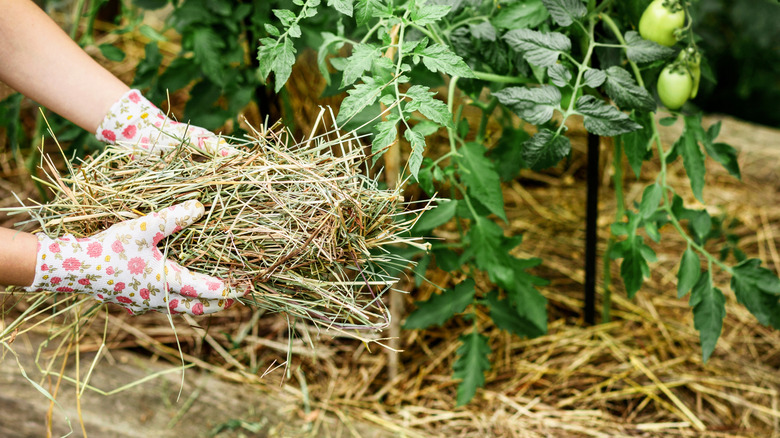
Now that you've chosen a fast-growing tomato type, it's time to actually think about the soil. We're not talking about food and water — although, as you'll see later, those are both important soil considerations if you want to grow healthy tomatoes. Instead, we're talking about temperature. Warm soil is much more conducive to fast tomato growth than chilly ground. In the earlier part of your campaign, during the spring, your soil may not yet have reached its late-spring or summer warmth. And with that being the case, it can pay to give the sun a helping hand. This means exposing your soil to more sunlight, and one way to do that is to move aside any mulch.
By raking away mulch from the surface of your soil, you'll allow the soil — plus any roots — direct access to the sun's warmth. Once ambient temperatures start to climb and your soil follows suit, that's the time to replace your mulch. By exposing your soil to more sunshine in the early stages of growth, then re-mulching once things warm up, you'll give the tomatoes rooted in it a solid head-start on the season. In turn, you can expect a faster time to harvest versus allowing them to languish in cooler conditions.
Soak your tomatoes in sunshine and protect them from the wind
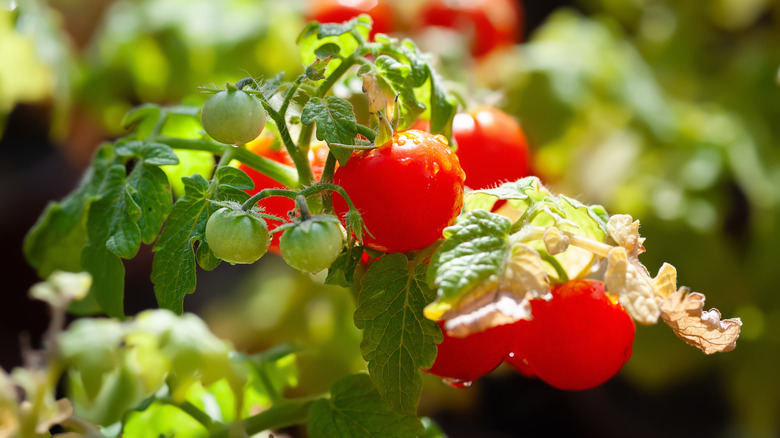
While tomatoes will certainly grow in a variety of different conditions, some are more favorable than others. The best spot to plant tomatoes is generally one with minimal exposure to wind, but all the exposure to sunshine. Starting with wind, a breazy position poses several risks to tomatoes. Leaves can drop off, interfering with their ability to photosynthesize. Stems can break, too, which is sure to slow things down. And, even if your plants manage to flower, strong winds could knock the flowers off before they have a chance to set fruit. Wind also tends to cool the plants and the soil, which as we've discovered, is less than ideal if you want your tomatoes to grow quickly. As for sunlight, tomatoes need at least six, ideally eight, hours per day. Any less, and you can expect a much slower time to harvest than that which is listed on the seed packet — perhaps up to twice as long.
So, before you start planting, take a tour around your yard and get a feel for where's most likely to support tomatoes. Ideally, do it on a day when the prevailing wind is blowing, and try to feel which areas are most sheltered. At the same time, assess which areas receive the most sunshine. If you can find a leeward spot that's also south-facing, then perfect! In those conditions, tomatoes are much more likely to grow at their fastest possible rate.
Ensure your soil is deep, fertile, and well-drained
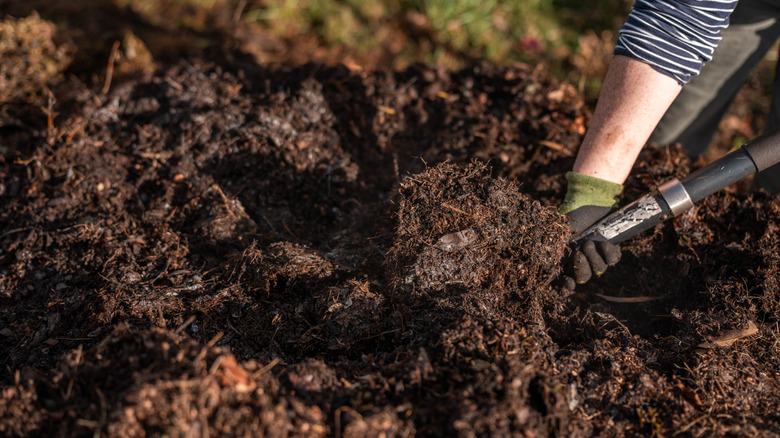
We've touched upon this already, but how you feed your tomatoes is just as important to speedy growth as the environmental conditions you grow them in. Even in the sunniest, most sheltered spot, sterile soil is unlikely to produce decent tomatoes, and those that do appear are likely to grow on the go-slow. That's not to say that tomatoes are fussy, in fact they will grow in many types of soil, but if the soil is poor and nutrient-deficient, it could stunt the growth of your transplants, or prevent them from growing altogether. Instead, for the best and fastest results, a deep, fertile, well-drained substrate is best for tomatoes.
It should drain freely to avoid issues like root rot, which can dampen your plant's spirits, delay fruiting, and even lead to death. As for fertility, tomatoes are hungry growers. If you fold lots of nutrients into the soil prior to planting, they're much more likely to get off to a fast start. Use home-grown compost and well-rotted manure, folding around 2 inches into the top 10 inches of soil. And as for depth, tomatoes fare better when planted deep (assuming that you folded nutrients deeply into the soil!). Ideally, their entire rootball and stem up to the first leaves should be buried. Planted this way, the stem will happily sprout new roots, and when it does, it'll be able to soak up even more of those goodies that you worked into the soil.
Grow your tomatoes in raised beds
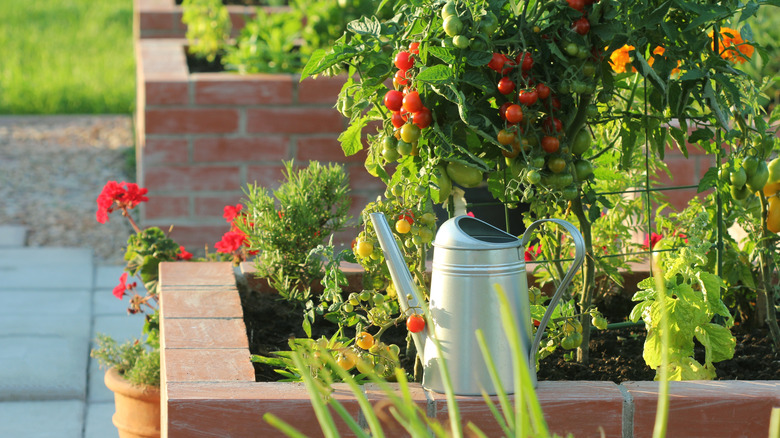
If you've never grown this way before, then starting a raised bed garden can be surprisingly easy. There are also various raised bed designs that you can choose from to help optimize your growing space, regardless of how much room you have to play with. What's more, if growing tomatoes quickly is important to you, then raised beds are an excellent way to speed things along. As for why, it boils down to soil temperature.
Since raised beds are, by nature, raised above ground level, the soil inside them warms much more quickly than your regular in-ground beds. Since tomatoes are warm-season crops — meaning they grow best and fastest in warmer conditions — they're more likely to get going earlier in the season if tucked into a cozy raised bed. Of course, things will eventually even out, and the ground soil will eventually catch up. This point is really about giving yourself a head start. If the soil in your raised beds reaches 65 to 85 degrees Fahrenheit (the optimum growing temperature for tomatoes) a week ahead of the soil in the ground, then that's one week less that you'll have to wait until harvest.
Give your plants some support
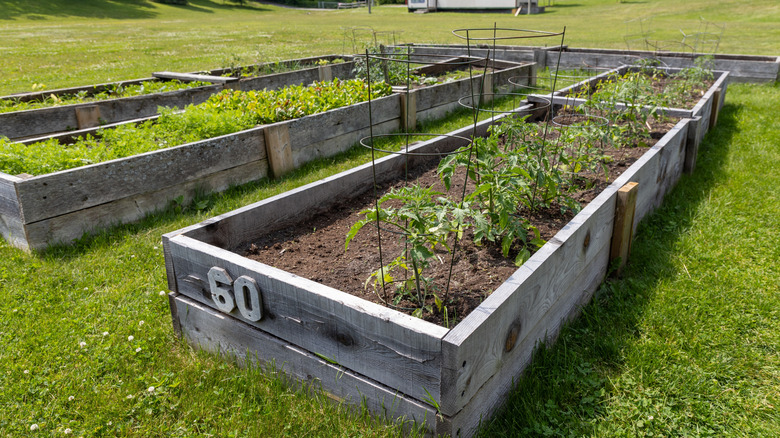
This may not sound like a tip that'll encourage faster growing, but if you intend to nail your feeding, watering, and locational strategy, then you'll be glad you took the time to install some supports. If your tomatoes have everything they need to grow well, then that's precisely what they'll do. As well as bushing out with lots of leaves, some indeterminate types (those that keep growing until the first frost) will grow surprisingly tall. When their stems become laden with the weight of foliage, they can easily snap, potentially leading to the loss of fruit-setting flowers. Even if they don't snap, floppy stems covered in leaves can cast shade over the fruits beneath, which will slow the time it takes them to reach maturity.
So, give your plants some props! Cages are often considered the best structure for supporting tomatoes. They help to keep the plants growing upright and give them something to lean on should a breeze blow through. They also allow the tomatoes to grow freely, without having to tie twine around the stems, like you would with a traditional stake. Having said that, a stake will also do the trick, especially if you use dedicated tomato clips to fasten the stems, instead of tying and potentially damaging them.
Employ a consistent watering strategy
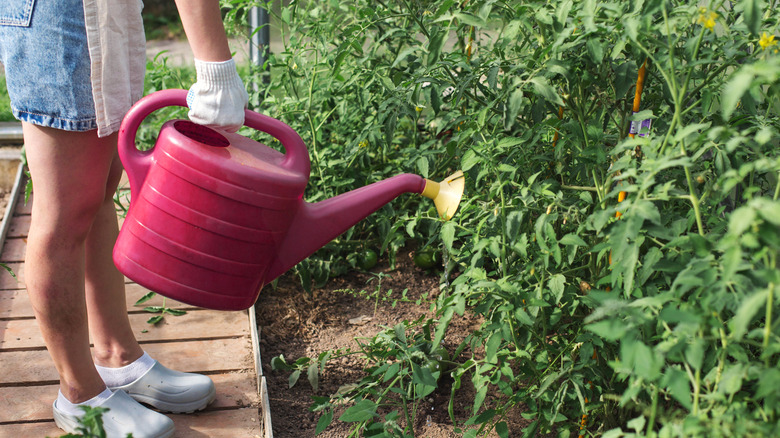
It's hard to overstate the importance of a solid watering strategy. The regularity with which you water your tomatoes can often be the difference between vigorous growth and stunted sadness. The overall growth of a tomato plant can slow down if you overwater them, and in severe cases, you can experience root rot — which is sure to slow things down even more. Similarly, if you underdo it, your plant won't be able to absorb nutrients anywhere near as fast as it needs to, which will also slow down growth.
To ensure your plants have the right amount of water, try to ensure your plants are never allowed to dry out. Infrequent, deeper watering is usually preferable to daily douses. Aim to soak your soil to a depth of 8 inches, and let the plants tell you when they need replenishment. Check them daily, and if they show slight signs of wilting, add more water. In hot weather, you may need to do this several times per week. And remember that if you're growing tomatoes in containers, the soil is likely to dry out much more quickly than in the ground. In the height of summer, you can make things more manageable by applying mulch, which should prevent the soil from drying out too quickly.
Keep your pruning shears sharp and ready
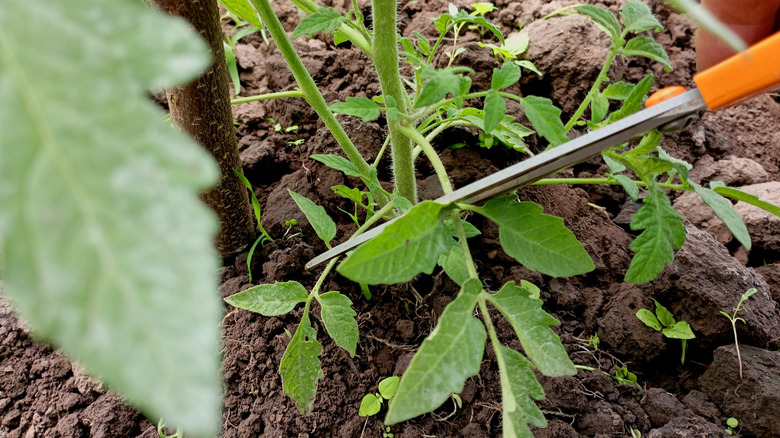
As well as supporting your plants to ensure they don't flop over, it can pay to give them a prune. This might seem counterintuitive, and it's true that it could slow things down. But only if you prune the wrong parts. The trick is to focus on the lowest suckers and leaves. There are several reasons why pruning helps speed things along. Firstly, those lower suckers, if left in situ, would eventually develop their own stems and suckers, forcing the parent plant to divert energy their way, instead of towards fruit production. Secondly, by cutting away leaves, you'll improve airflow, which can help mitigate against blight, mildew, and other harmful diseases, while improving flower pollination. Finally, by thinning out the leaves slightly, you increase exposure of any fruits buried beneath them to sunlight, thus speeding up the rate at which they mature.
Now, this isn't a hard and fast rule for all tomatoes. With determinate tomatoes (those that are restricted by their growth habit), you should only prune a few leaves from the bottom. This will help to improve airflow and prevent "splashes" from the soil, which can lead to the spread of pathogens. But if you're growing indeterminate varieties (those that continue to grow as long as conditions are right), a good prune can seriously speed things up. As for how often to prune your tomatoes, wait for around four weeks after planting before you start, and aim to revisit them once every few weeks to keep any unwieldy growth in check.
Give younger plants a strong start with a pop-up greenhouse
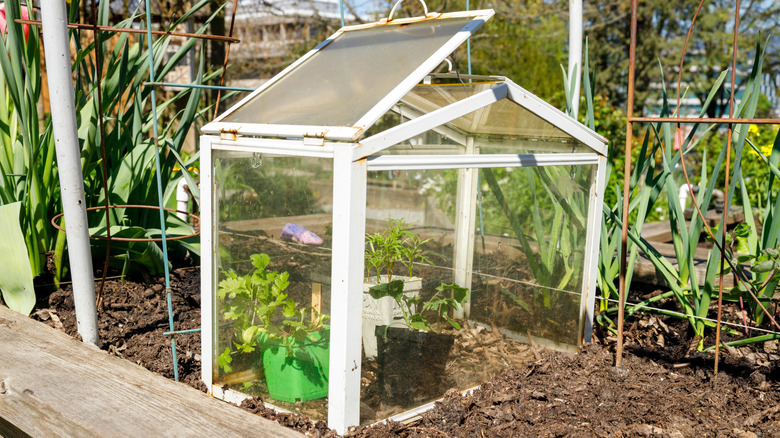
Temperature plays a very important role in tomato growth, especially in the early stages. As we discovered earlier with the idea of using raised beds to promote earlier soil warming, the warmer the conditions you can give tomatoes from the outset, the faster they'll grow and bear fruit. But even if DIYing your own raised bed feels like too much hassle, you can still help keep them cozy with a pop-up greenhouse.
You could use a pop-up greenhouse protector, like this Pop-Up Tomato Accelerator from Garden Supply Company, or you can install a low polytunnel over your row of young seedlings. You could even use a clear plastic bag or shrink wrap to turn a tomato cage into a miniature greenhouse. The key is to give them shelter from the wind, protection from any cold snaps, plus lots of extra warmth from the sun. Unfortunately, even just a week of cooler temperatures can stunt the growth of tomatoes. But you can easily sidestep that by keeping your plants, especially younger ones, protected. And if you use a mini-greenhouse or tomato accelerator to do it, you could potentially shave weeks off of the time it takes to develop and ripen your tomatoes.
Cover your growing area with black plastic
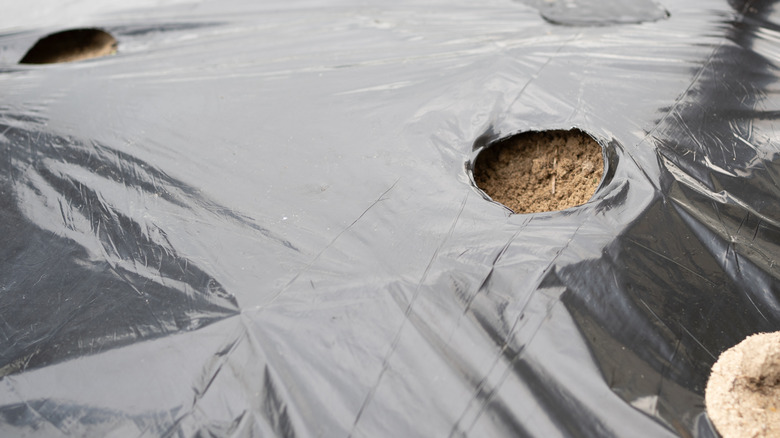
There are so many ways to use mulch in and around your garden. There are also lots of different types of mulch that you can use. For example, you can use organic mulches to both feed the soil while guarding it against extreme weather. You can also use inorganic mulches, like black plastic, which can help in several ways — especially with tomatoes. Firstly, a plastic barrier on the surface of the soil guards against soil "splashing," which can often lead to the spreading of diseases that are hiding in the substrate. Secondly, like landscape fabric, it can help to prevent annoying weeds from poking their way through and choking your plants. It's also an excellent way to speed up tomato growth.
It works by keeping the soil underneath nice and warm. The plastic soaks up the heat from the sun — especially earlier in the year, when ambient temperatures are cooler. And it can shave a considerable amount off of your harvest timeline, too. In fact, the Colorado University Extension suggests that mulching your beds with black plastic can encourage tomatoes to fruit up to three weeks earlier than without it. Just note that it's best to plant early with black plastic. This ensures your plants have plenty of time to bush-out and shade the plastic, before the summer sun gets too hot. If they don't, you may find that the plastic gets too hot, which can damage, and even kill, the plants around it.
Give greenhouse-grown tomatoes a helping hand with pollination
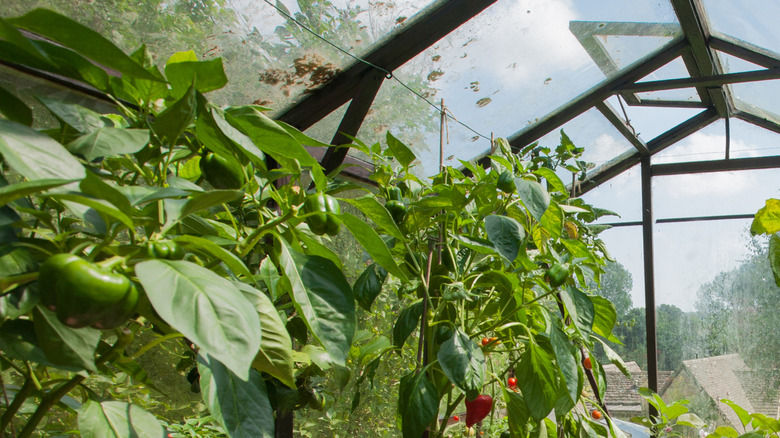
As we've discovered, using greenhouses (miniature or otherwise) is a great way to speed up tomato growth. They're warm, which tomatoes love, and they're sheltered, which, well, ditto. The only real downside to growing tomatoes indoors is that there's naturally less chance of pollination. This is for two reasons. Firstly, there's no wind, which is one of the primary means of pollination in tomatoes. When the breeze shakes the flowers around, it works the pollen loose, which in turn helps to fertilize the female parts of the flowers. Secondly, behind closed doors, there's little chance of pollinators buzzing their way around your blooms. Unfortunately, if your plants aren't pollinated in time, those blooms will drop off, leaving you waiting, perhaps perpetually, for your plants to set fruit.
To ensure your greenhouse-grown flowers grow fruit as quickly as possible, you'll need to give them a helping hand. Look out for flowers, and when you start to see them, consider opening a window or leaving the door ajar to let pollinators inside. Alternatively, you can pollinate the flowers yourself. One way to do this is to give the plants a gentle shake, which will help to dislodge the pollen — much like the wind — and thus fertilize the flowers. You can also use a leaf blower to pollinate your tomatoes. If you really want to ensure total pollination, try pollinating each flower individually. Use an electric toothbrush (on low setting) to vibrate the flowers, or swab them with a fine paintbrush or a cotton earbud. The goal is to coat the central stalk of the flower (known as the stigma) with pollen.
Choose actively-growing plants from the nursery to ensure a speedy harvest
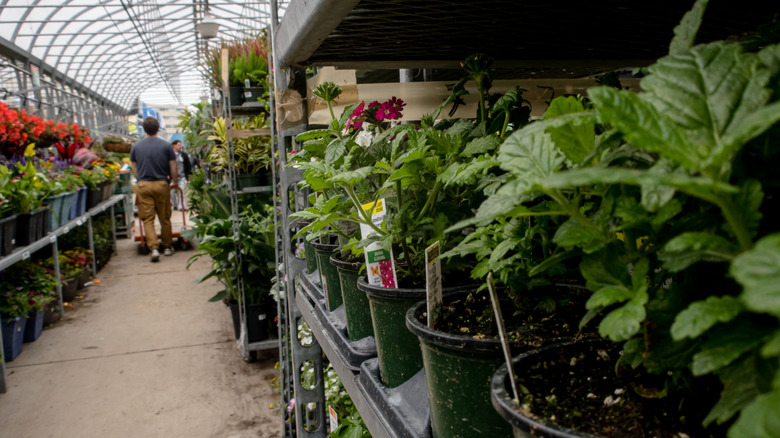
If you'd prefer to forgo the hassle of growing tomatoes from seeds and instead buy seedlings from the nursery, then it pays to be picky. Choosing the right plants can be the difference between fast growth and a painful wait for your new babies to acclimatize. Avoid taking pity on any plants that are showing signs of discoloration, insects, or other visible problems. While you may think you can nurture them back to health, you could just as easily spread those problems to the rest of your patch.
Instead, look for stocky, thick-stemmed plants with a healthy green color. You should also look out for tomato plants that are actively growing. Those that have already hardened and filled their pots may take longer to start growing again when you get them home and into your garden. Smaller, active growers, on the other hand, will usually hit the ground running, increasing your chances of a speedy harvest.