

Give Tomato Seedlings A Major Nutrient Boost With An Affordable Fertilizer
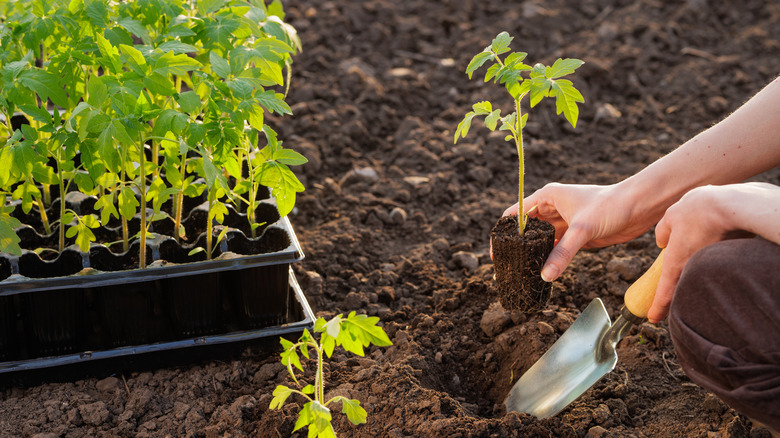
Your tomato seedling roots are looking for partners. They want particular partners so badly they're willing to pay with a precious commodity: sugar. If you were a tomato plant, you'd want partners like this, too, because they boost growth, help you take in nutrients, and even make your fruit taste better, among many other benefits. These powerful and inexpensive partners are mycorrhizal fungi, which form a symbiotic relationship with the roots of most plants — including tomatoes — and deliver nutrients and other benefits to plant roots in exchange for receiving sugar and carbs from the plant. Mycorrhizal fungi can be particularly beneficial in the seedling stage. They especially help with the uptake of phosphorous, which is a common deficiency in tomato plants.
The use of mycorrhizal fungi with tomato seedlings, one of the lesser-known gardening hacks for growing healthy tomatoes, is no fad-driven trick, but a well-researched technique that has multiple studies backing it up. A study published in the Brazilian Journal of Microbiology found that they reduce disease and severity of disease. German research published in the International Journal of Molecular Sciences demonstrated that the symbiotic pairing increases both tomato growth and yield and helps plants resist drought stress. A study by researchers at the University of Tokyo indicated use of mycorrhizal fungi boosted tomato resistance to both fungal and bacterial pathogens (via Scientific Reports).
These fungi look like tiny threads, called hyphae. They work their magic by growing around a plant's roots, expanding the root system so the plant can reach even further. While mycorrhizal fungi are not classified as fertilizer, they offer many of the same benefits without chemicals that can burn plants.
How to apply mycorrhizal fungi to tomato seedlings
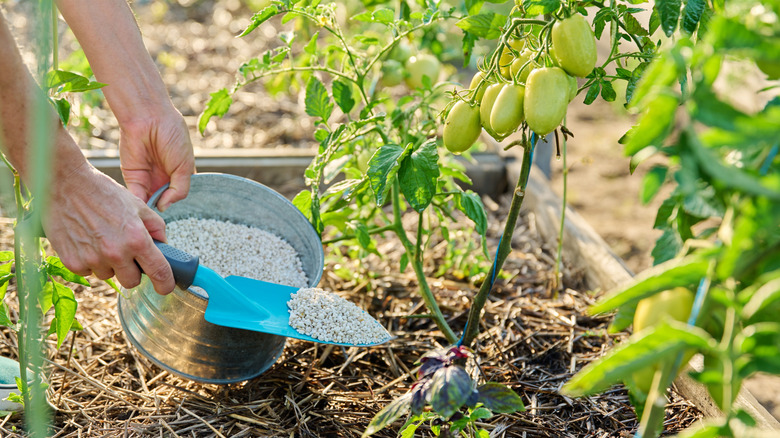
In the spring, choose the perfect time to transplant tomato seedlings based on frost danger and soil temperature. Apply a mycorrhizal fungi product; they come in granule, powder, or liquid form. All need to make direct contact with plant roots. Granules or powder can be sprinkled into the planting holes for your tomato seedlings. You can apply powder to the seedling's root ball; displace soil and manipulate the rootball enough so roots are exposed.
You can also use a soluble liquid or powder with water, following label instructions for diluting, and dip your plant's roots into the mixture; you can pour some into the plant hole, as well. Soil mixes with built-in mycorrhizal fungi are available, but they may not provide sufficient contact between plant roots and fungi.
If you've already planted your tomato seedlings, you can still provide their roots with mycorrhizal fungi using a turkey baster. Fill it with a diluted mycorrhizal fungi solution, poke it into the ground to about where the plant's roots are, and squirt.
Create the best environment for both mycorrhizal fungi and tomato seedlings
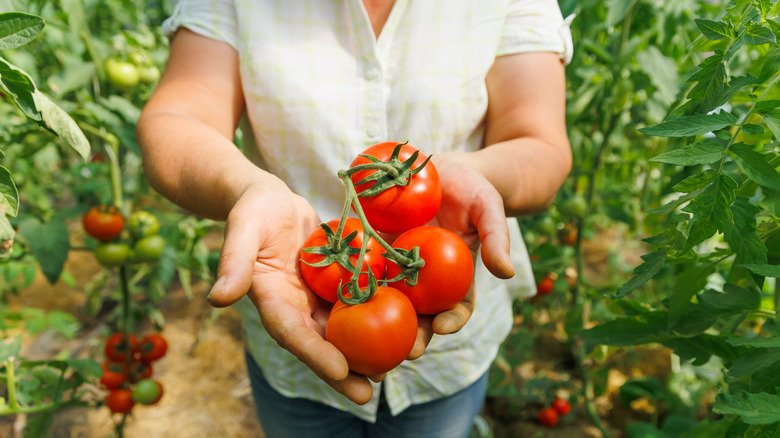
The big question is whether you'll use mycorrhizal fungi alone or supplement with traditional chemical fertilizer. The mycorrhizal approach is effective on its own for tomatoes and is certainly the most economical choice. Mycorrhizal fungi are cost-effective because they're typically used just once, when you plant. You can expect to save money on phosphorus fertilizer because the fungi will help your plants use it more efficiently. One reason you might also choose to also use fertilizer is if your goal is a high tomato yield, but even then, use fertilizer moderately, as heavy fertilization will impede root colonization by mycorrhizal fungi. Also wait until root colonization is established before applying fertilizer.
To ensure a hospitable environment for your tomato seedlings' new partners, avoid tilling the soil around the plants, as doing so can disrupt the mycorrhizal networks. Make sure the soil has plenty of organic matter, such as compost. As these fungi start partnering with your seedlings, check out more tips to set your tomato plants up for success with a low-maintenance garden.