

Soften Your Gravel Driveway Edges Using Herbs That Thrive In Poor Soil
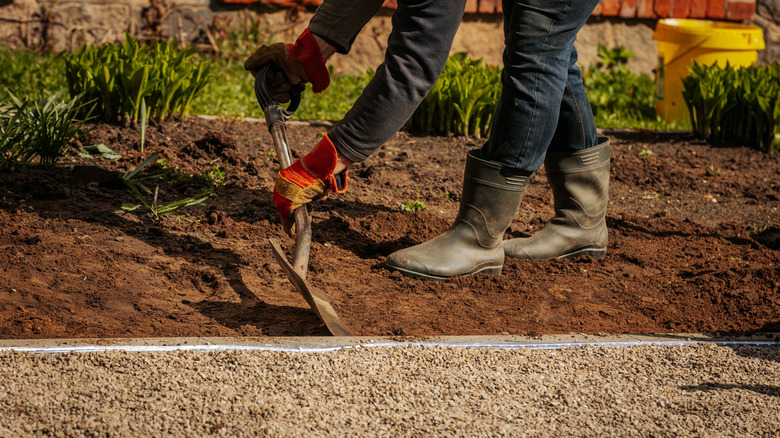
Your gravel driveway looks great — sleek and pristine — yet it feels like something may be missing. You have crisp, sharp edges separating lawn from driveway, but they look a bit harsh and uninviting. The stark look of your driveway isn't doing your home any curb-appeal favors. You've considered a living solution to soften those edges, but you're worried about the quality of soil around that gravel expanse. How about plants that not only tolerate poor soil but also provide a fragrant sensory experience for anyone entering the driveway? We're talking herbs, and while quite a few herbs are suitable for driveway edging, we're focusing on four that do especially well in poor soil — lavender, catmint, salvia, and oregano.
Consider softening your driveway edges with any one of these fragrant herbs, or combine them for more variety. Using plants along the edges helps eyes transition from the sea of gravel in your driveway to your green lawn while creating a sense of balance and framing the driveway. Let's not forget you can also harvest some of these herbs to season food.
Lavender, catmint, salvia, and oregano are considered Mediterranean herbs, whose shared genetic history of surviving the rocky, thin-soiled hillsides of southern Europe contributes to their tolerance of poor soil. All four are members of the Lamiaceae or mint, family. They thrive when grown together and can all attract pollinators. Let's take a look at planting them as driveway edging and how to care for them.
Consider lavender, catmint — or both — to edge your driveway
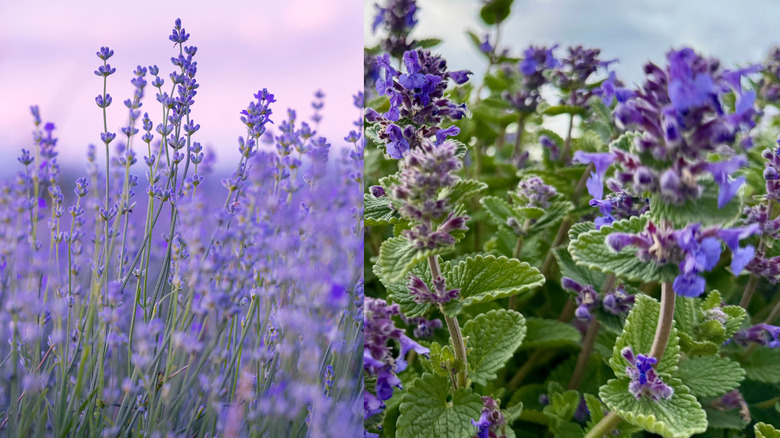
Lavender (Lavandula angustifolia) is a perennial, evergreen shrub that is cold hardy in USDA Zones 5 to 9. You can easily grow lavender for an endless supply of dazzling purple flowers along your driveway. While lavender tolerates poor soil, it needs excellent drainage and can't stand soggy roots. Be sure your driveway location provides six hours of sun daily if you choose lavender for edging. Provide infrequent, deep waterings, ensuring soil is dried out between sessions.
Catmint (Nepeta), which is cold-hardy in Zones 4 to 8, is a fast-growing herb with purple flowers that makes a perfect ground cover. Plant in well-draining soil in full sun to partial shade. Like lavender, catmint functions best with deep, infrequent waterings, but should be watered two to three times a week while getting established. Cutting back blooms to encourage new ones will keep catmint looking lush as an eco-friendly driveway edge alternative that smells incredible.
Consider oregano alone along your driveway or paired with salvia
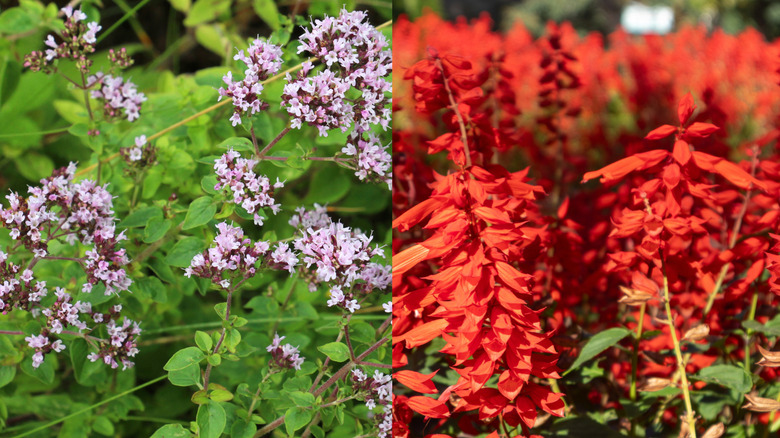
You can find many stunning ornamental oregano varieties to plant along your driveway, bringing white, pink, or purple flowers to your edging. Oregano (Origanum) has a wide cold-hardiness range, from Zones 3 to 10. Plant it in well-draining soil in a spot with full sun. Avoid the biggest mistakes that are made when growing oregano: not enough space between plants and too much water and fertilizer.
Salvia comes in many species, along with hybrids and cultivars, meaning there are lots of options for your driveway edging. This includes plenty of different color choices, as well — white, burgundy, blue, red, pink, purple, and yellow — that may complement other driveway-edging herbs. Like the other Mediterranean herbs described here, salvia needs full to partial sun and well-draining soil. Salvia supports not only pollinators, but also birds, which enjoy the nutlets salvia produces.
Feel free to mix textures, colors, plant sizes, and fragrances to create your herbal driveway border. You could plant repeating clusters of several herbs or parallel rows of herbs along your path. Regardless of the specific design, these border plants are sure to stun.