

How Often Do I Need To Replace Soil For Tomato Plants?
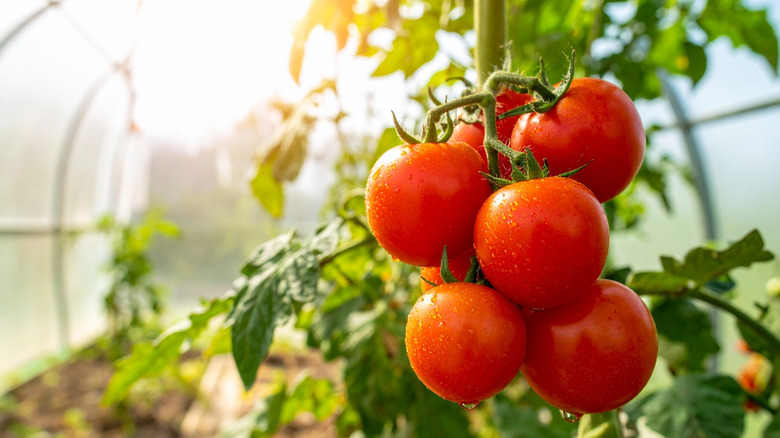
There really is nothing quite like the taste of a homegrown, sun-ripened tomato harvested right from your own garden. Whether you are planting a sprawling heirloom variety or a compact cherry tomato plant, these garden favorites are super rewarding to grow. While figuring out how often to replace soil in potted planters is one thing, as some plants can thrive in the same dirt for years, tomatoes are notorious for being incredibly demanding. If you're growing these summer staples in containers, you might be wondering exactly how often you need to be replacing the soil tomato plants actually need to produce a great harvest. The short answer is that you need to replenish their soil every year.
While it may be tempting to reuse last season's potting mix to save time and money, doing so is, unfortunately, a recipe for a disappointing tomato harvest. Tomatoes are considered heavy feeders, which means they extract high amounts of nutrients from the soil. By the time autumn rolls around, it's possible for a single tomato plant to have stripped its surrounding soil of enough useful minerals to support future growth. And, if you try to plant a new seedling there in that same now-depleted area the following spring, you'll be facing nutrient deficiencies that could create issues like discolored leaves or smaller plants. Providing a fresh, nutrient-dense soil refill each year is one of many ways to set your tomato plants up for success.
Why changing the soil each year protects your tomato harvest
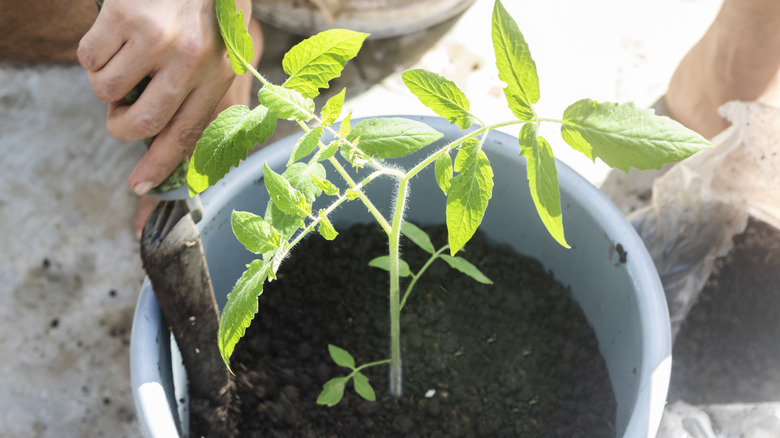
Beyond basic nutrient depletion, another important reason you should toss out old potting mix every year comes down to disease prevention and pest control. Tomatoes are highly vulnerable to certain soil-borne diseases, like blight. It's easy for some of these pathogens to remain in soil, waiting patiently to attack anything new you plant next year.
If those aren't good enough reasons, know that old potting soil also loses its structural integrity over time. After months of frequent watering and root expansion, the mix eventually gets super compacted, reducing airflow and drainage. Tomato roots need loose dirt with plenty of airflow to expand properly. While amending old soil with organic matter like compost is an option, starting with a brand new fresh, fluffy mix will do a better job managing moisture and helping the roots get established without fighting through hardened dirt or against disease.
Before adding your brand-new potting soil, be sure to clean your pots to get rid of any lingering fungi or other gunk. Wash with water and dish soap, then use a mix of 9 parts water to 1 part bleach to soak and disinfect them. Once the container is sanitized and thoroughly dried, go ahead and fill it with new, quality vegetable potting mix. There are also ways to amend soil for healthier tomato plants, if needed. By making this process a habit each spring, you effectively break that potentially dangerous disease lifecycle and provide your plants with plenty of nutrients instead. Your tomato plants will show their thanks by growing a delicious summer harvest.