

Not Impatiens, Not Coral Bells: The Plant That Works Beautifully In Shaded Flower Beds
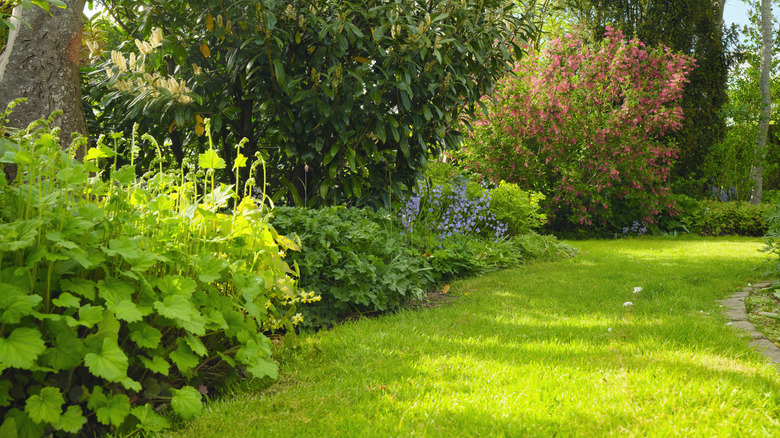
When planning what to grow in a shaded flower bed, you may first think of coral bells, impatiens, and other shade-loving flowers, as these species do particularly well in these types of locations as long as they're kept hydrated. But there's another pretty herbaceous perennial that you may not have seen before, and it will explode your flower bed with stunning color. It's known as the Chinese ground orchid (Bletilla striata), and it's surprisingly easy to grow. In fact, it was given the Award of Garden Merit by the Royal Horticultural Society and is considered the hardiest orchid to grow. That's why it's one of numerous bulbs you should be planting in your garden in spring.
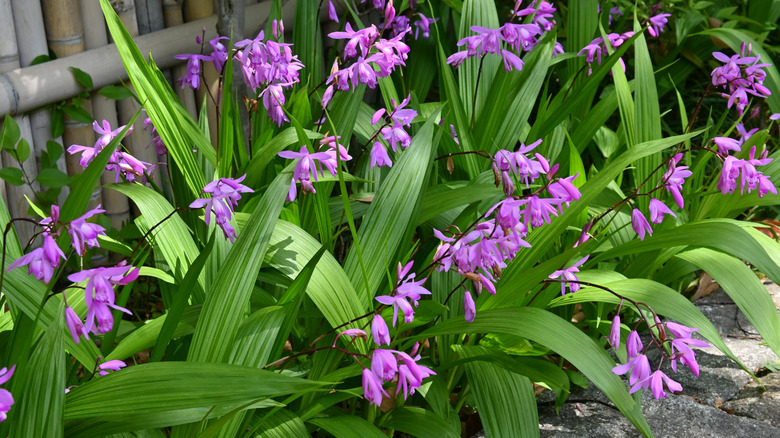
Unlike many of the orchids that are grown as popular houseplants, this species is terrestrial, meaning it grows in the ground rather than on trees. It has long and wide strap-like leaves and the most amazing flowers in a bright pinkish-purple color. Each bloom has five outwardly pointing petals and a protruding lip, which is ridged and striped. The plant is native to Asia, China, and Japan, and will last through the winter in USDA Hardiness Zones 5 through 9.
How to grow Chinese ground orchid in your shaded garden
The Chinese ground orchid prefers moist, well-drained soil that has been enriched with organic matter. It grows from a type of corm known as a pseudobulb, so if you live in a colder climate, you may need to lift the bulbs out of the ground and store them in a cool, dry spot over winter. When you plant them again, put them around 2 to 4 inches deep. If your shaded flower bed gets some morning sun, your orchids are going to reward you with even more of those delightful blooms.
Once the flowers have finished, remember to deadhead them so that the plants put their energy into storing nutrients in the bulbs for the following year's flowers rather than producing seeds. For the same reason, you want to make sure that you preserve the green foliage by keeping the plants hydrated until the leaves die down naturally. When this happens, you can remove the dead leaves, as this will allow plenty of space for new growth in spring.
If your clumps start to get a bit overcrowded or you notice a decline in flowering, you can lift the plants in the fall and then split them up before storing or replanting. You can also lift them in early spring. It's a good idea to cover the ground with mulch before winter if you plan to leave the bulbs in the ground. While other types of orchids will help you fight off the winter blues when you grow them indoors, Chinese ground orchids will fill your shade garden with stunning blooms in spring.