

Tropical Bulbs That Love The Hot, Humid July Weather
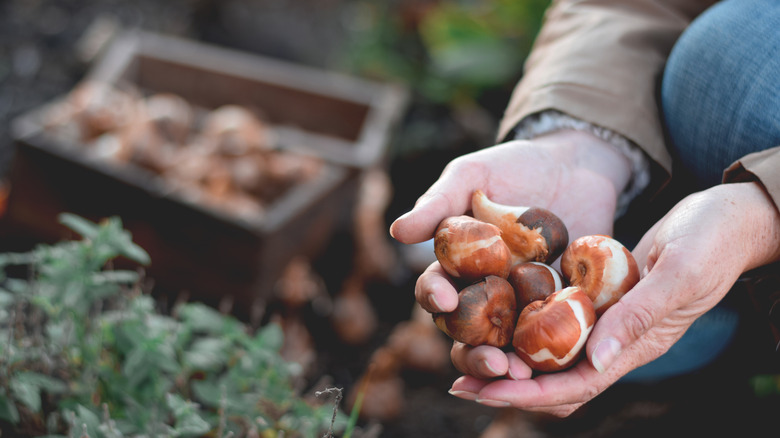
Summer is most heavily associated with growing — and often, weeding — more than planting. It is a commonly held notion that spring-blooming plants (like tulips and daffodils) should be planted in the fall, and popular summer bulbs (like dahlias and gladiolus) should be planted in the spring. However, there is a group of tropical plants that can be planted in July to fill in your vegetable or flower beds for a little bit of instant gratification.
Tropical bulbs including elephant ear, canna and calla lilies, and caladium, even prefer July's hot, humid days. Certain daylilies, sedums, and ornamental grasses can also be added in July to give your garden layered color and texture right away. However, it is notable that these varieties are not frost-tolerant, and most will need 90 days of pre-frost weather in order to return next year. And in some regions, July is simply too hot to plant new bulbs, so it is important to understand your individual climate and hardiness zone before getting your gardening gloves. For July planting, the sweet spot mainly hits in the Northeast, Midwest, and Pacific Northwest.
To determine if you live in an ideal climate to plant tropical bulbs in July, head to the United States Department of Agriculture (USDA)'s Plant Hardiness Zone Map. To use the USDA's tool, simply input your zip code to reveal your home's hardiness zone. Once you have this number, you can use it to filter the selection of plants that are suitable to your climate on online garden centers. Your local garden center will also be an invaluable resource for must-know bulb planting tips, and to determine the best crops to plant in July for summer color and success every year.
What tropical plants should you add to your garden?
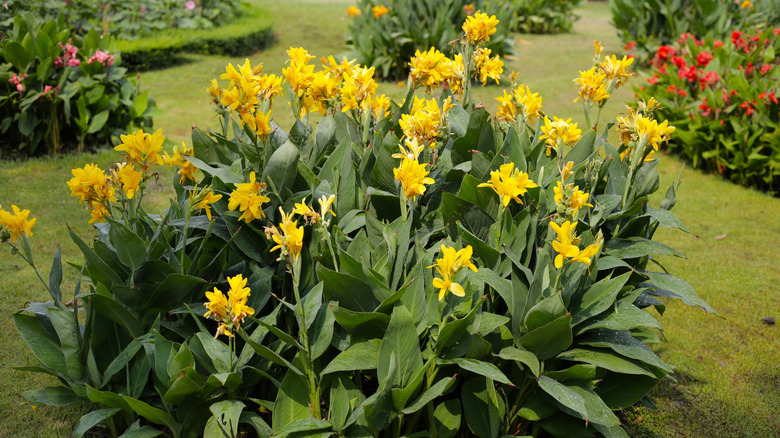
Tropical plants are known for their vivid hues, so you can use these blooms to fill gaps in your flower beds come July. To determine which is best for you, you'll want to consider both your garden aesthetic and your location.
For a wide range of climates, lilies are a great option. The canna lily (Canna x generalis) features wide, paddle-shaped leaves and can be planted in July for late summer color in Zones 8 to 11, which covers much of the South. Natal lilies (Clivia miniata) are another great example, and thrive in Zones 9 through 11. Though they're grown from rhizomes and not true bulbs, white ginger lilies (Hedychium coronarium) and yellow ginger lilies (Hedychium gardnerianum) can be planted as low as zone 7, which reaches as far north as southern New England and much of the Midwest. Take care to water them regularly, giving them a good soaking in the mornings or evenings. In humid areas, take care to look out for diseased plants, as added moisture and mildew can restrict circulation. This, along with careful pruning and weeding, will keep your garden thriving through July and beyond.
In many cooler climates, like the Northeast and Pacific Northwest, July is the perfect time to plant tropical plants like colocasia, or elephant ears, which add lushness with their wide, heart-shaped leaves. However, many of these plants will not survive a cold winter, so you'll need to take them inside or move to a greenhouse come fall before the cold comes. Chose a container with good drainage and transplant each plant individually into a large enough pot that offers some room to grow. And bring them back outside next July!