

Ditch The Traditional Tomato Cage For A Unique Method That Gives You A Sweeter Harvest
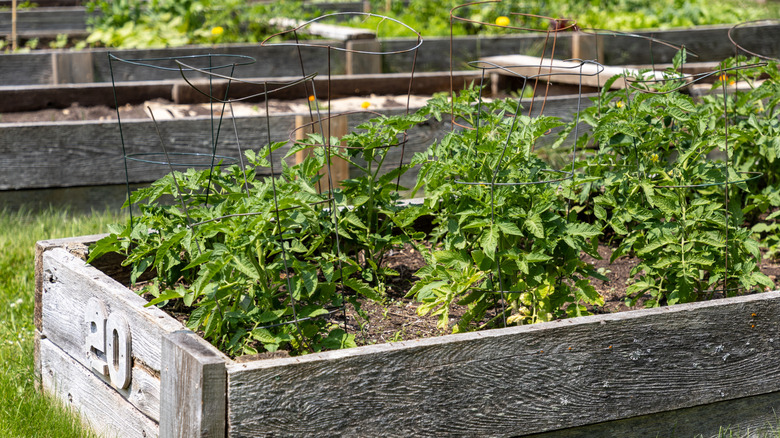
Gardeners are constantly coming up with new techniques and hacks for growing the most popular vegetable grown in home gardens — tomatoes — and one effective method may have you scratching your head. It would be weird to grow tomato plants outside of tomato cages instead of inside, right? Yes, unless you're deploying one of the lesser-known gardening hacks for growing healthy tomatoes – Japanese tomato rings. This technique is neither new nor even remotely Japanese. It dates back roughly to the 1960s, and the Japanese descriptor seems to be the result of a miscommunication when the technique's inventor, a South Carolina postal carrier, was interviewed by a newspaper reporter and included stories of his World War II adventures in Japan.
A Japanese tomato ring consists of four tomato plants planted around the perimeter of a tomato cage or similar container filled with organic matter, such as compost and shredded leaves. The plants are watered through the cage so hydration mixes with the organic materials and encourages roots to stretch to take in the moisture and nutrients. Anecdotally, users frequently rave about the huge quantities, size, heartiness, sweetness, and overall flavor of tomatoes grown with this method. Some growers have found the technique works on other veggies, too.
It's important to note that no scientific studies have tested the effectiveness of Japanese tomato rings, but science does support the individual components it applies. Research acknowledges amending soil with compost, which has been shown to dramatically increase tomato yield, along with localizing water and nutrient placement. Let's see what these processes look like using the Japanese tomato ring technique.
How to make a Japanese tomato ring for a bountiful and delicious harvest
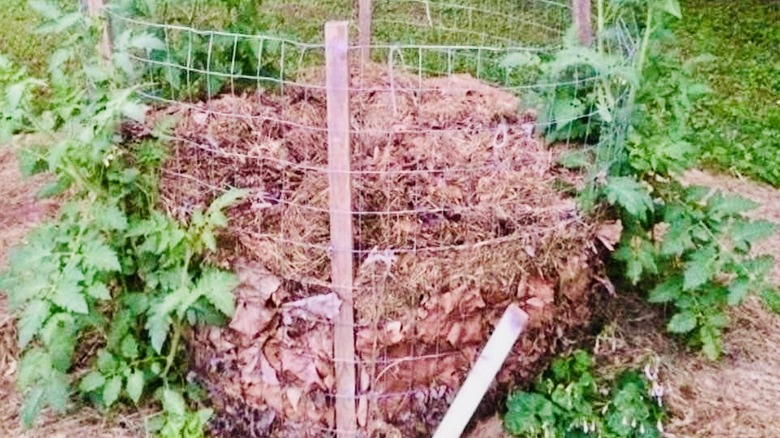
Over the years, gardeners have made many Japanese tomato ring adaptations in both the container for organic material and the "recipe" for that material. For example, while you could use an actual tomato cage to hold the organic matter, many cages have openings that are too large to hold compost and other materials.
You can purchase cages with a tighter wire mesh or line the cages with burlap, chicken wire, or hardware cloth, or you can construct your own cage design — essentially, you're creating a smaller version of a compost bin. For example, Kentucky Living reports that one gardener used farm fencing formed into a cylinder. The usual size for this cage is about 3 or 4 feet wide and up to 6 feet tall. However, make sure the cage is in a location that receives lots of sunlight.
Layer contents into the cage. A typical recipe calls for alternating layers of 6 inches of compost and 6 inches of shredded leaves until the pile is 2½ feet tall. Some gardeners layer in humus — especially if they don't have compost –mulch, or topsoil.
Fertilizing and watering your Japanese tomato ring
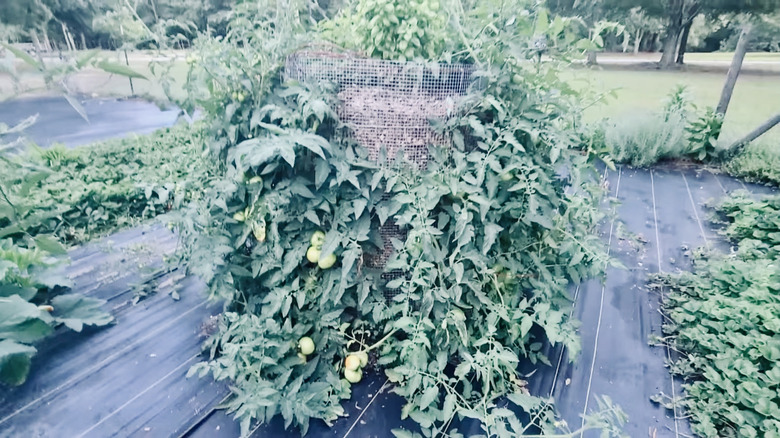
Gardeners also like to dig out a hole at the top of the organic material and add fertilizer to it, and continue to fertilize every few weeks. Follow label instructions and make sure you know how to choose the best fertilizer for healthy tomatoes. Once the cage is filled, give it a good watering before you plant your tomatoes. Space four plants around the cage and plant them about 2 inches from the cage, adding to the planting hole any other amendments you'd like to use. Add mulch to the surface to help hold in moisture. Continue to add more compost as the original supply decomposes.
Water your tomatoes by watering your compost-filled cage to give them a steady supply of nutrients, and be sure to keep the organic materials in the cage consistently moist. Once you're done, all that's left is to enjoy your Japanese tomato ring. But before you try it out, make sure to check out our other tips to set your tomato plants up for success with a low-maintenance garden.