

Not Egg Shells: Use This Kitchen Staple For DIY Fertilizer For Healthier Houseplants
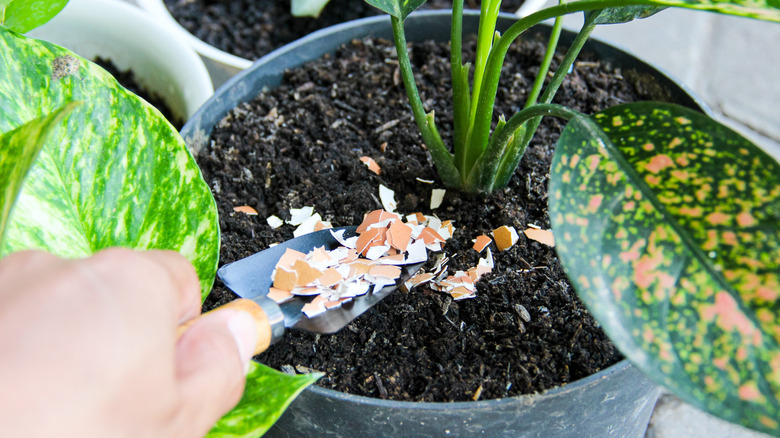
If you're constantly on the lookout for common kitchen staples to give your houseplants to make them healthier, you may have read that your orchids need eggshells, and so you've tried using ground-up shells with some success. While this can provide benefits for plants that need a calcium boost, the results can be slow, and not all of your houseplants will show a response. Luckily, there's another kitchen staple you can use to DIY your own houseplant fertilizer: black tea.
You probably already know that coffee grounds help certain houseplants thrive. But if you're a tea drinker, you'll be happy to learn that many of the same indoor plants benefit from the refreshing brew you enjoy on a daily basis. Firstly, tea leaves are a natural plant material and contain nitrogen. This means that tea can be quite beneficial for promoting lush, green growth in your plants. On top of that, tea also contains smaller amounts of nutrients, such as phosphorus, potassium, magnesium, calcium, zinc, and copper. However, keep in mind that tea can make the soil more acidic thanks to its high tannin content, and you'll find that darker teas, like black tea, contain more tannins than, say, green tea. This means that while black tea will work for acid-loving plants, it may not be ideal for those that prefer a neutral or a somewhat alkaline growing medium.
How to use black tea to fertilize your houseplants
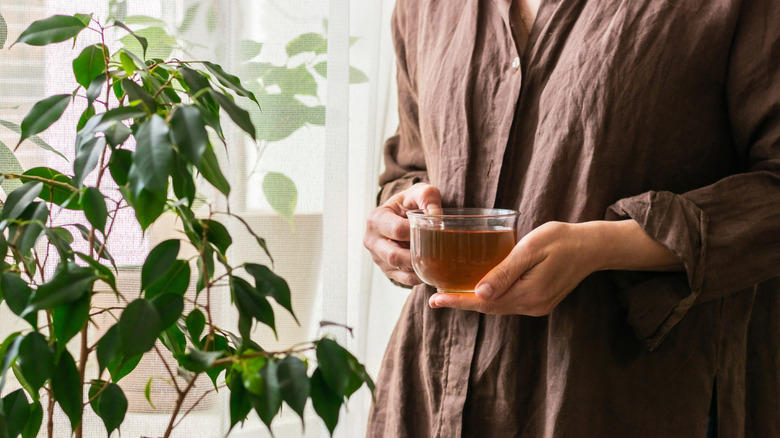
You have a few options for making black tea houseplant fertilizer. If you regularly make your own brew in a pot using tea leaves, you undoubtedly will have some left over. Dilute the leftover tea with four parts water to one part tea, and then use this liquid to water the houseplants that appreciate this addition. Alternatively, you can grab some used tea leaves and soak them in water for one to two days at room temperature. This should create a mild tea-based fertilizer you can apply to the plants' potting medium. It goes without saying that leftover tea should be allowed to cool down before you give it to your plants.
Now, remember that you only want to use this homemade tea fertilizer on plants that prefer a more acidic soil. This includes ferns, African violets, some orchids, philodendrons, poinsettias, rubber trees, spider plants, and peace lilies. On the other hand, there are houseplants that you shouldn't water with black tea, and these include succulents and cacti, geraniums, lavender, and begonias. As is the case with most additives you give to your houseplant, moderation is key, so you would only apply the tea fertilizer once every two weeks. Now that you're aware of the benefits, you might even want to add an old teabag to the bottom of your planters when you do some repotting.