

Not Coffee Grounds: The Unexpected Pantry Item To Use In Your DIY Fertilizer
When you think of adding items from your kitchen or pantry to your DIY fertilizer, you probably picture a few key products: coffee grounds, banana peels, egg shells, etc. The list goes on. However, there are actually plenty of other, less popular ingredients from your kitchen that you can use to boost the health of your flowers, and one of them may be totally unexpected. That half-used canister of whey protein powder that you've had in your cabinet for the past year and have barely touched? Yep. Your plants may actually benefit from the protein's key ingredients. Believe it or not, the power of amino acids, a main component of whey protein powder, can help boost the growth and production of your plants. Thus, it may be worth your while to incorporate that unused powder into your soil.
Now, how exactly does this work? According to a 2019 report from the National Library of Medicine, whey protein has been found as a potential "plant booster," based on studies that analyzed soil properties and plant growth. While more research needs to be completed on the specific impact of whey on different soil organisms and communities, amino acids can affect the physiology of your plants. They not only support growth, but they can help your plants resist pests, disease, and even drought. If you already have leftover whey protein at home, why not try giving it to your plants?
DIY whey protein fertilizer and how to apply it to your garden
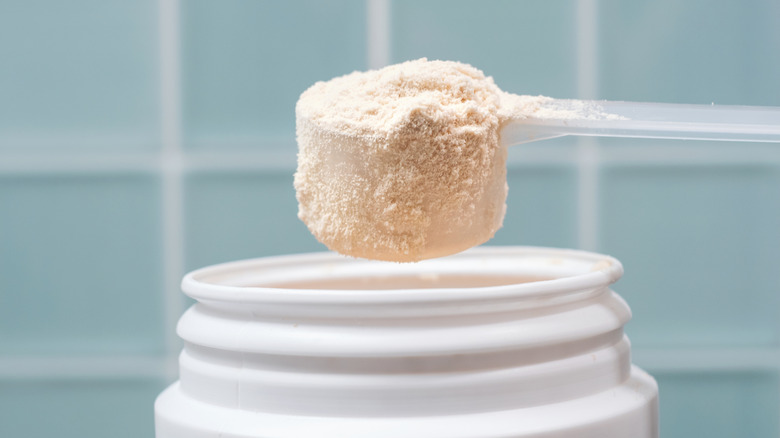
While there are a myriad of common household items that can be used as a natural fertilizer, some at first may seem unconventional. Whey protein powder probably isn't your first guess for a pantry-turned-gardening staple, but it may be worth a try. In order to produce more chlorophyll, plants require three main nutrients: iron, magnesium, plus nitrogen. And whey protein happens to contain a significant amount of nitrogen.
So when you should you add in some whey protein powder? In general, it's recommended to add fertilizer to your plants while they are actively growing, or have just come out of dormancy. Before you apply any type fertilizer to your soil, though, it's typically recommended to use a soil testing kit in order to determine your soil's pH levels. This way you can tell just what your soil needs in order to improve. You don't want to accidentally add too much acidity to the soil and cause damage.
You can either sprinkle whey protein powder (but make sure it's unsalted first) directly onto your soil, or create your own DIY fertilizer spray by mixing the whey with water. If you want to use actual whey, you should dilute it first with water with a 1:1 ratio and then apply the solution to the roots. If you don't have whey protein, you can also use regular or powdered milk in order to incorporate the same types of nutrients, though they will most likely be not as potent as whey protein.