

What Does The Sun Symbol On A Plant Tag Really Mean?
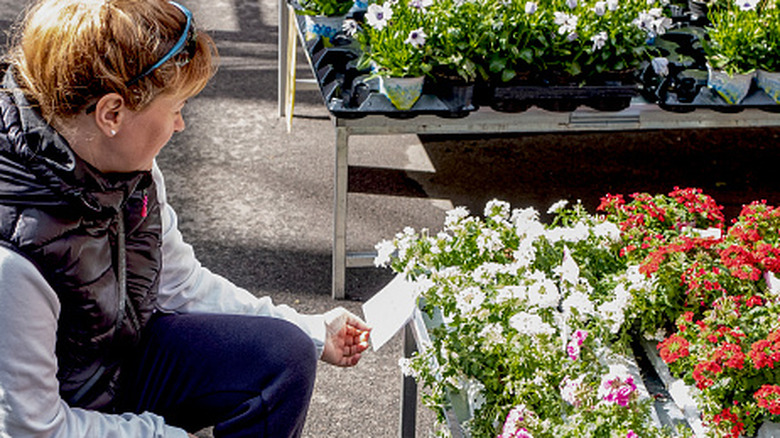
When you buy a plant from a garden center, it typically has a tag attached to the pot, loosely tied to a branch, or pushed into the soil. These tags contain lots of helpful information about the plant in question, from its watering needs and spacing to its preferred soil pH and USDA Plant Hardiness Zones. It's worth taking the time to read through them carefully before popping any greenery in your shopping cart. If you take a flowering annual or fruit tree sapling home, you should always save your plant tags so you can refer back to them later — either to remember the species or cultivar name or to understand how best to care for the plant. One piece of information that you'll see on every tag informs you of the amount of light the plant needs to thrive: the sun symbol.
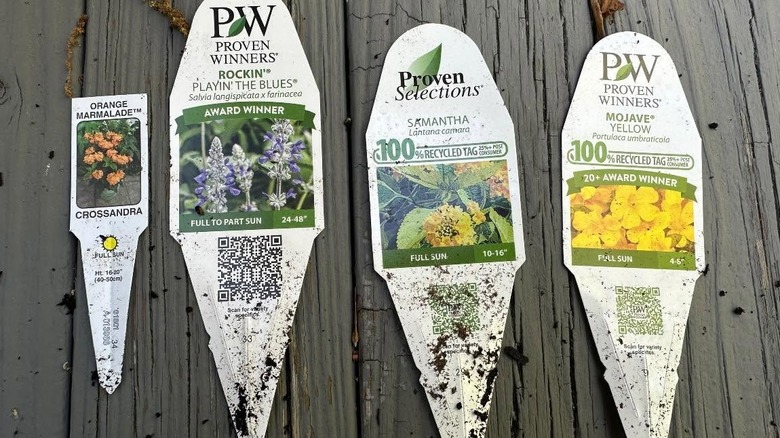
A graphic line drawing of a stylized sun with rays is typical. When the sun is bright and clear without any shading, it means that the plant needs a site with full sun — usually at least six hours of bright sunlight a day, though some species need up to 10 hours. A darkened sun indicates the plant grows best in low light conditions — less than three hours of sunlight daily. If the icon is partially shaded, the plant needs between four and six sunshine hours a day, also called part shade. Sometimes a plant tag contains more than one sun symbol. In that case, it means that the plant grows well with varying amounts of light exposure. For instance, you might see a tag with both a partly shaded and a completely blacked out sun icon. This indicates that the plant grows best with six hours or less of sunlight a day.
Determine how much sun your garden get before picking plants
Before you even step foot into your local nursery, and well before you head to the sales counter with your plant picks, determine how much sunlight your yard receives. To avoid making mistakes when you're building a sun map, make a sketch of your planting area — or your entire yard if you're landscaping the whole area. At regular intervals throughout the day, note where the sun falls on your planting area and its quality. Is it beaming down full and bright or is it being blocked or filtered by a fence, overhanging trees, or the neighbor's roof? There are also sun tracking apps you can use, like Sun Seeker or Shadowmap, that offer instant information. Either way, total up the hours of direct sunlight you observe. If it's six hours or more, you have a full sun spot. Now, you can use the tag information to determine if a species or cultivar will grow well in that location.
Keep in mind that afternoon sun can be more intense than morning sun. Plants labeled full sun may thrive in all-day rays or prefer some protection from afternoon blasts. For example, marigolds and zinnias love lots of sun and will survive pretty intense temperatures. On the other hand, some beautiful flowering shrubs grow best in morning sun and afternoon shade, despite being labeled full sun on plant tags. Hardy hibiscus, garden phlox, and most hydrangea varieties spring to mind. More often, however, such plants will have two symbols on their tag — full sun and part shade — indicating their intolerance of midday heat. Note, too, that sometimes a plant will only have its sunlight needs typed onto the tag, with no symbol present. The meaning is the same, even without the icon.