

What's The Best Brown/Green Ratio For Compost? It Depends
We may receive a commission on purchases made from links.
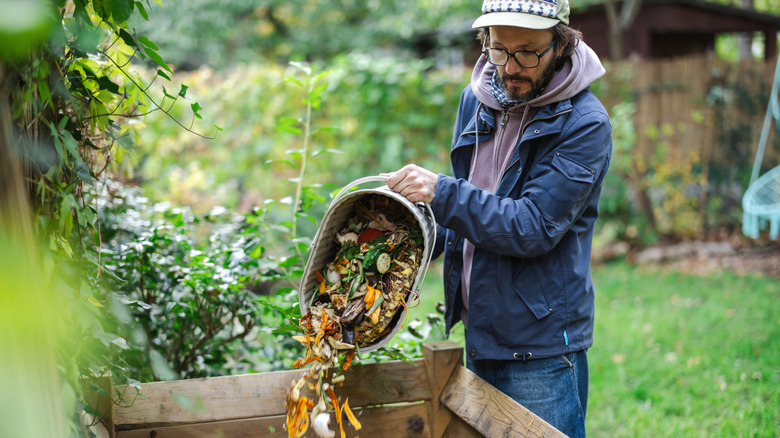
Composting is relatively easy once you understand the basics, like avoiding the things you should never add to a compost heap. Starting a compost pile from scratch can, however, be a bit of a struggle because making a pile perfect requires the right balance of inputs — the brown materials and the green materials. When you first started researching compost making, you probably came across all sorts of ratios, from 3:1 right up to 30:1 brown versus green. Though it's not easy to tell initially, these ratios are actually referring to different ways of describing the same input: brown and green materials on the one hand, and their carbon-to-nitrogen content on the other. If you're attempting to demystify the process of creating the ideal compost mix, it's easiest to stick to a brown-to-green ratio of somewhere between 2:1 and 4:1.
As mentioned, a ratio with smaller numbers or fewer parts generally refers to the proportion of brown to green materials in a compost by volume — for example, bucketloads. Meanwhile, when you see a ratio with double digits, like 30:1, this is most often describing the ratio of carbon to nitrogen in a material. This is a more technical approach that requires a deep understanding of the nutrients individual biodegradable materials contain, something the casual composter may prefer to avoid. Sticking to the volume-based green and brown ratios is easier, even if they're not as exact. You'll still end up with well-balanced compost, which is the goal, right? In general, aim for about two to four times more brown, carbon-rich materials (like untreated wood shavings, straw, and paper products) than green, nitrogen-rich materials (used coffee grounds, fresh lawn clippings, and kitchen scraps).
How getting brown-to-green compost ratios right improves your compost pile
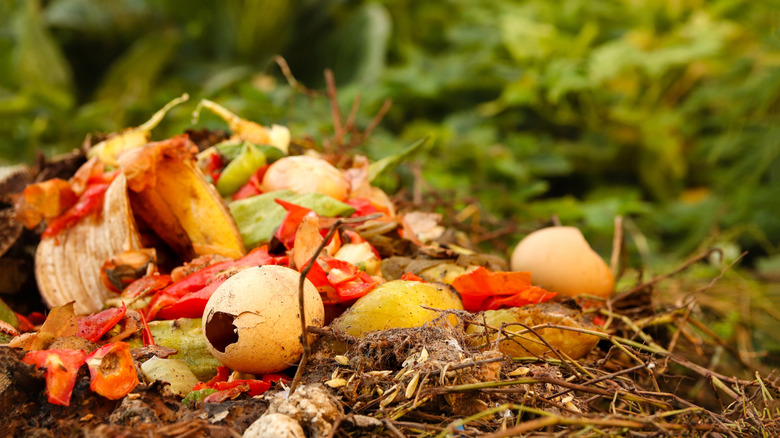
Getting the brown:green ratio right is vital for creating a moist, well-balanced compost pile with the right mix of carbon- and nitrogen-generating materials. Too much damp green material can cause your compost to break down too fast or grow mold, while an excess of dry brown materials slows the composting process to a snail's pace. When first creating your compost pile, start in the middle with a 3:1 ratio of brown to green materials. If you turn the heap one day and notice it's overly dry or really soggy, add some extra raked fall leaves (brown) or veggie peelings (green) to rebalance it. As you keep going, you'll figure out which materials disrupt the equilibrium in your pile, and you'll be better equipped to deal with — or, ideally, prevent — instability.
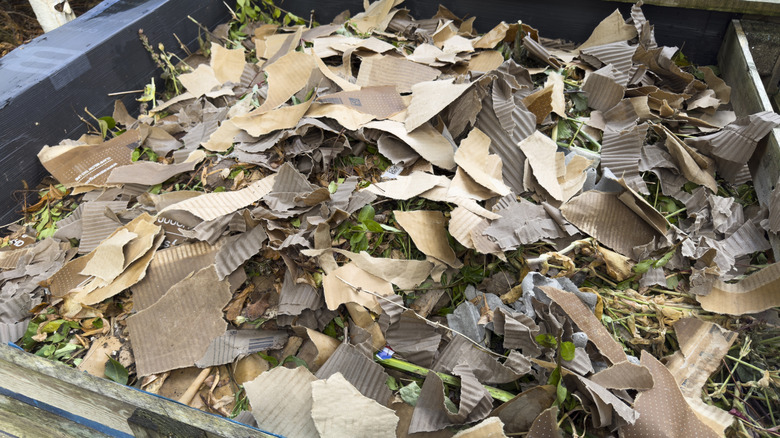
Even if you use a volume-based brown to green ratio, it's not quite as simple as picking out some numbers and sticking to them indefinitely. The type of material can affect the compost in different ways — even when it broadly falls under the category of brown or green. For example, if you add a brown material that absorbs a lot of water, such as shredded paper or corrugated cardboard, you may need to reduce the volume. However, if you add an overly damp green material, like the rinds and flesh of an overripe watermelon, a large amount of paper — the household trash you should add to compost — will come in handy. Plus, a thick layer of a brown material on the top of your compost pile will help keep unwanted critters away. Generally, you'll likely find you fluctuate between a 2:1 to 4:1 brown-to-green ratio.
Clues that tell you whether the brown-to-green ratio of your compost is correct
There are other clues to help you figure out if you have, or are at least close to having, a perfectly balanced compost mix. For example, if you stick a Greenco Stainless Steel Compost Thermometer into your compost, you'd hope for a reading between 90 and 140 degrees Fahrenheit. Materials break down fastest at these temperatures. If your pile is running hot (about 140 degrees Fahrenheit), it needs more brown materials. If it's too cold (below 90 degrees Fahrenheit), add some green materials. You can use your nose to test your compost pile. It should smell a little earthy; it should not remind you of rotting food. If you start gagging every time you turn your compost, it may be a sign that the ratio is weighted to heavily toward green.
Don't be afraid to feel your compost, either. It should feel moist, but not wet. If the mix squishes between your fingers when you handle it or you notice pools of liquid on the surface of the pile, you likely need to add some brown materials. On the other hand, if the mixture feels dry and crumbly, add more green materials to boost decomposition. Ideally, compost should feel like a wrung-out sponge. Thankfully, you don't need to put too much pressure on yourself to get the mix perfect. If you do mess up the ratios or things get out of balance, all you have to do is add a little brown or green material to compensate for the shift. What makes things even easier is that the compost ingredients you likely already have at home, from fireplace ashes to food scraps, are exactly what you need to fix the problem.