

What To Do If You Find Mushrooms Growing In Plant Pots
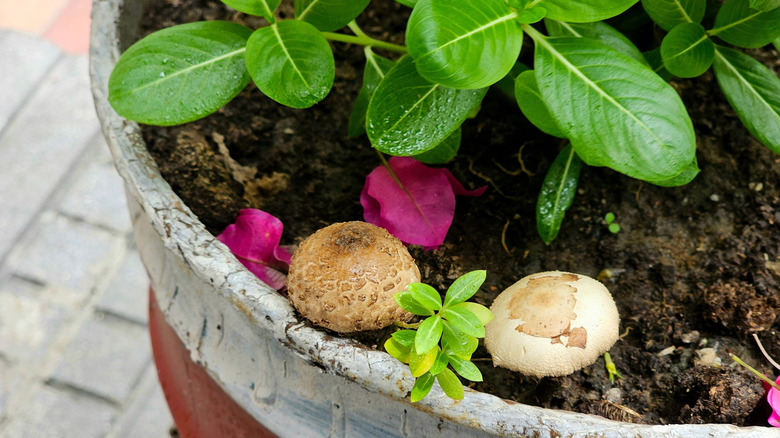
I'm a master gardener, permaculture specialist, and soil geek, so little mushrooms suddenly appearing in my plant pots overnight are nearly always a welcome sight. While many people think that seeing unexpected fungi fruit in their pots means there's something wrong, it's actually usually a sign of soil health. In almost every case I've seen, nothing bad is really happening to the plant. Mushrooms are the fruiting bodies, or the above-ground reproductive structures, of any one of a vast number of fungi that are living in the soil of your plant pots and feeding on the organic material in the mix. They are a sign of a healthy, active, biodiverse soil ecosystem. It's the same for mushrooms growing in your flower beds.
Most of the fungi you'll find in plant pots are saprotrophic. This means they are decomposers, so they break down woody organic material that you'll commonly find in many commercial potting mixes, like bark chips, pine, and coco coir. All are prime food for decomposer fungi. As they work on breaking down this organic matter, they release nutrients that the plant roots can absorb. Therefore, the fungal network and the fruiting bodies are not in direct competition with the plant for anything and, in fact, they are feeding the plant. Their presence in containers is perfectly normal and nothing to panic about.
When mushrooms in your plant pots aren't quite such good news
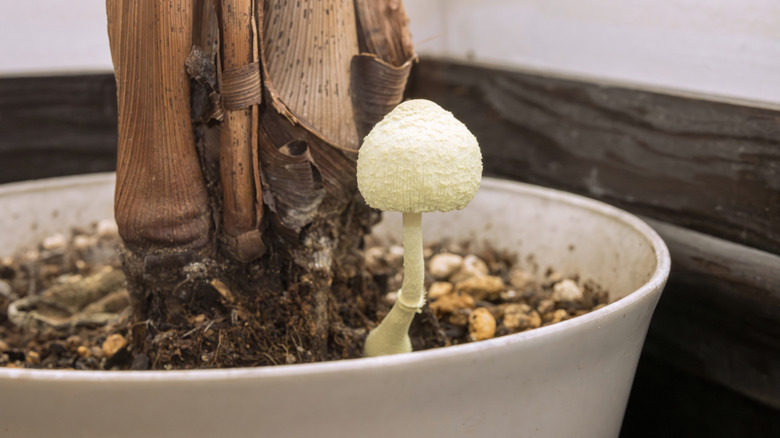
In most cases, having mushrooms in your plant pots is a good thing. However, if you have small children and pets in your household that might be tempted to have a little munch on any novel thing that pops up in the garden or in your houseplants, then you need to be especially careful. While some species that pop up are completely harmless, others, like inky cap or the very common flowerpot parasol, are toxic when eaten by dogs, cats, and humans. Symptoms can range from severe gastrointestinal problems to death. If you have pets or kids who tend to put things in their mouths and you can't ensure they can't access the pot, you need to remove and dispose of the mushrooms.
The other scenario to watch out for is dense mycelium build-up on the surface of the soil. Mycelium is the white cottony substance that you may occasionally see on the surface of your soil or even on your lawn. It's harmless and is just the fungus doing what it does. If it builds up into a thick, persistent mat that doesn't vanish in a day or two, however, it can block water and nutrients from reaching the roots of the plant. This can cause stress, dehydration, and nutrient deficiencies. It also implies that the conditions are perfect for the mushrooms, with constant moisture, poor drainage, and high humidity. While this is great for the fungus, it's generally not great for your plants and can lead to root rot and other plant diseases, so mushrooms could be one of the signs that your houseplants need repotting.
What to do (and what to leave alone)
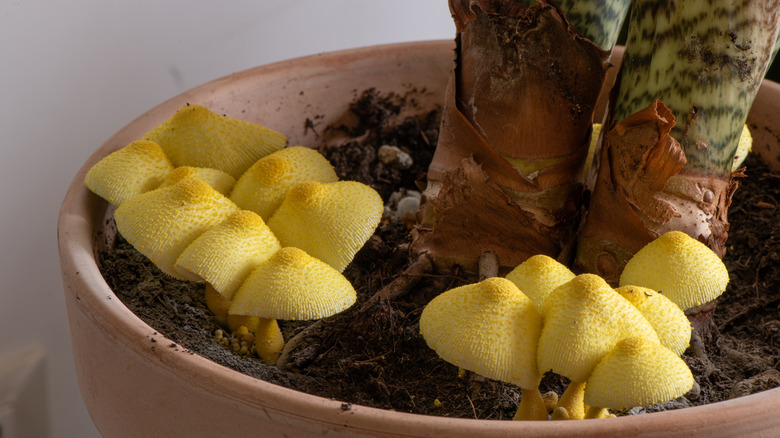
If you want to remove the mushrooms because of the risks to pets or kids, wear gloves and make sure you get the whole fruiting body. That includes the stem, not just the cap. Be careful not to drop any little pieces on the floor and pop them in the garbage. Dumping them in the trash ensures that you get rid of the spore source before it has a chance to spread further. Because I'm a permaculturist, I never recommend fungicide for mushrooms popping up in containers. Aside from the fact that it's largely ineffective against mushroom-forming fungi and potting compost, it will damage the beneficial microbial life in your soil and your plant will suffer. Mostly, in my experience, fungicide used in this situation does more harm than good.
Cultural controls are a much better option. If you're concerned about persistent fruiting because of pets or kids, once you've removed the fruiting bodies you can repot the plant into fresh compost. One of the best tips for easily repotting your favorite plants is to remove as much of the old compost as possible, without damaging the roots. It's also a good idea to wash the roots in tepid water. Just remember that you may be taking spores with you or your new compost may also contain spores. But this is where cultural controls come into play. Make sure there's plenty of airflow around the pot and plant leaves and make sure there's adequate drainage at the bottom of the container. Additionally, use a good quality, free-draining compost and let the top inch or two dry out fully between waterings.