

5 Once-Popular Concrete Home Features No One Uses Anymore
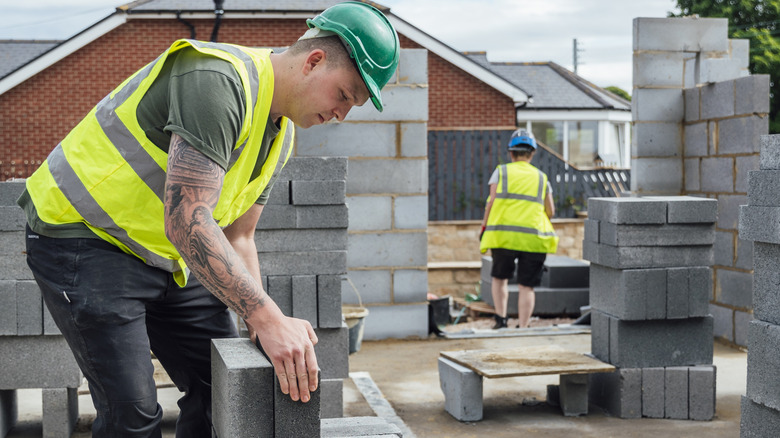
Sidewalks, subway stairs, and parking garages hardly feel like the epitome of modern design, but the material they're made from is really quite remarkable. You might think that concrete feels too sterile, utilitarian, or cheap to play a big role in our homes, but there was a time when concrete was regarded as a high-tech new industrial material. During reconstruction efforts after World War II, concrete also rose in popularity because it was affordable, versatile, and quick to work with. Aside from the many great displays of brutalist architecture, concrete also appeared in residential homes and gardens throughout much of the 1900s. Features like concrete breezeblock walls, stamped concrete patios, and even concrete clotheslines could be found in an average neighborhood. Sometimes, concrete even found an intentional place inside homes, acting as an accent wall or plastering floors and countertops.
Since its conception, concrete has taken many forms in public and private interior design. While it might not always be a trending material, concrete has many advantages that have allowed it to persist for decades. Whether you're a fan of true béton brut ("raw concrete") design or you're just looking to replace flimsy modern materials with something more sturdy, it's worth looking back at these once-popular concrete features nobody uses anymore and potentially even adopting them into your present-day home or garden.
Concrete clothesline posts built to last in the early 1900s
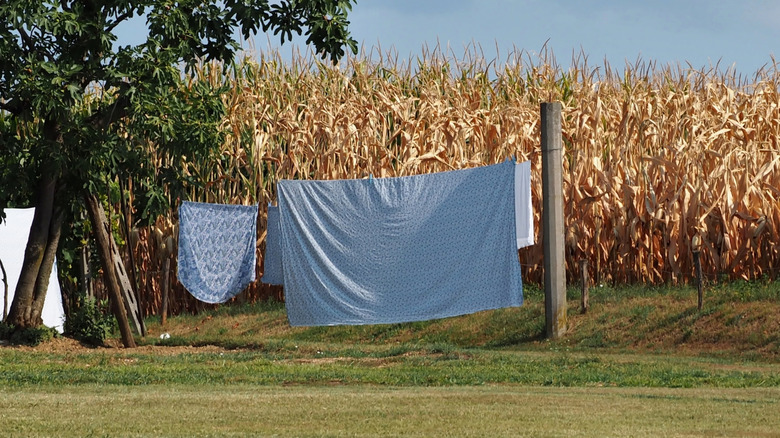
We're used to seeing concrete in industrial and practical applications today, but decades ago, it also brought an ornamental edge to everyday devices. Reinforced concrete clotheslines served in backyards throughout the country at one time. Some, like those designed and installed in Duluth, Minnesota by Herman Edmund Magnusson, featured a hexagonal concrete post. This was mostly an aesthetic detail, and not really needed to provide essential support to the steel and aluminum frame. However, according to a mid-1920s advertisement flyer shared by Perfect Duluth Day, the additional weight and buried bottom may have also helped these clotheslines resist frost-heaving. This represents some very clever engineering for cold cities like Duluth.
Today, it doesn't seem that many of these reinforced concrete clotheslines still exist, despite their description as solid and long-lasting. As people transitioned to in-home dryers and ripped the clotheslines from their yards, many of these concrete monoliths were also removed. Some creative homeowners have even decorated or repurposed their stubborn concrete posts. But with more folks today seeking ways to cut down energy bills and reduce their carbon footprint, perhaps now is the perfect time to consider installing a clothesline in your outdoor space, so why not bring back a version with a creative concrete twist?
Decorative concrete garden walls defining midcentury lawns
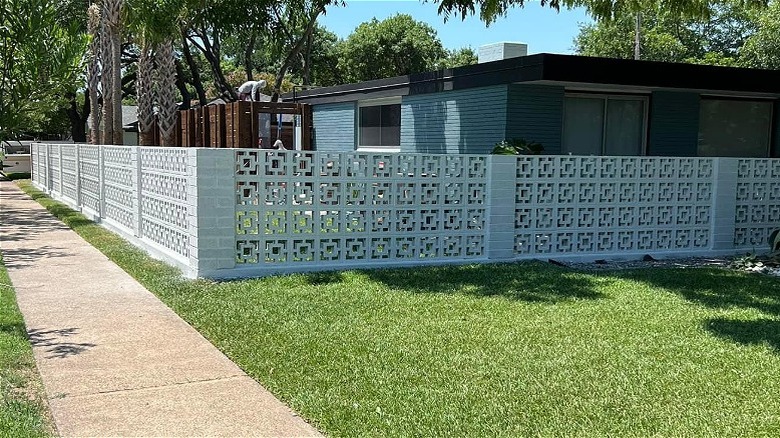
Low walls and garden bed edges are another underrated concrete feature from the past, especially when they're built with decorative concrete blocks. This style of concrete blocks, also known as "breezeblocks," was especially popular in the 1950s and '60s, although they'd been around for much longer — since the 1930s Art Deco era, at least. The horizontal nature of ranch-style homes put more focus on landscaping, lawns, and outdoor living areas. An easy do-it-yourself addition, concrete blocks of various sizes and styles could be ordered to suit the home's overall design and add interest to the garden. Some manufacturers developed their own distinct block patterns, which may only have been available to locals.
If you're keen on bringing these back, you might be able to find authentic mid-century breezeblocks at your local architectural salvage center. They're still produced by some companies, and basic versions also exist from retailers like Lowe's and Home Depot. Concrete garden walls can be useful to break up large outdoor spaces and separate them into livable "rooms" or levels. They're also surprisingly effective for marking property boundaries, hiding an unsightly A/C compressor, or providing a sound barrier between the home and busy street traffic. Once installed, these concrete walls generally require very little maintenance.
Stamped concrete pathways and patios of the late 1900s
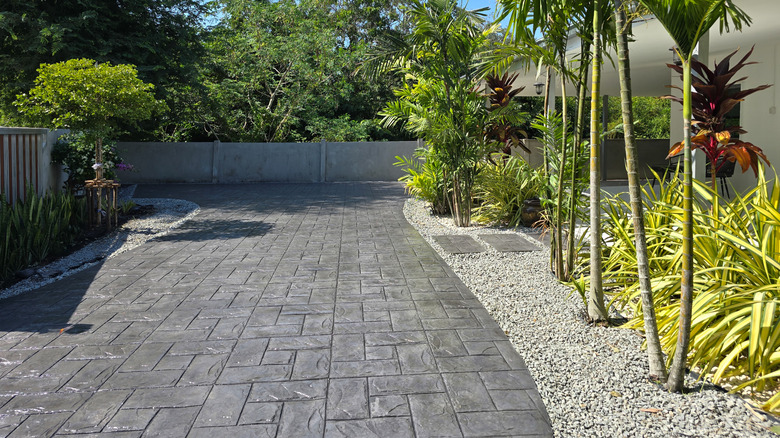
Concrete patios and floors with decorative designs have practically been around since the dawn of civilization. However, in the 1950s, stamped concrete, in particular, became iconic in homes, gardens, and public spaces. An innovator named Brad Bowman was credited as the trailblazer for this trend. He studied sculpture before being called away during World War II, and when he returned to California, he experimented with techniques to add color and texture to freshly poured concrete. Eventually, he developed metal V-shaped "stamps" that could create consistent, repeating patterns. This became known as the Bomanite process, which eventually transformed into its own companies and brands.
Using techniques pioneered by Bowman, wet concrete could be stamped and stained to mimic wood, cobble stones, bricks, flagstone, and other, more expensive materials. The technique continued to spread over the next few decades, and by the 1990s, many residential driveways, walkways, pool decks, patios, and even shopping centers and amusement parks were covered in stamped concrete. This technique was an especially valuable invention in the mid-1900s when contractors needed to build structures quickly and affordably. It still has plenty of wonderful applications today, offering the same durability as ordinary poured concrete with a lower cost and less maintenance. However, genuine, natural materials like flagstone and gravel are more in-line with today's eco-conscious ad organic hardscaping trends.
Midcentury breezeblock walls, both indoors and out
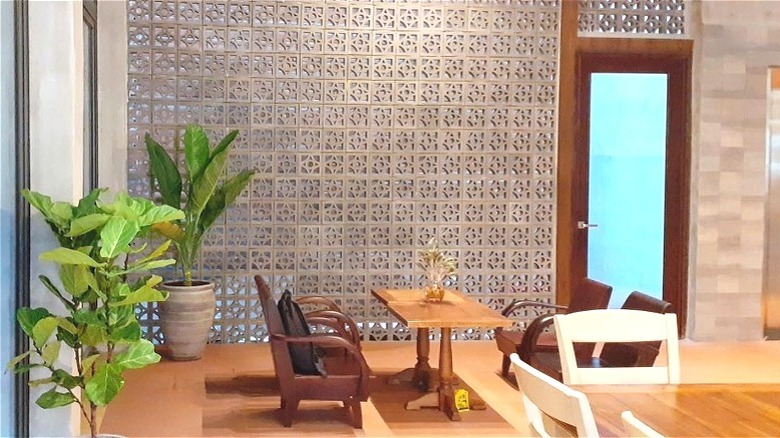
Breezeblocks weren't relegated to the garden. In many homes, businesses, and public venues, people interacted closely with the ornate concrete cubes. Full walls could be constructed both indoors and out, and the versatile blocks also offered some surprising benefits. When installed around courtyards, porches, and front entries, the tall block walls offered privacy and noise control without obstructing sunlight or airflow — hence their name "breezeblocks." The semblance of solid walls made living spaces feel as if they extended outdoors.
Concrete block walls were even adapted and brought inside in some home designs, albeit with smaller and smoother blocks to avoid overwhelming the room. Indoor breezeblock walls acted as room dividers or partitions, giving the space some separation without totally blocking off the area. For a more decorative touch, breezeblocks can be incorporated into an existing structure, such as a fireplace surround or kitchen island.
Breezeblock walls eventually faded from the limelight around the 1970s, but their practical benefits make them a clever construction material even today. In hot climates and against sunny southwestern walls, they can cast valuable shade over homes. For homes in sparse landscapes and hurricane zones, breezeblocks could protect windows from high winds and even flying debris. Could it be time to give breezeblocks a second chance?
Rugged concrete walls, floors, and more of the 2010s
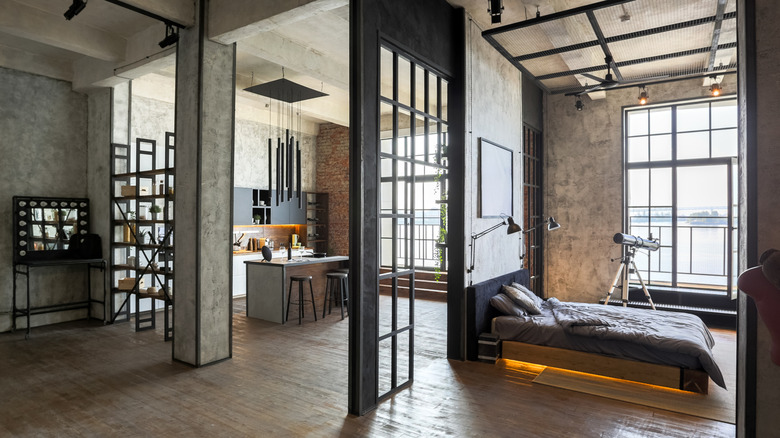
Amid all the patterns, blocks, and ornate designs, solid concrete surfaces have had their moments, too. Arguably, concrete features have never really gone away, although they have morphed over the years. Solid concrete walls, floors, countertops, and other elements have shown up perhaps most recognizably in the 2000s and 2010s. During this period, concrete's utilitarian nature was embraced through minimalist and industrial interior design styles. Factory-inspired concrete flooring, exposed concrete walls, and other time-worn materials reflected the unique and rugged tastes of the era. It's as if every coming-of-age millennial dreamed of living in a converted warehouse loft — some even going so far as to DIY faux concrete accent walls for an industrial look. Those design aspirations faded away as the trend pendulum swung in the other direction.
While the unpolished, industrial concrete look from the early aughts might not be so trendy anymore, softer, more livable styles of concrete and cement still persist. In the 2020s, people are seeking more earthy, cozy, and touchable materials. Enter: microcement. Microcement, or micro concrete, actually emerged in the 1950s as a smoother, more polished version of concrete that was suitable for indoor surfaces. The popularity of microcement increased over the years, especially during the '80s and '90s. Now, it's seeing a comeback for its low VOCs, earthy, clay-like texture, and DIY-friendly nature. If you're still in love with the idea of a concrete accent wall, floors, or countertops, microcement may be the more modern alternative to the brutal, unpolished styles gone by.