

Not Retaining Walls: The Landscape Feature That Is A No-Brainer For Sloped Yards
We may receive a commission on purchases made from links.
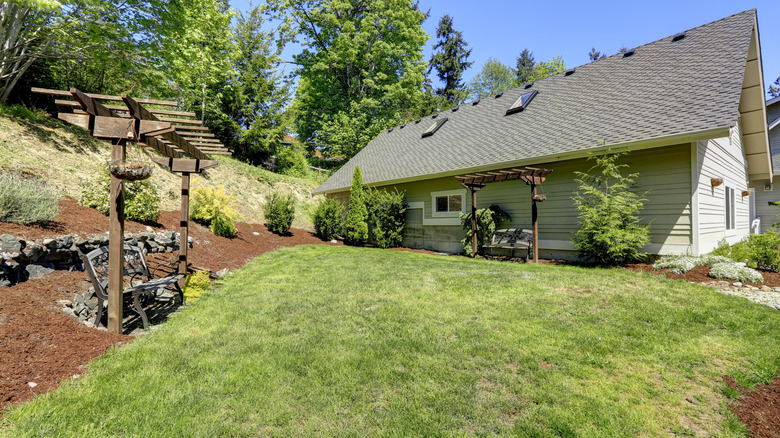
Sloped yards are challenging to landscape and maintain. There's little enjoyment in tumbling down a steep lawn or feeling like your neighbors have a bird's-eye view of your patio. Nuisances like these can make spending time in your backyard feel like a chore. Add rain into the mix, and a whole new host of problems present themselves. A temporary river can form at the bottom of yards that slope down and away from a home. Any plants growing there get waterlogged. On the flip side, homes situated at the bottom of a sloped yard could be at risk of costly basement flooding. Dealing with either of these situations? A berm could be just what you need to take control once and for all. These landscaping features have been around — and proven effective — for centuries.
While retaining walls can be used to control the flow of water, these rigid structures are more often constructed on hillsides to prevent erosion. On the other hand, berms are essentially mounds of dirt that change the appearance of your yard, add privacy, or provide a natural way to control drainage for sloped yards. Depending on their size, DIYing a berm with the aid of a few helpers is often more cost-effective than a retaining wall, which usually requires professional installation. Note, however, that this is a stormwater solution you should double-check the legality of in your area. Berms are generally legal to build anywhere in the U.S., but their construction is highly regulated and you'll likely need a permit. In most cases, they must be planted with vegetation and must not cause damage to neighbouring properties during building or after they're completed.
How to build a berm in your sloped yard
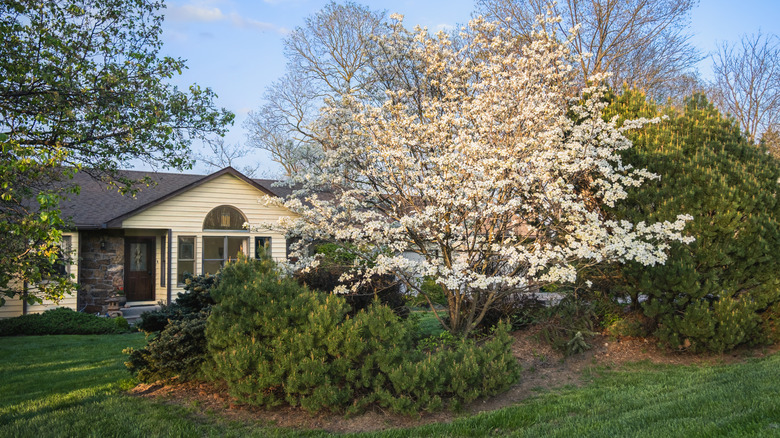
First, determine the location of the berm and its purpose. You could build a low berm between a deck, play area, or garden bed and the bottom of a slope for flood protection. A berm could also add privacy to backdoor patio at the top of a slope where neighboring homes are on the same level. Plant the feature with evergreen shrubs to add more height and block the view. If water pools dangerously close to your home's foundation, use a berm to channel it into a French drain. Or you could simply use berms to define your property line in place of a fence.
Once you have decided on the general location, map out the dimensions of the berm. How long and tall does it need to be? Should it curve one way or another? How will rainwater flow around it? Do you need to make space for a drain? Remember to take local municipal regulations into consideration. Then mark the dimensions with garden stakes or Rust-Oleum Professional 2X Distance Inverted Marking Spray Paint. It's safest to keep the berm under 2 feet tall.
Next, use a spade or hoe to remove the grass inside the marked-off area, digging down below the soil surface about 3 or 4 inches. Spread gravel over the area and lightly compact it using a Heavy-Duty Hand Tamper. Cover the gravel with dirt, heavy clay soil, or the removed turf — or a mix of all three materials, molding it into a mound. Add some topsoil before planting the berm with ornamental grasses, shrubs, and small trees, or create a low-maintenance flower garden with perennials you'll love. The plant's roots will lock in the soil, stabilizing the structure.