

Sharpen Your Lawn Mower Blades With A Tool You Already Own
We may receive a commission on purchases made from links.
Given that most people cut their lawn at least once a week in the summer, your mower can rack up dozens of hours in just one season. This amount of usage places considerable wear and tear on the machine. Internal components might start to sputter, and the blade will eventually dull. That's why it's important to keep these 12 things in mind before you mow your lawn, including checking for detritus and making sure you have the proper tools on hand to make repairs. If you have a Dremel in your workbench, you'll be able to sharpen that dull mower blade and get back to work cutting the grass in just a few minutes.
You may recognize this rotary tool from woodworking projects, where it is often used to make detailed etchings. It is a handheld, electric-powered device that spins a shaft. You can add various attachments to the shaft, including a circular blade, a bristle brush, and a grinding stone depending on what you plan to do with the tool. For sharpening, you'll simply need a Dremel Variable Speed Rotary Tool, which will cost you around $40 and a Dremel Aluminum Oxide Grinding Stone as your attachment, which will cost you around $5.
These are the main components, but you'll also need a few other tools to complete this project; you probably already have these as well. If one bolt is holding your blade in place, you can remove it with a crescent wrench, but if two bolts are holding it, then you'll need a socket wrench. It's also helpful to have a stick to prop your mower up because you'll have to turn it on its side. For safety, you should wear gloves and goggles, because tiny bits of metal may fly off as you sharpen.
How to sharpen your lawn mower blade
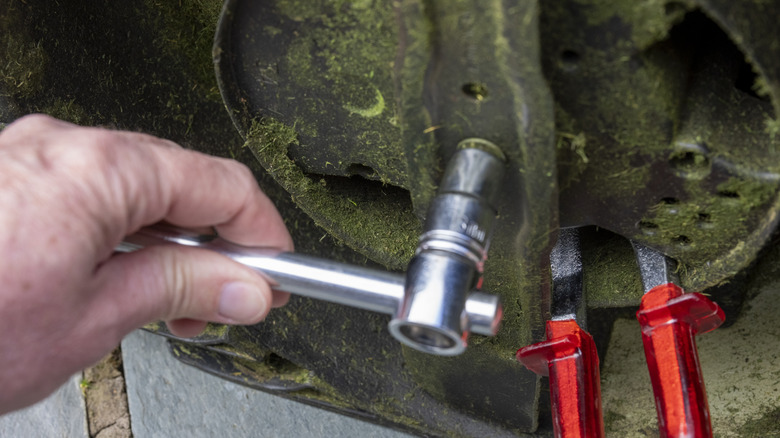
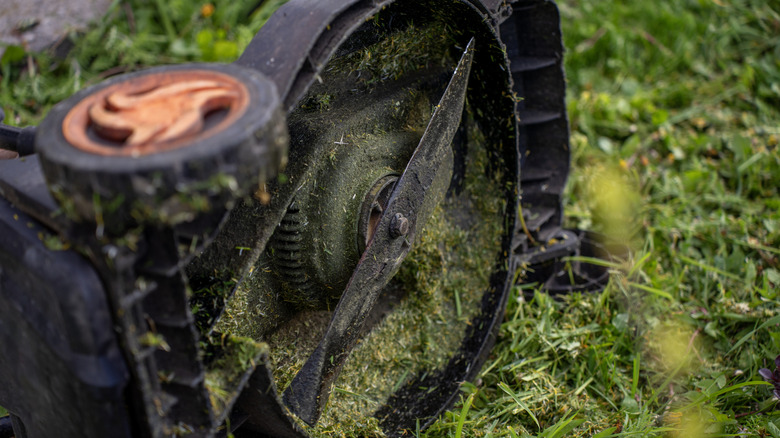
To access a push mower blade, you'll first need to turn the machine on its side. Keep in mind that doing this the wrong way can flood the carburetor with gas and oil, so proceed with caution. First detach the spark plug, and turn the mower with the muffler facing down, so the carburetor and air filter face upward. A piece of black plastic usually covers the air filter, and the carburetor will be just behind it. Then you can prop up the mower up with a piece of wood. After this, remove the bolt with your crescent wrench or socket wrench. After you unscrew them, collect them so you don't lose them.
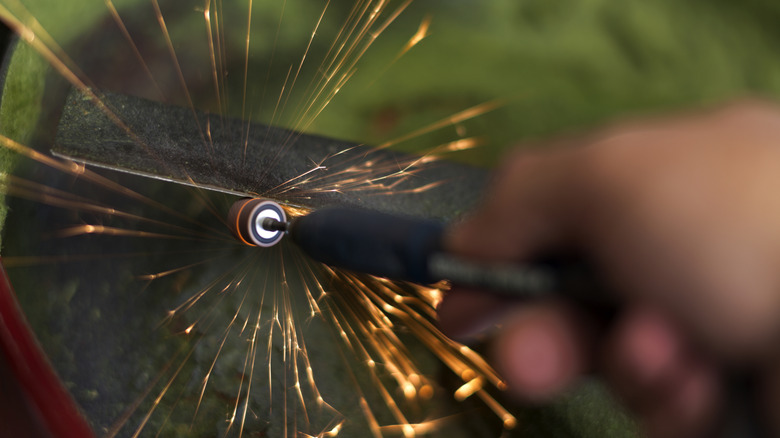
Next, you'll need to wipe the blade clean with a rag or even some steel wool to remove any dirt or grass that is hanging on. Once it's clean, turn on your rotary tool and run the grinding stone along the blade's edge at a 45-degree angle. The last step is to reattach the blade to the mower's undercarriage. When you reattach the blade, make sure the sharp edges are angled toward the ground rather than the mower deck.
If you don't own a Dremel, you can always sharpen your blade with a file. Simply hold each end and pull it across the blade at a 45-degree angle, as you would with a rotary tool. At the end of each pull, lift the file, place it back on the blade, and pull it across the blade again.
The importance of sharpening your mower blade
A dull blade can lead to a litany of problems. For starters, it may leave stalks of grass frayed, which make them far more vulnerable to environmental conditions. During the summer, in particular, your grass might turn brown more quickly. These shredded ends also make your yard more susceptible to diseases like yellow patch and necrotic ring spot. So, if you're lawn's been looking uneven or even a little discolored, it might be a sign it's time to sharpen your lawn mower blade.
What's more, dull lawn mower blades cause your mower to burn more fuel or use more electricity (depending on your model). The shaft that turns the lawn mower blade won't be able to spin as efficiently if the blade has to hack and tear through a yard. In other words, it can actually be more cost-efficient to invest in a sharpening tool, and it will certainly save money on fuel if you have a gas mower.
If you're buying a new blade, keep in mind that you should always sharpen it first, because they tend to be shipped dull. It's also important to check your blade regularly, even before your grass starts to look frayed. Try to sharpen your blade at least twice each season. If you're not confident in your abilities, don't sharpen your mower blade by yourself; just take it to a professional. There are several mistakes everyone makes when sharpening lawn mower blades, so make sure you have a firm understanding of how the process works before giving it a go.