

Not Sawdust: Another Garage Find You Can Add To Your Compost Bin
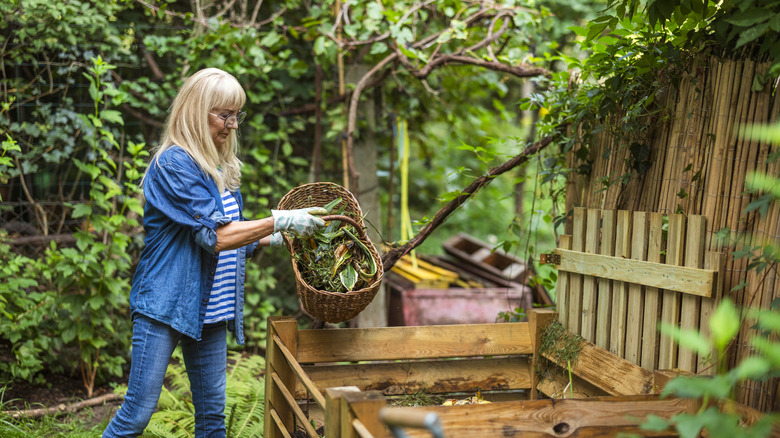
Composting is a great way to reduce your weekly trash, support your garden, and help the environment. However, knowing what to compost isn't always easy. You have basic items, like food scraps and sawdust, but there is other waste in your garage that you might be able to compost, like natural fiber rope.
It's not surprising to find some in your garage. It comes in handy in a lot of ways around your home and garden, whether you're using rope for a root rot prevention hack or keeping it handy for barriers and plant support. At the end of these projects, you may find you have more than you know what to do with. Thankfully, since there are big benefits to composting at home, you can get rid of those ropes that have been lying around without feeling guilty. Natural fibers can take nearly half a year to fully incorporate into your compost, but simply cut up the rope into small pieces to make sure that your pile is at an ideal temperature and moisture level.
The kinds of ropes from your garage you can't compost
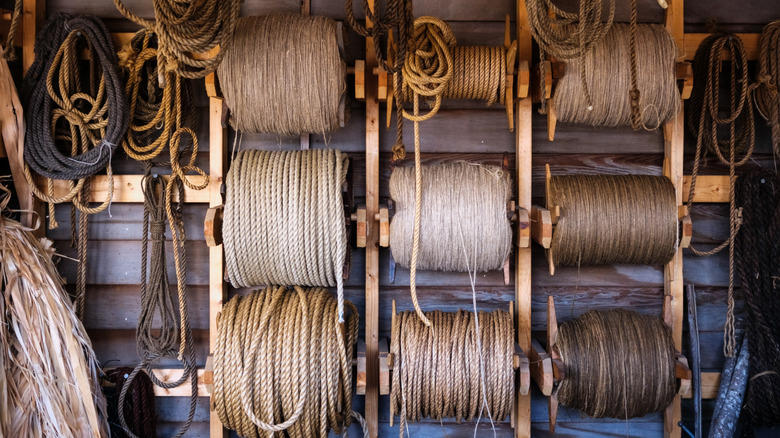
Treated materials are among the things you should never add to a compost heap, and this includes pretreated ropes. You want to make sure that the rope isn't treated or coated, as it can affect the composting process. Additionally, the materials used for pretreating rope usually include harmful chemicals that can leach out and hurt your compost and plants. You also need to avoid dyed ropes for the most part. If the dye is plant-based, then it is fine, but if you're unsure or it's made from something else, you want to avoid it.
However, there is an exception. Wax-coated ropes and twine can usually be composted. Generally, the material is covered in soy or beeswax. It does take a little longer to break down — 6 to 9 months – compared to the 3 to 5 months natural fibers need. Pre-soaking these ropes also comes in handy, as it helps get some moisture into them and start the breakdown process.
It really only works with hot composting, where the temperatures are 130 degrees Fahrenheit or hotter. Beeswax needs to be around 145 degrees to melt off the rope and start breaking down, which is on the warmer side for many compost piles. Soy wax can melt closer to 130 for some types, but it's still on the warmer end. If your compost doesn't regularly get to these temperatures, you may need to skip coated rope.
What else to know before composting natural fiber ropes

To home compost, you need 100% natural materials like untreated flax, linen, hemp, jute, and cotton if you want them to fully break down in your compost pile. There are often labels that tell you the materials, but if you aren't sure what kind of rope you have in your garage, a handy trick is to try burning some. Natural fibers will burn into a fine powder and smell a bit like paper. However, if there are synthetic, the rope tends to melt, bead up, have a melted plastic odor, and produce dark smoke.
You need to understand the differences between biodegradable and compostable, too. Ropes made from a mix of cotton and polyester, for example, are biodegradable, but not compostable. This means that they can eventually decompose over time, but they may need to go to an industrial composting site to do so. Meanwhile, a lot of compostable materials disintegrate relatively quickly and can often be done in your backyard.