

'Drama And Intrigue:' The Kale Variety You Should Grow For Both Beauty And Abundant Harvests
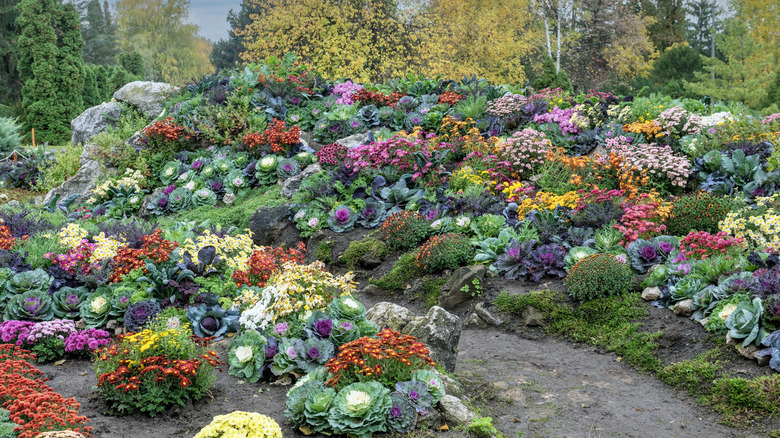
Gardeners are increasingly looking for plants that work as hard as they do. That's why home growers turn to the botanicals whimsically known as "edimentals." What are edimentals? This new garden trend relies on plants that are not only aesthetically pleasing, but provide you and your family with tasty, nutritious food. That's certainly the case with Redbor kale (Brassica oleracea 'Redbor'), the kale variety with the height and intense coloring that allows it to grace either vegetable or ornamental gardens in style.
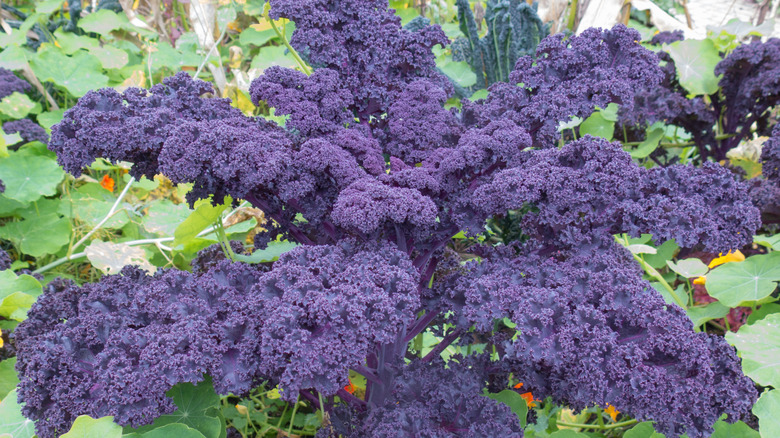
Redbor kale is a tall, purple-red variety of kale. It's frequently classed as a 2-foot-tall plant, but it routinely grows to double that height, according to the Chicago Botanical Garden. This edimental's height and spread make for an impressive yield. Redbor's frilled leaves change color as the colder weather sets in, from deep purple in spring months, to burgundy after it's been touched by frost. One satisfied Redbor grower remarked, "This great back of the border plant adds drama and intrigue to any cool season garden."
Like most other vegetables, Redbor kale is an annual type for most climates and is classified as such in gardens. It grows – and tastes – better in cooler seasons, especially fall. But if you're growing Rebor purely as an ornamental, moving container-grown specimens to shady areas in the summer can keep it going until cooler months, when color and vigor will improve. You can even grow this ornamental veggie during winter.
Given the right conditions, Redbor yields months of colorful, edible foliage
Kales should be seeded about four weeks before the last frost date in spring, and about six weeks before the first fall frost. Like other kale varieties, Redbor is commonly grown from seed, although you may be able to find seedlings at the garden center. The Redbor variety can be harvested 28 days after sowing during its baby stage, or at a more mature phase of 55 to 75 days. Direct-seed Redbor into a garden bed or container. If you're sowing several of this kale variety, seed companies recommend an in-row spacing of 18 to 24 inches, and that rows be 30 to 36 inches apart. If growing in a mixed bed, keep those spacing conditions in mind.
Pick a site that's in either full sun or part shade. Plant Redbor kale in a bed or container that's been filled with soil enriched with a nitrogen-rich fertilizer, and has a pH of between 6.0 and 7.5. Keep their soil consistently moist.
To utilize Redbor kale as both an ornamental and a nutritious edible green, harvest foliage sparingly. Removing just the larger, outer leaves for eating will allow the plant to continue producing new leaves while still maintaining a regal presence in the garden. Kale tastes especially sweet in the cooler months, after the leaves have been touched by frost. Time of day is also important when it comes to harvesting. For the most flavorful leaves, the best time of day to harvest kale is in the morning.