

Not Lavender Or Thyme: The Flowering Herb Pollinators Would Be Thrilled To Find In The Garden
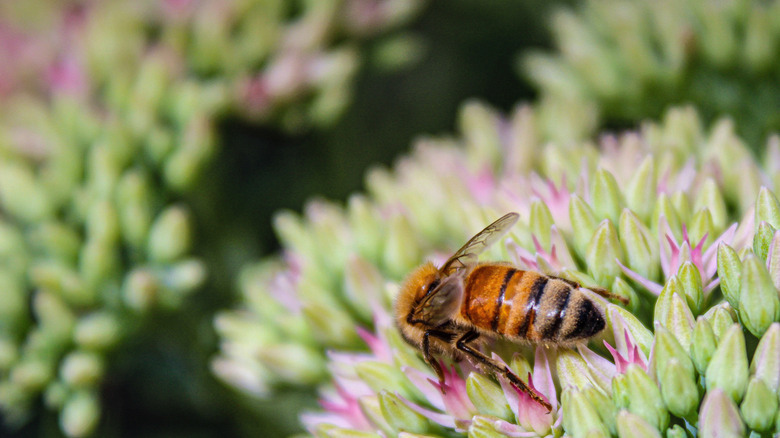
When a garden needs flowering herbs that pull in pollinators, most minds jump straight to thyme and lavender. And honestly, it makes sense. They both have beautiful blooms and a lovely fragrance that pulls in bees and other similar creatures. However, there is another herb that deserves a place in that conversation — a herb that also offers creamy, showy, sweetly scented flowers that bees and butterflies happily visit. Enter, garlic chives (Allium tuberosum).
Often also called Chinese chives, these come from the onion family and have a clumpy growth habit and edible green leaves. Garlic chives' ability to attract pollinators, however, comes from their nectar and pollen-rich flowers. These appear on the plants from late summer through fall, and have a distinctive bell shape.
Aside from its pollinator-attracting abilities, this is a durable and low-maintenance herb that will replant itself in the garden every year. For starters, garlic chives are more cold-hardy than both thyme and lavender, growing down to USDA plant hardiness zone 3. After flowering, those heads mature into capsules packed with seeds, and those seeds, along with their tuberous roots, help garlic chives spread aggressively. To prevent self-seeding, it's recommended to deadhead the flowers. On the flip side, this tendency means that garlic chives are among the herbs that are easy for even the most forgetful people to grow.
Growing garlic chives to attract pollinators to the garden
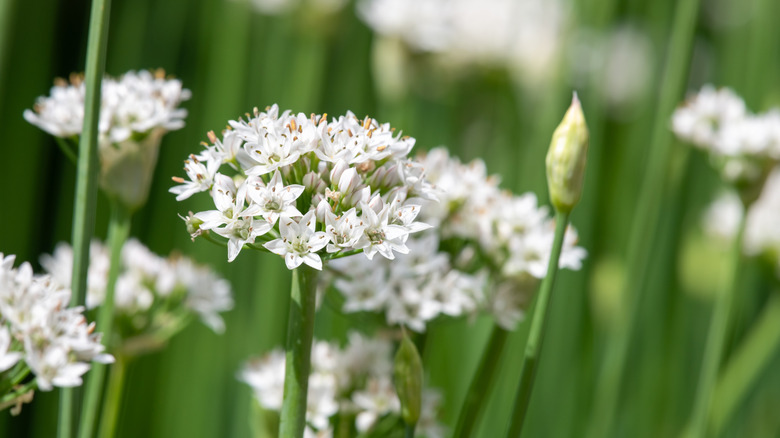
Garlic chives are a wonderful addition to any garden. From cottage gardens and rock gardens to vegetable beds and herb beds, they can be planted anywhere. However, if your aim is to bring more pollinators into your yard and garden using garlic chives, proper planting makes a very big difference.
One of the best approaches is to grow garlic chives in clusters. The reason for this is that pollinators are attracted to plants in groupings more than individual, isolated plants. It makes it easier for the pollinators to see the flowers, and it also gives them a reliable source of nectar as they don't have to waste their energy flying around in search of new flowers. However, you can't just plant garlic chives randomly in clusters. You have to make sure you plant and space these herbs properly, maintaining a distance of 12 inches between the plants.
Once again, though, keep an eye out for the aggressive spread as garlic chives can become weedy very quickly. If their tendency to spread means that garlic chives don't sound like the herb you would want to grow, you could try lemon balm instead. It is another herb pollinators are thrilled to find in the garden.