

Not Fallen Leaves Or Grass Clippings: The Garden Pruning Scrap To Add To Compost
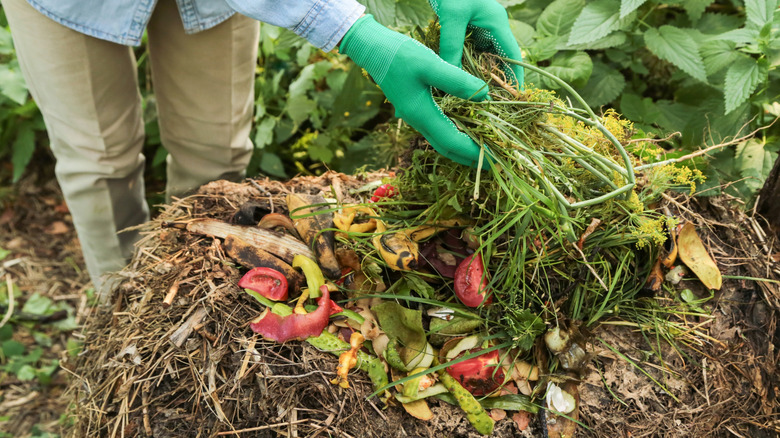
We know that fallen leaves and grass clippings are effective compost ingredients, but you may be wondering just how far can you take the idea of using yard trimmings in compost. As it turns out, all the way to the trimmings you've pruned away from your shrubs. Composting is one of the easy green methods to get rid of your landscaping waste. In fact, you'll do both yourself and your community a big favor by composting pruned shrub trimmings rather than tossing them out with the rest of your garbage.
The Missouri Botanical Garden notes that up to 20% of solid waste that goes to landfills is yard waste; some states even have laws against including yard waste with household garbage. This green waste takes up landfill space that could be used for materials that don't decompose; they can also emit methane gas and possibly contribute to water pollution. It's much more productive for your garden (and satisfying for you) to make your own DIY compost out of yard waste and use it to boost your plants' growth and health. Using shrub trimmings in compost has two requirements: You must have a way to reduce the trimmings to smaller pieces, and you also need patience, as woody plant materials take much longer to decompose than most compost ingredients.
How to compost trimmings from shrub pruning
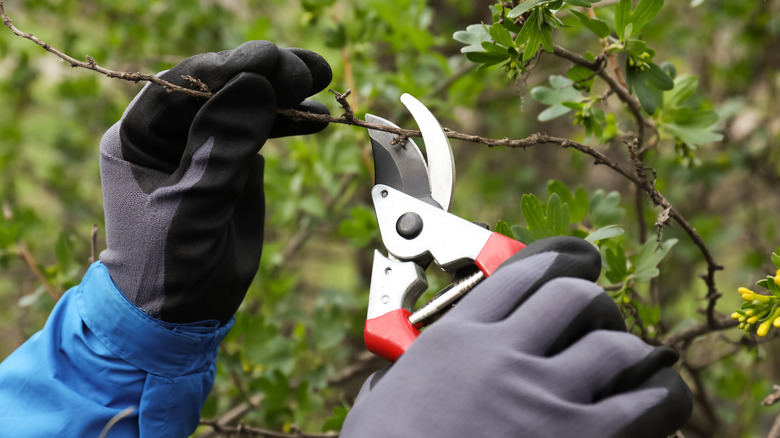
Materials placed in compost bin will decompose faster if they're cut into smaller pieces because microorganisms have more surface area to work. Scraps from pruning your shrubs can be a bit challenging to cut up. You're in good shape if you already have a heavy-duty chipper or shredder, but renting one is also an option. Consider obtaining a small home shredder; some models sell for less than $150 and can handle woody branches up to 1 ½ inches in diameter. Hedge shears or a chainsaw are other possibilities for chopping up your shrub trimmings. You could also try TikTok's hack that makes cleaning up after pruning a breeze — passing your lawn mower over pruned twigs and leaves.
Woody shrub trimmings take three to four years to decompose, largely because the lignin in woody shrub parts is difficult to break down. Since adding these materials to your existing compost can slow down decomposition in the entire pile, consider some options. You could set the shrub trimmings aside in their own pile for a year or so to allow them to rot before placing them in compost. Another possibility is to use the trimmings as the base for a new bin or pile, adding nitrogen-rich materials to the carbon-rich shrub trimmings in the correct ratio of 25% nitrogen-rich "green" items to 75% carbon-rich "brown" materials (which your shrub trimmings fit into). Keeping this balance in check will ensure your compost breaks down as quickly as possible without releasing unpleasant smells.