

The Old-School Tomato Fertilizer Your Grandma Used That We Can't Recommend

If, like me, you grew up in a household where basically nothing went to waste, you've probably come across this old tomato fertilizing hack. Every time the vacuum bag needs emptying, you or one of your siblings would likely be tasked with taking it outside and emptying the bag straight onto the tomato patch. The idea is that vacuum dust is filled with human hair and pet fur that break down into nitrogen. Dead skin cells, food crumbs, and the desiccated remains of house dust mites and whatever unfortunate insects got sucked up by the nozzle are all natural and will feed soil too. For generations of people around the world whose parents and grandparents were thrifty and hated all forms of waste, the contents of the vacuum bag would be used to add organic matter and nutrients to the tomato patch.
As a permaculture specialist, I am the last person who would ever dismiss recycling organic waste back into the soil. In fact, I cycle as much waste as I can back into my beds, especially for crops like tomatoes that are heavy feeders. I'd never recommend the vacuum cleaner hack, though, because a vacuum picks up so much more than just hair and crumbs. Studies on indoor dust have documented microplastic fibers sourced from synthetic carpets, upholstery, and clothing as dominant components of what accumulates in vacuum bags. While this may seem like a small thing, you don't want those synthetic fibers in the soil. They don't decompose reliably, they just break down into smaller particles and potentially leak chemicals that have no place in a food-growing bed. There are so many easy, free, or super cheap DIY ways to fertilize your tomato plants that you don't need to resort to contaminated vacuum dust.
Why dumping vacuum dust in the garden is such a bad idea
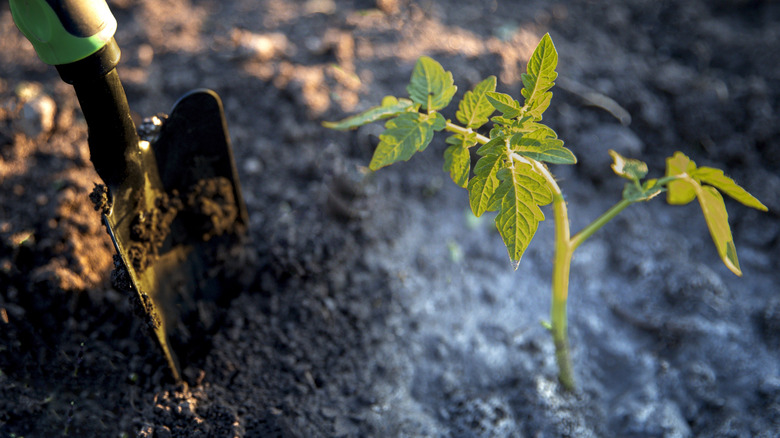
There are other reasons why the contents of your vacuum bag shouldn't be dumped in your vegetable beds. Aside from the accumulation of microplastics, household dust is also a significant collector of trace metals, including lead, cadmium, and arsenic. These heavy metals are drawn in from a range of indoor and outdoor sources such as old paint flaking from surfaces in old homes, traffic pollution that you inadvertently track in on your shoes or your pet's feet, residues from treated flooring, and chemicals left behind after using cleaning products. These substances settle on floors over time and get picked up in trace amounts after every vacuum pass. You really don't want these heavy pollutants in an area where you plan to grow vegetables. Tomatoes are especially efficient at absorbing minerals from soil, including ones you don't want there, and there's no reversing what's been done once they're taken up into the fruit.
If you want to boost the nutrients of the soil in container plantings where there's no edible produce, adding the vacuum contents will present a lower risk to you. However, even then, knowing that the microplastics won't break down and the heavy metals won't dissipate, the container soil will still be contaminated, so you can't reuse the soil in your garden without considering this. When you pot those plants up or the soil needs replacing, you couldn't compost that soil or the plants that were growing there. You'd have to remember that you used vacuum dust in those containers and dispose of the contents in the garbage, which is much more wasteful than simply putting the contents of your vacuum cleaner in the trash to begin with.
Free tomato fertilizers you can use instead
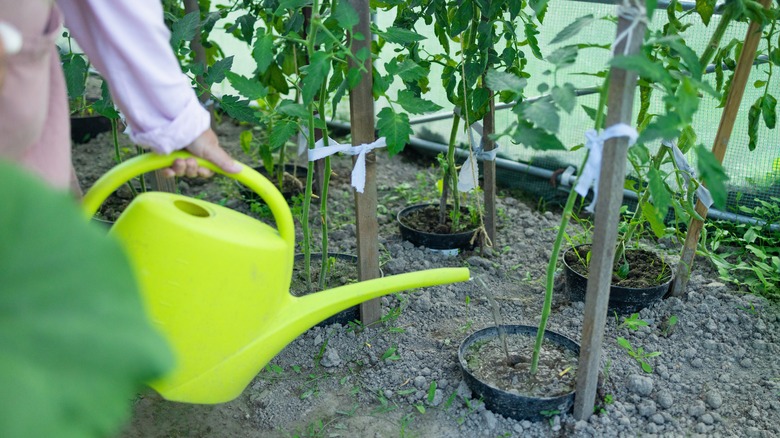
Instead of emptying your vacuum on the garden, look for other cheap or free nutrient sources. One of my favorites is comfrey tea, a lesser known hack to grow healthy tomatoes. It's easy to make — and free if comfrey grows in your area — although it is a little bit stinky. Comfrey tea is rich in nitrogen, phosphorus, potassium, and other trace minerals and it makes a fantastic liquid feed, particularly once tomatoes start flowering and setting fruit. To make your own DIY comfrey tea, all you need to do is pick some comfrey leaves, stuff them in a bucket, weigh them down with a brick, and add water. Cover it and leave it for three or four weeks. Do be aware, however, that comfrey tea smells horrific in its undiluted form so when you first uncover the bucket don't panic and assume something's died in there. That really is just what it smells like. Before adding it to the garden, dilute it with roughly one part tea to ten parts water. You can use it every two weeks around the base of your tomato plants and other fruiting vegetables throughout the growing season.
The same method can be done with stinging nettles as long as you strip the seeds off first. You can also chop comfrey and nettle leaves and lay them as a mulch directly around the base of your plants or lightly dig them into the top of the soil. You can also mulch with finished compost or dig shallow trenches between plants, fill them with kitchen scraps, and cover with soil, which is known as composting in place and is an effective way to rapidly boost the nutrition and organic matter in your vegetable beds.